
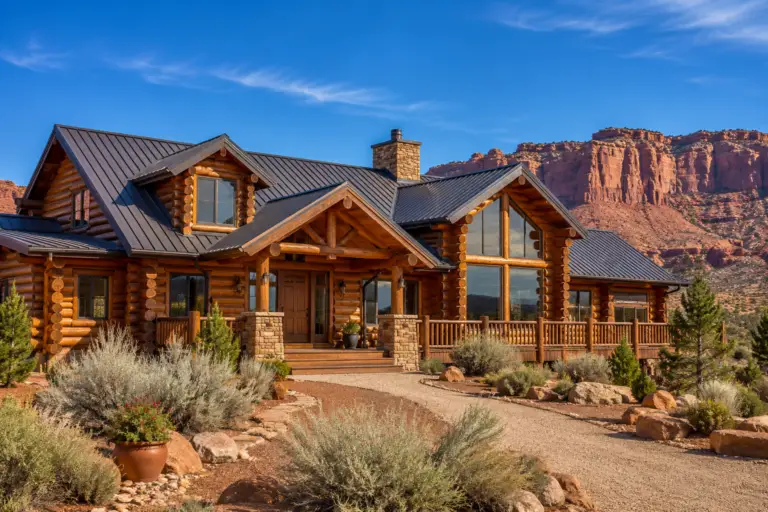








Log home restoration in Spanish Valley, UT calls for a practical understanding of red rock country, high-desert exposure, and the way dry air, sun, wind, and seasonal moisture affect exterior wood. A log home in Spanish Valley does not weather the same way as a cabin tucked into a shaded mountain drainage. Around this part of southeast Utah, log walls can take on intense sunlight, windblown dust, quick temperature changes, and long dry stretches that slowly wear down stain, open checks, and expose vulnerable wood fibers.
Pencil Log Pros helps homeowners protect and restore log homes, cabins, and rustic wood structures in Spanish Valley with services that may include log home staining, log cabin repair, chinking, caulking, media blasting, sanding, log rot repair, and ongoing maintenance planning. Whether your property sits near Spanish Valley Drive, closer to the Moab side of the valley, or farther south toward open desert views, the goal is the same: restore the logs correctly, seal the areas that need attention, and choose a finish system that fits the actual exposure of the home.
In a dry climate, it can be easy to assume moisture is not a major concern. That is a mistake. Even in high-desert country, logs still deal with rain, winter snow, irrigation overspray, roof runoff, and water trapped in upward-facing checks. When moisture combines with sun-damaged stain or open gaps, small issues can turn into costly repairs. A careful restoration plan looks at the full home, not just the color of the stain.
Why Spanish Valley’s High-Desert Climate Is Tough on Log Homes
Spanish Valley has a distinct high-desert feel. The landscape is open, the sun can be strong, and many homes have broad exposures with limited tree cover. That combination can be beautiful for views, but it can be hard on exterior wood. Log homes are durable, but they are not maintenance-free. Their performance depends on keeping the finish, sealants, and exposed wood in good condition.
Sun Exposure and UV Damage
The most obvious wear on many Spanish Valley log homes shows up on the south- and west-facing walls. These elevations usually take the hardest sun. Over time, ultraviolet exposure breaks down stain pigments and weakens the surface protection. Logs may start to look faded, washed out, gray, or patchy. A wall that once had a warm, even tone may begin to look dry and uneven, especially around log ends, corners, railings, and trim.
Sun damage is not only cosmetic. When stain loses its protective strength, the wood surface becomes more vulnerable to checking, moisture absorption, and erosion. The outer fibers can become rough or oxidized. If new stain is applied over that surface without proper prep, it may not bond well or penetrate evenly. That is why a good restoration plan starts with evaluating the surface, not simply choosing a stain color.
Wind, Dust, and Desert Grit
Windblown dust is part of life in red rock country. On a log home, that dust settles into checks, corners, ledges, window trim, chinking lines, and textured log surfaces. Over time, fine grit can dull the finish and interfere with maintenance coats. If the logs are restained before the surface is cleaned or prepared correctly, dirt and oxidation can get trapped beneath the new finish.
This is one reason surface preparation matters so much for log home restoration in Spanish Valley. A lightly weathered home may only need a careful wash, spot sanding, and maintenance coat. A more heavily weathered or coated home may require deeper sanding or media blasting. The right approach depends on the condition of the existing finish and the wood underneath it.
Dry Air, Heat, and Log Movement
Logs naturally expand and contract as conditions change. In dry climates, checks can widen, sealants can pull away, and older chinking can become brittle or cracked. Daily temperature swings can also add stress to joints, corners, and window perimeters. These movements are normal, but they need to be managed with flexible materials and proper application methods.
When caulking or chinking fails, gaps can allow dust, insects, drafts, and moisture into the wall system. Even small openings should not be ignored. Spanish Valley homeowners often notice gaps first around windows, doors, log corners, deck connections, and large checks that face upward. These are common areas to inspect before staining because sealing work and finish work should support each other.
Occasional Moisture Still Creates Problems
Even though Spanish Valley is dry compared with many parts of the country, moisture still matters. Rain, snow, melting ice, roof runoff, and irrigation can all affect logs. The biggest problems often happen where water repeatedly hits the same area. Lower log courses, deck ledgers, porch posts, log ends, shaded corners, and walls near landscaping deserve close attention.
Sprinklers are especially important around log homes. If irrigation spray hits the wall day after day, the lower logs may stay damp long enough to support decay. A log wall can look dry from a distance while hidden trouble develops near grade, behind trim, or inside a deep check. During restoration, these areas should be inspected before any stain is applied.
Common Log Home Problems in Spanish Valley, UT
Every log home is different, but the same kinds of wear tend to show up in high-desert settings. Some problems are cosmetic. Others are signs that the home needs repair before refinishing. Knowing what to look for helps homeowners avoid the common mistake of waiting until the finish has failed completely.
Faded or Uneven Stain
Faded stain is one of the most common reasons homeowners call for log home restoration in Spanish Valley. The home may still look good from the road, but up close the logs may feel dry, rough, or chalky. Water may no longer bead on the surface. The color may be strong under porch overhangs but pale on exposed walls. This uneven appearance is a clear sign that exposure is not the same around the whole structure.
In many cases, the sun-facing walls need more attention than shaded walls. A full restoration may still be the best choice if the finish is failing across the home, but some maintenance plans can focus on the most exposed elevations first. Pencil Log Pros evaluates the condition of each wall so the work matches the actual need.
Open Checks and Cracks
Checking is normal in log homes. Logs crack as they dry and adjust over time. Not every check is a problem, but some checks need attention. Upward-facing checks can collect dust, water, and debris. Deep checks can allow moisture into the log. Checks near log ends, corners, or high-sun walls may widen as the surface dries and weathers.
The best treatment depends on the size, direction, and location of the check. Some checks can be cleaned and sealed with appropriate log home caulking. Others simply need monitoring. The goal is not to fill every natural line in the wood. The goal is to protect the checks that can hold water or compromise the wall system.
Failed Chinking or Caulking
Chinking and caulking are essential parts of many log homes. They help seal gaps, reduce drafts, block dust, improve comfort, and keep water out of vulnerable joints. In Spanish Valley’s dry air and heat, older sealants may crack, shrink, harden, or pull away from the logs. Once that happens, the seal no longer performs as intended.
Failed chinking often shows up as separation along the top or bottom edge of a joint. Caulking may split around windows, doors, trim, or checks. These gaps may look small, but they can allow wind-driven dust and moisture into the structure. During restoration, old failed material may need to be removed or repaired before new stain and sealants are applied.
Soft or Decayed Log Ends
Log ends are vulnerable because they absorb and release moisture differently than the face of the log. In Spanish Valley, log ends exposed to direct sun may dry and crack, while log ends near runoff or irrigation may darken and soften. Corners, deck areas, stair connections, and exposed beam ends deserve special attention.
Warning signs include punky wood, flaking fibers, dark staining, a hollow sound, or areas that stay damp longer than surrounding logs. Stain cannot fix rot. If decay is present, the damaged wood needs to be evaluated and repaired before finish work begins. In some situations, a small repair may be enough. In more advanced cases, a section of log may need replacement or a more involved repair.
Coating Build-Up or Peeling Finish
Some log homes have been coated several times over the years. If the previous products were not compatible or the prep was rushed, the finish may peel, flake, darken, or form an uneven film. This can be especially noticeable on high-sun walls and handrails. Applying another coat over a failing finish usually does not solve the problem. It may only hide the issue for a short time.
When coating build-up is heavy, media blasting or sanding may be needed to remove failed material and create a proper surface for the new stain system. The best method depends on the log profile, existing coating, desired appearance, and depth of weathering.
Our Log Home Restoration Process in Spanish Valley
A successful log home restoration project is built in stages. Skipping steps can lead to poor stain performance, recurring gaps, trapped moisture, or uneven appearance. Pencil Log Pros approaches each home based on condition, exposure, and homeowner goals.
Step 1: Log Home Inspection and Condition Review
The process starts with a close look at the home. We review the condition of the stain, exposed logs, checks, chinking, caulking, corners, trim, lower courses, and water-prone areas. We look for signs of UV damage, coating failure, rot, insect activity, poor drainage, and previous repairs.
This review helps determine whether the home needs a maintenance coat, partial restoration, full stripping, media blasting, sanding, chinking repair, caulking, or log repair. It also helps identify causes of damage. For example, if a lower wall is soft because sprinklers are hitting it, refinishing alone will not solve the problem. The moisture source needs to be addressed.
Step 2: Surface Preparation
Surface prep is the backbone of log home restoration. Depending on the condition of the home, preparation may include washing, sanding, media blasting, detail work, or removal of failed coatings. The purpose is to create a clean, sound surface that can accept new stain properly.
In Spanish Valley, dust and oxidation are major concerns. Even a home that looks fairly clean may have fine grit embedded in the surface. Logs that feel rough, chalky, or dry may need more than a simple wash. Proper prep improves adhesion, stain penetration, color consistency, and long-term performance.
Step 3: Media Blasting When Needed
Media blasting can be a good option for log homes with failing finishes, heavy discoloration, or old coatings that need to be removed. It can strip the surface back to a cleaner wood profile and allow the new finish system to perform as intended. This is especially useful when previous maintenance coats have built up unevenly or when the home has darkened from age and exposure.
Media blasting should be done with care. The media type, pressure, distance, and technique all matter. The goal is to remove failed material without unnecessarily damaging the log surface. After blasting, additional sanding or detail prep may be needed to smooth raised grain and prepare the wood for stain.
Homeowners comparing nearby red rock homes may also find the conditions described on our log home restoration in Moab, UT page helpful, since Spanish Valley and Moab share many of the same sun, dust, and high-desert maintenance concerns.
Step 4: Sanding and Detail Work
Sanding is often used to smooth rough areas, blend repairs, remove remaining finish, and prepare details that blasting or washing cannot fully address. Corners, checks, railings, trim boards, log ends, and hand-hewn surfaces may require careful detail work.
This stage is where craftsmanship makes a visible difference. Poor prep can leave swirl marks, inconsistent stain absorption, or rough transitions around repairs. Good prep helps the finished home look intentional, even, and properly restored rather than quickly coated.
Step 5: Log Repair and Rot Correction
Any soft or decayed wood should be addressed before staining. Depending on the condition, repair may involve removing damaged fibers, using appropriate repair materials, replacing a damaged section, or correcting water-management issues that caused the decay in the first place.
Log rot repair is not just about appearance. It protects the structure and helps prevent the damage from spreading. If decay is sealed under stain without repair, the problem can continue underneath the surface. That is why restoration should include a careful look at lower logs, log ends, porch areas, and places where water may collect.
Step 6: Chinking and Caulking
Chinking and caulking help seal the building envelope. In Spanish Valley, this work can make a noticeable difference in comfort because wind-driven dust and drafts can enter through gaps. Properly sealed checks and joints also reduce moisture risk.
The correct approach depends on the size and location of the gaps. Some joints may need backing material before chinking. Some checks may need cleaning before caulk is applied. Old failed sealant may need to be removed so the new material can bond properly. Flexible products are important because logs continue to move with changes in temperature and moisture.
Step 7: Staining and Finish Application
After the logs are repaired, cleaned, and prepared, the finish can be applied. Stain selection matters in Spanish Valley because the home must stand up to strong UV exposure and dry conditions. Pigment, breathability, water repellency, and compatibility with existing products all need to be considered.
Application conditions also matter. Heat, direct sun, wind, and surface temperature can affect how stain performs. A good staining plan considers which walls receive the strongest sun and how the product should be applied for consistent coverage. The result should protect the logs while preserving the natural character of the home.
Log Home Staining for Spanish Valley’s Red Rock Setting
Log home staining in Spanish Valley is about more than color. The finish is the first line of defense against UV damage, moisture, and surface wear. A high-quality stain system can help slow weathering, but only when the surface is prepared correctly and the product fits the conditions.
Choosing a Stain for High-Desert Exposure
Homes in open desert settings often need strong UV protection. Pigment helps protect wood from sunlight, which is why very light or nearly clear finishes may not provide the same long-term protection as more pigmented options. The right color and product depend on the homeowner’s preference, the log species, the home’s architecture, and the level of exposure.
Breathability is also important. Logs need protection from water, but they also need a finish system that allows trapped moisture to escape. Products that create the wrong kind of film can peel or trap moisture if they are not suitable for the home. During restoration, compatibility with the existing stain system should always be considered.
When to Restain a Log Home in Spanish Valley
A log home should usually be restained before the finish fails completely. Waiting too long can mean more prep, more sanding, more repair, and more cost. Homeowners should watch for fading, rough texture, gray wood, open checks, dark streaking, or areas where water no longer beads on the surface.
Sun-facing walls may need attention sooner than shaded walls. Railings, decks, posts, and log ends often weather faster because they have horizontal surfaces or more direct exposure. If one side of the home looks noticeably more faded than the rest, it is time to schedule a closer inspection.
Why Another Coat Is Not Always the Answer
Many homeowners hope that adding another coat of stain will fix faded logs. Sometimes a maintenance coat is exactly what the home needs. Other times, the existing surface is too dirty, oxidized, cracked, or coated for a simple recoat to perform well.
Applying stain over a failing finish can lead to blotchy color, poor bonding, peeling, or trapped moisture. A better plan may include washing, sanding, media blasting, or targeted removal of failed coatings. The goal is to make the new stain part of a complete protection system, not a temporary cover-up.
Chinking and Caulking for Log Homes in Spanish Valley
Chinking and caulking are easy to overlook until they fail. In a log home, these materials help close the spaces where air, water, insects, and dust can enter. They also contribute to the finished appearance of the structure. In Spanish Valley, flexible sealing is especially important because logs can move with heat, dry air, and seasonal weather changes.
Where Gaps Often Develop
Gaps commonly develop between log courses, around windows and doors, at corners, along vertical posts, near roof transitions, and inside larger checks. Deck-to-wall connections and porch areas also deserve attention. These areas often combine movement, water exposure, and sun damage.
Not every gap needs the same product. A large joint between log courses may require chinking, while a smaller check may need log home caulk. Window and trim transitions may need a different approach. The key is to use the right material and install it correctly.
Why Flexibility Matters
Rigid fillers do not perform well on moving logs. As the home shifts with temperature and moisture changes, brittle materials can crack or pull loose. Once that happens, the gap opens again. Flexible chinking and caulking products are designed to move with the logs when properly applied.
Good installation includes proper surface cleaning, backing where needed, correct joint design, and enough material thickness to perform. Rushed caulking may look acceptable at first, but it often fails early. Proper chinking and caulking should be treated as a core part of restoration, not a final cosmetic step.
Media Blasting for Older or Weathered Log Cabins Near Spanish Valley
Media blasting is often used when a log home needs more than washing and light sanding. It can remove old stain, failed coatings, darkened surface fibers, and uneven buildup. For Spanish Valley homes with years of sun exposure or multiple finish layers, blasting may be the cleanest path toward a proper restoration.
When Media Blasting Makes Sense
Media blasting may be recommended when the existing stain is peeling, flaking, heavily weathered, too dark, or incompatible with the planned finish. It may also be useful when the homeowner wants to reset the appearance of the logs after years of uneven maintenance.
Blasting is not always necessary. A newer home with a sound finish may only need cleaning, spot sanding, and a maintenance coat. A good contractor should explain why blasting is or is not recommended. The goal is to use the least aggressive method that will still produce a durable result.
What Happens After Blasting
Freshly blasted logs should not be left exposed longer than necessary. Once the failed finish is removed, the wood needs to be protected. Detail sanding may be needed to smooth raised grain, refine corners, and prepare the surface for stain. Checks, gaps, and repairs should also be addressed as part of the process.
For many homes, the final result is a cleaner, more consistent surface that accepts stain more evenly. This can make a major difference in both appearance and performance, especially on homes that have gone too long between maintenance cycles.
Log Rot Repair and Moisture Prevention
Log rot can happen in dry country when water repeatedly reaches the same wood. The most common sources are irrigation, roof runoff, splashback, snow sitting against lower logs, and moisture trapped in checks or trim joints. Once wood stays damp long enough, decay can begin.
Common Moisture Traps Around Spanish Valley Homes
Lower log courses near grade should always be inspected carefully. So should deck ledgers, stair connections, porch posts, roof valleys, log ends, and walls near sprinklers. Landscaping can also create problems if shrubs hold moisture against the logs or block airflow.
Spanish Valley properties often have a mix of desert landscaping, irrigated areas, patios, porches, and open exposures. That variety means each home needs a site-specific inspection. A wall that looks protected from sun may still have moisture problems if drainage is poor or sprinklers are too close.
Repair Comes Before Finish
Staining over rotten wood is never a real fix. If logs are soft, punky, or structurally compromised, the damaged area should be repaired before finish work begins. Depending on the extent of decay, this may involve spot repair, wood consolidation where appropriate, dutchman-style repair, or replacement of a damaged section.
Just as important, the cause of the moisture should be corrected. That might mean redirecting irrigation, improving drainage, adjusting gutters, trimming vegetation, or modifying a detail that traps water. Without that step, the same problem can return after restoration.
Realistic Restoration Scenarios for Spanish Valley Homeowners
Every project should be evaluated in person, but the following examples show how common Spanish Valley conditions might be approached. These are hypothetical, realistic scenarios that could apply to log homes in the area.
Sun-Faded Log Home South of Moab
A log home with strong south-facing exposure would probably show fading first on the walls that receive the most afternoon sun. If the stain is worn but not peeling and the logs are structurally sound, the home may need cleaning, spot sanding, check sealing, and a UV-resistant maintenance coat. If the surface has gone gray or rough, more prep may be needed before staining.
Older Cabin With Darkened Logs and Failed Finish
An older cabin near the Spanish Valley area with darkened walls and peeling finish would likely need more aggressive preparation. Media blasting may be appropriate if old coatings are failing across large areas. After blasting, the logs would probably need sanding, caulking, chinking touch-ups, and a new stain system chosen for high-desert exposure.
Lower Logs Affected by Irrigation
A home with sprinklers hitting the wall would probably need lower-log inspection before any finish work. If the logs are sound, the solution may be as simple as redirecting irrigation, drying the area, cleaning the surface, and restaining. If soft wood is found, log repair should come first. The irrigation pattern should be changed so the repair is not exposed to the same recurring moisture.
Second Home With Deferred Maintenance
A vacation home or second home that has gone several years without regular maintenance may need a full condition review. Even if the home looks acceptable from a distance, exposed walls, railings, log ends, checks, and chinking lines may show wear up close. A restoration plan would likely prioritize the most weathered elevations, seal vulnerable checks, repair failed caulking, and rebuild the finish before damage becomes more widespread.
How Spanish Valley Compares With Nearby Utah Log Home Areas
Spanish Valley shares many maintenance concerns with Moab and other red rock communities, but nearby areas can have different exposure patterns. Elevation, shade, canyon orientation, vegetation, and winter moisture all affect how a log home weathers.
Homes closer to Pack Creek, UT may experience more mountain influence than homes on the open valley floor. That can mean different moisture patterns, cooler temperatures, and more attention to freeze-thaw conditions in certain locations. Log homes toward La Sal, UT may also need a slightly different maintenance plan because higher-elevation conditions can affect staining windows and seasonal wear.
Properties around Old La Sal, UT may combine high-desert sun with more mountain weather, while homes near Castle Valley, UT often face strong sun, wind, and canyon-country exposure. The important point is that location matters. A restoration plan that works well in one Utah community may need adjustments for another.
For Spanish Valley homeowners, the best approach is to look closely at the specific home: where the sun hits hardest, where water collects, which walls are most exposed to wind, and where previous finish or sealant has failed. Local conditions should guide the restoration plan from start to finish.
Best Time of Year for Log Home Restoration in Spanish Valley
Spring and fall are often practical seasons for exterior log home restoration in southeast Utah because temperatures are usually more moderate than the peak of summer. These seasons can provide better working conditions for surface prep, caulking, chinking, and staining. However, every project still depends on actual weather, product requirements, surface temperature, wind, and moisture conditions.
Summer work may be possible, but heat and direct sun must be managed carefully. Stain should not be applied outside the product’s recommended conditions. Hot surfaces, strong wind, and fast drying can affect the final result. In some cases, crews may need to work around sun exposure by planning the order of walls carefully.
Winter may be useful for inspection, planning, and certain repairs, but exterior staining and sealant work depend on temperature and weather windows. A good maintenance plan starts before the ideal season is fully booked. If your logs are already showing signs of failure, it is better to schedule an evaluation early rather than wait until the damage becomes obvious from the driveway.
What Makes a Strong Restoration Plan for a Spanish Valley Log Home?
A strong restoration plan is not based on guesswork. It starts with the current condition of the home and builds from there. Age, log style, stain type, exposure, repairs, chinking, caulking, and moisture sources all matter.
It Starts With the Existing Finish
The type and condition of the existing finish determine much of the prep work. A sound stain may only need maintenance. A failing coating may need removal. A dirty or oxidized surface may need washing and sanding. A peeling film may require blasting. Understanding what is already on the logs helps prevent product compatibility problems.
It Prioritizes Prep Over Shortcuts
The most durable results usually come from careful preparation. Cleaning, sanding, blasting, repair, and sealing may not be as exciting as choosing a stain color, but they determine how well the finished project performs. In Spanish Valley’s sun and wind, shortcuts tend to show quickly.
It Handles Repairs Before Cosmetic Work
Rot, failed caulking, open checks, and loose chinking should be addressed as part of the restoration process. A fresh coat of stain may improve appearance, but it will not fix hidden water problems or structural decay. Proper repair protects the home and helps the finish last longer.
It Includes a Maintenance Plan
Restoration is not the end of log home care. Homeowners should inspect their logs regularly, especially after storms, high winds, winter weather, or long periods of intense sun. Watch for fading, open checks, soft spots, failed sealant, and water that no longer beads on the finish.
A maintenance plan may include periodic washing, touch-up coats on sun-facing walls, sealing new checks, trimming vegetation, keeping irrigation off the logs, and correcting drainage issues. Small tasks done on time can prevent larger restoration needs later.
Why Spanish Valley Homeowners Work With Pencil Log Pros
Pencil Log Pros focuses on practical, condition-based log home restoration. We understand that a high-desert log home needs more than a quick cosmetic coat. The work has to account for sun exposure, dry air, windblown dust, seasonal moisture, and the way logs move over time.
Our services may include log home restoration, log cabin repair, log staining, chinking, caulking, media blasting, sanding, log rot repair, and maintenance planning. More importantly, those services are organized around what the home actually needs. Some homes need full restoration. Others need targeted repair and a maintenance coat. The right plan protects the wood without doing unnecessary work.
Spanish Valley includes a wide range of homes, from rustic cabins and second homes to high-end log residences with large exposed walls, decks, porches, and view-facing elevations. Each one deserves careful evaluation. A home with heavy sun exposure near open desert may need a different approach than a shaded property closer to foothill terrain or a home with more mountain influence.
Protect Your Spanish Valley Log Home Before Damage Spreads
If your Spanish Valley log home is showing faded stain, dry logs, open checks, cracked chinking, failed caulking, peeling finish, or soft wood, it is worth taking action before the problem spreads. The high-desert environment around Spanish Valley can be hard on exterior logs, but timely maintenance and proper restoration can make a major difference.
A well-planned restoration project can bring back the natural beauty of the logs while improving protection against sun, wind, moisture, dust, and seasonal movement. The most important step is understanding what your home needs now, not waiting until every wall has failed.
Scroll to the bottom of the page to connect with Pencil Log Pros. We can help you evaluate your Spanish Valley log home and build a restoration plan that fits the home, the setting, and the conditions of southeast Utah’s red rock country.