
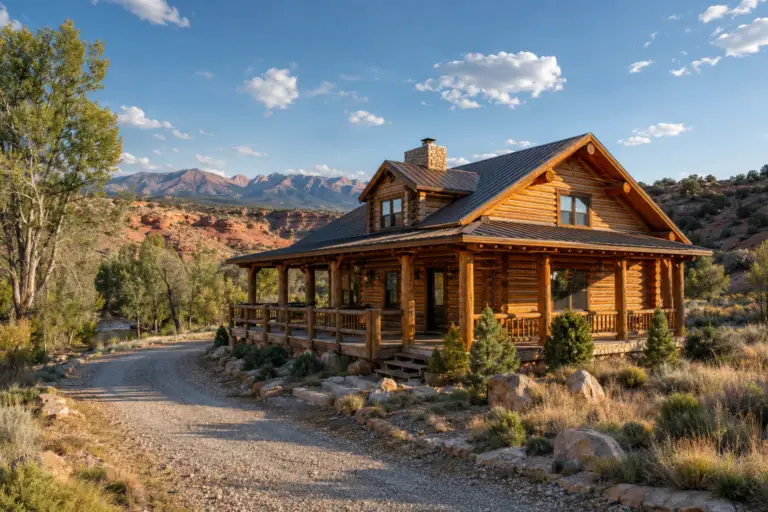








Pack Creek offers a setting that is hard to duplicate: red-rock views, open high-desert country, a creek corridor, and the La Sal Mountains close enough to shape the weather and the way homeowners care for their properties. A log home or cabin here can feel perfectly at home in the landscape, whether it is a hand-hewn retreat, a round-log home, a timber-frame cabin with log accents, or a ranch-style residence built to take in the views.
That setting also creates a demanding environment for exterior wood. Strong sun can fade and dry exposed walls. Wind carries dust and grit into corners, checks, and horizontal surfaces. Seasonal temperature changes move logs and sealants. Creekside shade, irrigation, snowmelt, and summer runoff can keep certain walls damp long after the rest of the home has dried. The result is that one side of a Pack Creek log home may look weathered and tired while another still appears to be in good condition.
Log home restoration in Pack Creek, UT should account for those differences. Rather than treating every wall, log course, and joint the same way, a careful restoration plan looks at the wood condition, the existing finish, moisture exposure, roof runoff, landscaping, and the home’s orientation to the sun. The goal is not simply to make the logs look better for a season. It is to protect the wood, preserve the home’s character, and help prevent minor finish or sealing issues from turning into more involved repairs.
For homeowners comparing options closer to town, our approach to log home restoration in Moab also applies many of the same high-desert principles. Pack Creek properties, however, often need added attention around drainage, shade patterns, mountain-influenced weather, and the way water moves across the site.
Why Pack Creek Log Homes Need Location-Specific Care
A log home is a natural building system. Wood responds to sunlight, temperature, humidity, and water exposure over time. That is true in every climate, but the combination of high-desert conditions and foothill influences around Pack Creek makes proactive maintenance especially important.
High-Desert Sun Can Wear Down Exterior Finishes
South- and west-facing log walls often carry the heaviest sun exposure. Over time, ultraviolet light can break down exterior stain and clear-coat systems, leaving the surface dull, faded, dry, or uneven in color. The finish may begin to lose its water-shedding ability before obvious peeling appears. When that happens, the logs can absorb more moisture during storms, snow events, irrigation overspray, or periods of shade.
Fading is not always just a cosmetic issue. A finish that no longer protects the surface can allow wood fibers to dry, lift, and weather. Homeowners may notice a rougher feel to the logs, small surface checks, gray areas, or a patchy appearance where sun exposure differs from one wall to another. A maintenance coat may be enough when the existing finish is still stable. Once the finish has failed across large sections of the house, more extensive surface preparation may be the better long-term solution.
Pack Creek homeowners should pay close attention to walls facing open terrain, driveways, south-facing patios, or wide views with little tree cover. These elevations often show early signs of sun wear first.
Seasonal Temperature Changes Stress Logs, and Sealants
Logs naturally expand and contract as weather conditions change. That movement can affect checks, fasteners, caulking, chinking, trim transitions, and seals around windows and doors. In a well-maintained home, this movement is expected and manageable. A home with aging sealants or neglected exterior finishes can create pathways for air, water, insects, and windblown debris.
Small openings around a log joint or window frame may not seem urgent at first. But repeated exposure to weather can allow those gaps to widen or hold moisture in areas that should dry quickly. Seasonal inspections help catch these issues before they become more visible or costly to address.
A practical inspection includes corners, log ends, roof-to-wall intersections, window and door transitions, deck attachments, and lower log courses near grade. These are common places where water and movement can work together against an otherwise sound exterior.
Creekside, Shaded, and Landscaped Areas Behave Differently
Pack Creek properties can have microclimates within the same lot. A broad, sunny wall may bake for much of the day, while a wall under mature trees, near a creek corridor, behind a deck, or beside irrigated landscaping may stay cooler and damp longer. That difference matters because wood that repeatedly gets wet and dries slowly needs a different level of attention than wood exposed primarily to sun and dust.
Homeowners should avoid assuming that an entire cabin needs the same treatment at the same time. One elevation may need cleaning and a maintenance application, while another may need failed finish removed, checks sealed, or localized wood repair. A restoration plan should follow the home’s condition rather than a generic schedule.
Common Signs Your Pack Creek Cabin May Need Restoration
Most log-home problems begin with subtle changes. The earlier those changes are identified, the more options a homeowner typically has. Waiting for widespread peeling, deep checking, or soft wood can turn a simpler maintenance project into a larger restoration effort.
Faded, Dry, or Unevenly Colored Logs
Exterior stain does not always fail dramatically. In many cases, the first signs are faded color, dry-looking wood, a rough surface, or a finish that no longer sheds water evenly. You may notice that one wall looks rich and protected while another appears pale, grayish, or blotchy. This is common in homes with strong sun exposure and varied shade patterns.
Uneven color can also develop after repeated spot repairs. Applying fresh stain over an aging or incompatible finish may create dark patches, uneven absorption, or a different sheen from one section to the next. In those cases, the best solution may be to prepare a larger area so the new finish can bond and appear more consistent.
Checking, Splits, and Open Log Ends
Checking is a natural part of how logs dry and age. A check is a crack that develops along the grain as the wood adjusts to changing conditions. Not every check requires repair, but some can collect water, debris, or insects. Checks that face upward, remain damp, or extend deeply into vulnerable areas deserve attention.
Log ends are another important detail. End grain can absorb moisture more readily than the face of a log, especially if it is exposed to weather or has been neglected over time. Darkened log ends, soft areas, deep cracks, or a worn finish can all indicate that targeted care is needed.
Proper check sealing and log-end treatment can help reduce repeated water entry while allowing the logs to continue moving naturally. The right approach depends on the size, placement, and condition of the opening.
Failed Caulking or Chinking
Caulking and chinking help close gaps between logs and around transitions where movement is expected. Over time, these materials can crack, pull away from the wood, lose adhesion, or become brittle. A failure may appear as a narrow opening, a visible edge separation, or a section that no longer sits tightly against the logs.
These gaps can affect comfort inside the home and create exterior maintenance concerns. Windblown dust, rain, pests, and moisture can work into open areas. Repairing sealant before the problem spreads helps maintain the performance of the entire wall system.
Soft Wood, Dark Staining, or Repeated Wet Spots
Dark stains do not automatically mean rot, and weathered wood does not always require replacement. Still, soft wood, repeated wetting, persistent dark areas, or a musty smell near exterior logs should be evaluated. These signs may point to a water-management issue rather than a finish issue alone.
Common causes include roof runoff that lands too close to the house, clogged gutters, missing or undersized downspout extensions, irrigation spray, soil or mulch held against logs, splashback from hard surfaces, and vegetation that keeps the wall from drying. A Pack Creek cabin with a shaded north wall, mature landscaping, or a low spot near the foundation may need localized repair and drainage corrections before refinishing work begins.
A Practical Log Home Restoration Process for Pack Creek Properties
Good restoration work begins with a clear diagnosis. The right process depends on whether the home needs a maintenance application, a full refinishing project, chinking and caulking work, log repair, or a combination of services. Skipping preparation to reach the stain faster can shorten the finish’s lifespan and leave underlying issues unresolved.
1. Assess the Wood, Finish, and Water Pathways
A thorough inspection looks beyond color. It should include the condition of the logs, existing stain, log ends, checks, caulking, chinking, window and door transitions, roof runoff, decks, gutters, and grade around the home. The inspection should also identify which walls receive the most sun, which areas stay shaded, and where water may repeatedly contact the wood.
This assessment helps determine whether the home needs light maintenance, deeper surface preparation, targeted repairs, or a more comprehensive restoration. It also helps avoid treating a water problem as though it were only a staining problem.
2. Prepare the Existing Surface Correctly
Surface preparation is one of the most important parts of log home refinishing. Depending on the existing coating and the condition of the wood, preparation may include cleaning, removing failed finish, sanding, controlled media preparation, or detailed hand work around trim and transitions. The goal is to create a sound, clean surface that is ready to accept a compatible finish.
Preparation also gives the restoration team a closer look at the wood beneath the old finish. Once weathered coatings, dust, and surface contamination are removed, issues such as deep checks, failed caulk, dark water staining, or deteriorated log ends are easier to identify and address.
Homeowners should be cautious about quick fixes that simply coat over peeling, chalky, or incompatible finishes. A new layer may briefly improve the appearance, but it may not solve adhesion problems beneath the surface.
3. Repair Vulnerable Logs and Seal Openings
Before staining begins, vulnerable areas should be addressed. This may include repairing localized damage, replacing deteriorated material where necessary, sealing checks that collect water, restoring caulking or chinking, and improving transitions around windows, doors, trim, and log ends.
The goal is preservation. Sound logs should be maintained whenever possible, and areas with genuine deterioration should be repaired to support the wall’s long-term performance. Cosmetic work should never hide active moisture concerns or failing wood.
4. Apply a Compatible Stain and Protective Finish
Once the logs are properly prepared and repaired, the finish system should match the home’s condition, exposure, and desired appearance. Stain color and opacity can affect how much ultraviolet protection the coating provides. Homes with intense sun exposure may benefit from a finish plan that prioritizes durability on the most exposed elevations while still maintaining a natural wood appearance.
The best finish schedule is not the same for every Pack Creek property. A home surrounded by shade and vegetation may age differently from a cabin on open ground with broad south-facing walls. Maintenance intervals are influenced by sun, moisture, wind, the condition of the existing finish, and the consistency of property inspections.
5. Build a Maintenance Schedule Around the Property
Log homes perform best when maintenance happens before visible failure spreads. A spring and fall inspection is a practical starting point for most homeowners. Spring is a good time to check for snowmelt effects, winter runoff, and sealant movement. Fall is a useful time to clear debris, review gutters and downspouts, and identify areas that should be addressed before colder weather arrives.
In summer, monitor high-exposure walls for fading, dry checks, dust accumulation, and areas where water no longer beads on the finish. After a strong storm, inspect roof runoff paths, lower log courses, decks, and corners where water may have collected. These habits can help a homeowner address small issues before they compromise larger sections of the exterior.
Nearby properties in Spanish Valley often face similar concerns with sun exposure, windblown debris, drainage, and varied shade patterns. The key is to inspect the conditions around the specific home rather than relying on a calendar alone.
Pack Creek Weather Challenges That Affect Log Homes
Pack Creek homes are exposed to a range of conditions throughout the year. Dry air and intense sun are part of the maintenance picture, but they are not the only concerns. Water moves quickly when storms arrive, snow and ice can affect roof runoff, and shaded areas may hold moisture longer than expected.
Intense Sun and Dry Air
High-desert sunshine can be hard on exterior finishes. It can dry out exposed wood, accelerate fading, and create noticeable differences between shaded and unshaded walls. South and west elevations often require closer monitoring because they may lose finish performance before the rest of the home.
Look for dullness, rough texture, fading around exposed corners, and areas that retain water rather than shed it. These can be early signs that the protective coating is nearing the end of its useful life.
Windblown Dust and Abrasion
Dust and fine grit can settle in log texture, window trim, deck joints, horizontal checks, and the base of exterior walls. Over time, buildup can make a finish appear dull and can hold moisture where water mixes with dirt and debris. Regular gentle cleaning helps homeowners see the actual condition of the finish rather than judging the exterior through a layer of dust.
Abrasive cleaning methods should be used carefully. Aggressive scrubbing or pressure washing can damage wood fibers, force water into joints, or strip finish unevenly. The cleaning method should suit the condition of the logs and the coating already in place.
Cold Weather, Snow, and Freeze-Thaw Cycles
Even in a dry climate, winter moisture can cause problems when it repeatedly reaches vulnerable areas. Snow held against lower logs, ice near roof edges, blocked gutters, and runoff that drains too close to the house can all increase the amount of time wood stays wet.
Homeowners should inspect where snow accumulates, where roof runoff lands, and whether downspouts direct water away from the home. Lower log courses, deck connections, and areas beneath roof valleys deserve particular attention because they can be exposed to concentrated water over time.
Summer Storms and Drainage
Summer storms can bring sudden rainfall and localized runoff. A log home’s finish system is important, but it cannot compensate for poor drainage, overflowing gutters, or landscaping that sends water toward the walls. Proper water management protects the foundation, lower logs, deck posts, and exterior finish.
Check that gutters are clear, downspouts discharge away from the house, grading directs water away from the foundation, and irrigation does not repeatedly wet the logs. Keep mulch, soil, firewood, and dense vegetation away from the exterior walls so air can move around the lower log courses.
Maintaining a Log Cabin Near the La Sal Mountains
Pack Creek sits close enough to the La Sal Mountains that the weather can feel different from the more exposed desert landscape nearer town. Properties may see cooler nights, greater seasonal changes, shaded areas, and more complex runoff patterns. A simple seasonal routine helps homeowners stay ahead of the most common maintenance issues.
Spring Maintenance Priorities
Spring is the time to inspect the effects of winter. Look for roof runoff damage, clogged gutters, loose caulking, wet areas near lower logs, and water pathways from snowmelt. Walk around the property after rain, when possible, to see where water naturally collects or flows toward the house.
It is also a good time to inspect chinking, window trim, doors, decks, and exposed log ends. Small issues can often be corrected before summer sun and storm activity put more stress on the exterior.
Summer Maintenance Priorities
During the hotter months, focus on sun-facing walls. Check for fading, dryness, surface checking, dusty buildup, and a finish that is no longer shedding water. Trim back vegetation that touches the home or blocks airflow. Review irrigation patterns to make sure sprinklers do not hit the logs, trim, or lower wall courses.
In a high-desert setting, regular observation is often more useful than waiting for a specific date on the calendar. A sunny wall can need attention well before a shaded elevation.
Fall Maintenance Priorities
Fall is a practical time to prepare for winter weather. Remove leaves and debris from gutters, roof valleys, deck areas, and drainage channels. Confirm that downspout extensions are secure and that water will move away from the home. Inspect sealants and finish condition while temperatures are still suitable for exterior work.
For homes influenced by foothill conditions, the same approach is useful for properties around La Sal, where exposure, elevation, and weather patterns can vary from one property to the next.
Winter Maintenance Priorities
In winter, watch for snow piling up against walls, ice buildup along roof edges, and water draining toward the foundation during warmer daytime periods. Do not allow snow, wet leaves, stacked firewood, or stored materials to remain pressed against the logs. The more freely the exterior can dry, the better the wood and finish can perform.
Choosing the Right Scope: Maintenance, Refinishing, or Full Restoration
Not every Pack Creek cabin needs a full restoration. The appropriate scope depends on the condition of the logs, the remaining performance of the finish, the condition of the sealants, and whether moisture has affected the wood. A careful evaluation helps homeowners invest in the work that is actually needed.
When a Maintenance Coat May Be Enough
A maintenance application may be appropriate when the existing finish remains stable, the color is generally consistent, water still sheds from the surface, and there is no widespread peeling or exposed weathered wood. Even then, the surface should be properly cleaned and evaluated before applying more product.
A maintenance plan is often the most cost-effective way to extend the life of a finish system. The key is applying it before the coating breaks down substantially.
When Stripping and Re-Staining May Be the Better Path
More extensive refinishing may be needed when the old coating is peeling, blotchy, heavily faded, incompatible with a new product, or uneven due to repeated patch repairs. In those cases, a reset can provide a more consistent appearance and a sounder base for the next protective finish.
Preparation is especially important when the home has multiple generations of stain or clear finish. Removing failed material and addressing the underlying wood can help prevent uneven absorption and premature adhesion issues.
When Log Repair Must Come First
Soft wood, persistent moisture, deep damaged checks, deteriorated log ends, failed chinking, or repeated water entry should be addressed before cosmetic refinishing. Stain is not a repair method. It should protect prepared, sound wood rather than cover an issue that continues underneath.
This is particularly important for cabins with shaded elevations, older roof drainage systems, or heavy weather exposure. Nearby rural properties in Old La Sal can face similar challenges where elevation, shade, snow, and drainage all influence how exterior wood ages.
What Pack Creek Homeowners Should Ask Before Hiring a Log Home Restoration Contractor
Choosing a contractor for a log home should involve more than selecting a stain color. The condition of the logs and the details around the home matter just as much as the final appearance. Homeowners should look for a contractor who evaluates the entire exterior system and explains the reasoning behind the recommended scope of work.
Ask whether the contractor will inspect moisture pathways, roof runoff, lower log courses, checks, log ends, caulking, chinking, and transitions around doors and windows. Ask how failed finish will be prepared or removed, which products are being proposed, and why those products fit the home’s exposure and existing coating condition.
It is also useful to ask how the surrounding areas will be protected during the work. Decks, stonework, windows, landscaping, metal roofing, and nearby structures should all be considered during preparation and finishing. A quality restoration plan should include cleanup, protection measures, and realistic guidance about future maintenance.
Pack Creek homes can be quite different from homes only a few miles away. A cabin near the creek, a house on open ground, and a property tucked into trees may all need different solutions. That same location-specific perspective is important for homeowners considering log home restoration in Castle Valley, where sun, wind, terrain, and drainage can also vary sharply by property.
Restore the Character of Your Pack Creek Log Home
A well-maintained log home belongs in the Pack Creek landscape. Strong sun, dry air, windblown dust, seasonal temperature changes, snowmelt, summer storms, and creekside moisture do not have to shorten the life of the exterior. They simply make proactive maintenance more important.
The best time to inspect a log home is before peeling stain, gray weathered wood, failed chinking, open checks, or soft spots become widespread. Regular evaluation of the finish, sealants, log ends, roof runoff, and drainage can help preserve the home’s appearance and protect the wood that gives it so much character.
Whether your Pack Creek property needs a maintenance coat, detailed caulking and chinking, log repair, full refinishing, or a complete restoration plan, scroll to the bottom of this page to connect with Pencil Log Pros and discuss the next steps for your log home or cabin.