
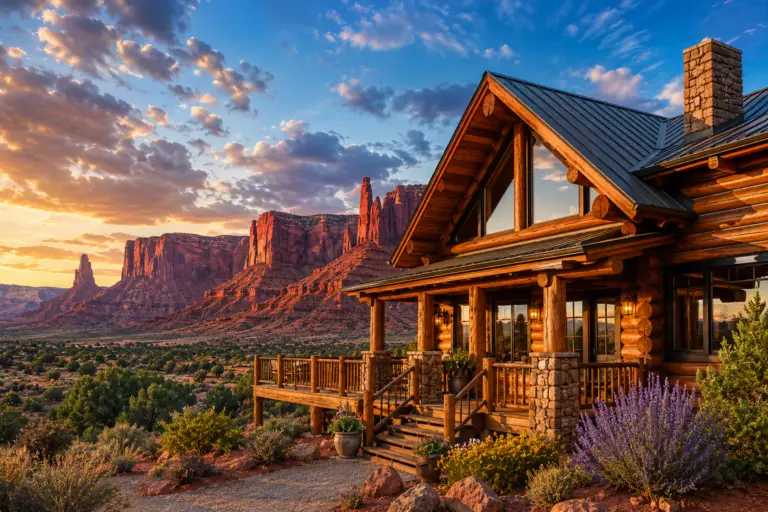








Castle Valley log homes sit in one of the most dramatic settings in eastern Utah. Red rock cliffs, open desert views, cottonwood-lined drainages, and the nearby La Sal Mountains all make the area feel rugged, quiet, and unmistakably local. But the same high-desert conditions that make Castle Valley beautiful can be hard on exterior wood. Dry air, intense sun, wind-blown dust, seasonal temperature swings, and short bursts of moisture all work against exposed logs over time.
That is why log home restoration in Castle Valley, UT should be approached differently than log care in a wet mountain valley or a shaded forest setting. A cabin in red rock country may not see constant rainfall, but it can still suffer from UV damage, dry checking, failed stain, dusty surfaces, brittle sealants, and water intrusion when storms roll through. Once the finish breaks down, the logs underneath can start aging quickly.
Pencil Log Pros helps homeowners understand what their log home needs before minor wear turns into expensive repair. Whether your Castle Valley property needs a maintenance coat, chinking repair, log replacement, stain removal, or a full log home restoration, the right plan starts with the local climate and the current condition of the wood.
Why Castle Valley Log Homes Need Localized Restoration
Castle Valley is not a generic cabin market. Log homes here are exposed to a combination of desert sun, dry air, dust, wind, and seasonal moisture that can create a very specific wear pattern. Many homes have wide-open exposure with limited shade. Others sit closer to foothill terrain, drainages, or rural roads where dust and weather can affect the structure in different ways.
In a place like Castle Valley, exterior wood can look fine from a distance while still losing protection. Stain may fade slowly until the logs appear dull, chalky, or gray. Horizontal checks may open on the upper side of logs. Chinking may pull loose as the home expands and contracts through dry summers and cold winter nights. Lower courses may collect splashback during storms or from irrigation overspray. These issues often start small, but they rarely fix themselves.
Log home restoration is about more than making a cabin look fresh again. It is about protecting the structure from the specific forces that wear it down in the local environment. In Castle Valley, that means paying close attention to sun exposure, surface preparation, stain choice, sealant performance, and water control around the home.
Sun Exposure on South and West Walls
The south and west walls of a Castle Valley log home usually take the hardest hit from the sun. Afternoon heat can be especially tough on stained logs, trim, decks, railings, and exposed corners. Over time, UV exposure breaks down the finish, dries the surface fibers, and causes color to fade unevenly. A wall that once had a warm, rich stain can turn pale, gray, orange, or patchy depending on the product used and the amount of exposure.
When the finish no longer sheds water or protects against UV, the log surface becomes more vulnerable. You may notice raised grain, small surface cracks, or a rough texture when you run your hand across the wood. That is often a sign the finish has worn thin and the logs need attention before deeper restoration becomes necessary.
Wind, Dust, and Abrasion
Castle Valley’s open desert setting can expose homes to plenty of wind and fine dust. Dust does not just make the house look dirty. It can settle into old stain, chinking joints, corners, window trim, and checks in the logs. When wind repeatedly pushes grit across a finished wall, it can act like a mild abrasive. Over time, that abrasion can dull the finish and make the surface harder to clean.
This is one reason proper washing and surface preparation are so important before restaining. Applying a fresh coat of stain over embedded dust, oxidized finish, or loose material can lead to poor adhesion and uneven appearance. A log home in a dusty desert climate needs a clean, sound surface before new protection is applied.
Seasonal Moisture Still Matters
Some homeowners assume that because Castle Valley is dry, moisture is not a major threat. That is a costly mistake. Dry climates can still create serious log problems when water hits unprotected wood. When rain comes hard and fast, it can drive water into checks, gaps, corners, and lower logs. Snow, roof runoff, and poor drainage can also create trouble spots around the base of the home.
Logs that are already dry, cracked, or unsealed can absorb storm moisture quickly. If that moisture gets trapped behind failed finish, old caulking, or damaged chinking, the wood may stay wet longer than expected. That is where staining, sealing, chinking, drainage, and routine inspections all work together.
Common Log Home Problems in Castle Valley, Utah
Most log home issues show visible warning signs before major damage occurs. The key is knowing what to look for. In Castle Valley, many problems are tied to sun exposure, dry movement, and short periods of moisture that find their way into vulnerable areas.
Faded or Gray Logs
Faded logs are one of the most common signs that a log home needs maintenance. Color change is not just cosmetic. When logs turn gray, the surface fibers are often exposed to UV damage. The longer the wood remains unprotected, the more prep work may be required before a new stain system can be applied.
If only one side of the home is fading, a maintenance coat may be enough in some cases. If several walls are gray, rough, blotchy, or peeling, the home may need more intensive cleaning, sanding, or media blasting. The right approach depends on the condition of the existing finish and how deeply the surface has weathered.
Cracked, Checked, or Weathered Log Faces
Checks are normal in log homes. Wood expands and contracts as moisture levels change, and cracks can open along the grain. In Castle Valley’s dry climate, checks may become more noticeable during long stretches of heat and low humidity. Not every check is a problem, but upward-facing checks can collect water and debris.
Large checks, deep cracks, or openings that direct water into the log should be inspected. Some may need cleaning and sealing. Others may simply need monitoring. The goal is to keep water from sitting inside the wood, especially on exposed walls or around corners where the finish has already failed.
Failed Chinking or Caulking
Chinking and caulking help seal the spaces between logs, around windows, at corners, and along other joints where air, water, dust, and insects may enter. Over time, these materials can crack, shrink, separate, or pull away from the logs. Dry air and temperature swings can make those failures more noticeable.
Failed chinking is not only an appearance issue. Open joints can allow wind-driven dust into the home. They can also let water reach areas that are difficult to see from the outside. Once chinking starts failing in one area, it is wise to inspect the rest of the home for similar movement.
Soft Lower Logs or Water-Stained Corners
Lower logs often tell the real story of a home’s maintenance history. If soil, gravel, decks, shrubs, or landscaping sit too close to the wall, moisture can stay against the wood. Irrigation overspray is another common issue in dry regions where homeowners use sprinklers around landscaping. Even occasional overspray can damage logs if it happens repeatedly.
Water-stained corners, dark lower courses, soft spots, and punky wood should be taken seriously. A small repair today may prevent a larger log replacement later. During restoration, these areas should be inspected closely before stain is applied, because stain will not solve decay or structural damage.
Dusty, Uneven, or Patchy Stain
A patchy finish often means the old stain has worn unevenly or was applied over inconsistent surface conditions. Some areas may still have heavy coating, while others may be bare wood. Dust, oxidation, old product buildup, and moisture stains can all affect how new stain penetrates.
Castle Valley homes with uneven stain usually need careful prep. A quick wash and recoat may work for a well-maintained cabin, but a neglected finish often needs more. The goal is to create a surface that accepts the new stain evenly and holds up under desert exposure.
Our Log Home Restoration Process for Castle Valley Properties
A good log home restoration plan begins with the actual condition of the home, not a one-size-fits-all checklist. Castle Valley properties can vary widely. A smaller cabin with deep roof overhangs may need light maintenance, while a larger home with full sun exposure may need a complete strip and refinish. Pencil Log Pros looks at the whole structure before recommending a path forward.
Step 1: Log Home Inspection
The process starts with a close inspection of the logs, corners, stain, chinking, trim, decks, railings, and moisture-prone areas. South- and west-facing walls usually get extra attention because they often wear first. Lower courses, log ends, window openings, and areas near roof runoff are also important.
An inspection helps separate cosmetic wear from deeper problems. Faded stain may only require maintenance. Soft wood, failed chinking, open checks, and water-stained log ends may call for repair before refinishing. This step helps the homeowner avoid spending money on surface work while hidden problems continue to grow.
Step 2: Cleaning and Surface Preparation
Surface preparation is one of the most important parts of log home restoration in Castle Valley. Dust, dirt, pollen, oxidized stain, and loose fibers must be removed before new stain or sealant is applied. Without proper prep, even a high-quality finish can fail early.
Cleaning methods depend on the condition of the logs and the existing coating. Some homes need a thorough wash and rinse. Others need more aggressive removal of old finish. The goal is always to prepare the wood without causing unnecessary damage.
Step 3: Media Blasting or Sanding When Needed
Some Castle Valley log homes need more than washing. If the finish is peeling, dark, blotchy, incompatible with new products, or deeply weathered, media blasting or sanding may be the best option. This removes failed coating and exposes sound wood so the new stain system can bond properly.
Media blasting can be especially useful when old coatings have built up over time or when logs have turned gray from long-term UV exposure. Sanding may be used for detail areas, spot corrections, or finishing work after blasting. The right method depends on the log species, finish type, surface condition, and desired final appearance.
Step 4: Log Repair and Replacement
Stain can protect wood, but it cannot repair damaged logs. If the inspection reveals soft spots, rot, insect damage, or deteriorated log ends, those areas should be addressed before refinishing. Repairs may include removing decayed wood, treating affected areas, replacing log sections, or rebuilding damaged corners.
In Castle Valley, lower logs and exposed corners often deserve close attention. Water may come from storm splashback, poor drainage, roof runoff, or landscaping. Once repairs are complete, the restored wood can be sealed and stained as part of the larger finish system.
Step 5: Chinking and Sealant Work
Chinking and sealant work helps close gaps and protect vulnerable joints. On some homes, only small repairs are needed. On others, old chinking may be cracked, loose, or failing across several elevations. Proper joint preparation matters because new material needs a clean, stable surface to bond correctly.
Good chinking work helps reduce drafts, dust intrusion, water entry, and pest access. It also improves the finished appearance of the home. For Castle Valley cabins, sealant flexibility is important because logs continue to move with seasonal changes.
Step 6: Staining and Protective Finish
The final stain system should fit both the home and the climate. Castle Valley’s desert sun calls for strong UV protection, proper penetration, and a finish that can be maintained before it fully fails. Color choice, transparency, product compatibility, and surface prep all affect the final result.
Many homeowners want to preserve the natural look of their logs while still protecting the wood. Others prefer a richer tone that helps even out older weathering. The best choice depends on the existing condition of the home, the level of exposure, and the owner’s maintenance goals.
Log Cabin Staining in Castle Valley’s Desert Climate
Log cabin staining in Castle Valley is not just about choosing a color. It is about choosing a system that can handle UV, dust, heat, and seasonal moisture. A stain that performs well in a shaded mountain setting may not be the best fit for a sun-exposed desert cabin.
Why Stain Choice Matters Here
Castle Valley homes often receive strong sunlight for long periods of the day. That exposure can break down weak finishes quickly. A stain system needs to protect the wood while allowing for future maintenance. If the product is too film-forming or incompatible with the existing coating, it may peel or trap moisture. If it offers too little UV protection, the logs may fade sooner than expected.
The best stain plan considers the home’s exposure, wood condition, previous coatings, and desired appearance. This is especially important for homes that have been stained multiple times over the years. Applying a new product without understanding the old product can create adhesion problems.
Transparent, Semi-Transparent, and Solid-Look Finishes
Transparent and semi-transparent stains show more of the wood grain, which many log homeowners prefer. They can create a natural look, but they may require more frequent maintenance in high-sun conditions. More opaque finishes can offer stronger color coverage and may help even out older weathering, but they change the look of the logs more noticeably.
There is no single right answer for every Castle Valley property. A well-preserved log home may look best with a transparent or semi-transparent system. A heavily weathered cabin may need a deeper tone or more coverage to achieve a consistent appearance. The goal is to balance beauty, protection, and future maintenance.
How Often Castle Valley Log Homes May Need Maintenance Coats
Maintenance timing depends on exposure, product type, prep quality, roof overhangs, elevation, and how much direct sun the home receives. A shaded wall may hold stain much longer than a west-facing wall that bakes in the afternoon. Homes with wide overhangs often perform better than homes with exposed log faces and little roof protection.
Rather than waiting for the finish to fail completely, homeowners should inspect their log home every year. If water no longer beads on the surface, if color looks dull, or if the logs feel dry and rough, it may be time to plan maintenance. A timely maintenance coat is usually easier and less expensive than a full restoration after years of neglect.
Log Chinking and Caulking for Castle Valley Homes
Chinking is both functional and visual. It helps seal the spaces between logs while giving the home a finished look. In dry climates, log movement can stress old chinking and caulking. As the wood expands and contracts, sealants may crack, separate, or lose flexibility.
Castle Valley’s wind and dust make tight joints especially important. Even small gaps can allow fine grit into the home. During storms, those same gaps can allow water to reach areas behind the exterior face of the logs. Repairing chinking early helps prevent bigger problems later.
Signs Your Chinking Needs Attention
Homeowners should look for cracks, gaps, missing sections, brittle texture, loose edges, and areas where chinking has pulled away from the logs. Water staining below joints can also indicate a problem. Around windows and doors, failed caulking may show up as drafts, dust trails, or visible separation between materials.
If chinking failure appears on one wall, it is worth checking the rest of the structure. The same sun, movement, and age that affected one area may be affecting others. A targeted repair may be enough, but widespread failure may require a more complete chinking plan.
Why Proper Joint Prep Is Critical
Chinking should not be applied over loose dirt, old failing material, or unstable surfaces. Proper prep may include removing loose chinking, cleaning the joint, installing backer material, and applying the new product at the correct depth and shape. This helps the material stretch and perform as the logs move.
In Castle Valley, dust control is especially important during prep. Clean joints allow better adhesion and a cleaner finished appearance. Careful chinking work helps the entire restoration last longer.
Local Homeowner Considerations in Castle Valley, UT
Every log home has its own exposure pattern. In Castle Valley, that pattern can change depending on where the home sits, how much shade it has, how the roof is designed, and how the property handles drainage. A cabin tucked near vegetation may have different concerns than a home sitting in wide-open sun.
Homes Near Open Desert Exposure
Homes with broad desert exposure often need more frequent finish inspections. Wind, dust, and sun can wear down the stain faster on the most exposed elevations. South- and west-facing walls should be watched closely, especially around log ends, railings, decks, and trim.
For these homes, maintenance planning is key. Waiting until every wall looks bad can make restoration more expensive. A smarter approach may be to maintain the harshest elevations before the finish fails completely.
Homes Closer to the La Sal Foothills
Properties closer to foothill terrain may experience slightly different weather patterns, including cooler temperatures, more shade, or more seasonal moisture depending on location. Homeowners comparing conditions around Castle Valley with nearby La Sal or Old La Sal often notice that elevation and exposure can change how a log home weathers.
A home that sees more moisture may need closer attention to lower logs, shaded walls, and areas where snow or runoff lingers. A home with more sun may need stronger focus on UV protection and maintenance coats. Localized evaluation matters.
Homes Along Scenic Rural Roads and Acreage Properties
Many Castle Valley-area properties are rural, spread out, or set along dusty access roads. That can mean more dust accumulation on logs, decks, porch posts, and railings. Detached guest cabins, shops, barns, and outbuildings may need attention too, especially if they were built with similar logs or timber details.
When restoring a rural property, it is often worth inspecting every log structure at the same time. A main home may look like the priority, but a smaller guest cabin or detached structure may be aging faster because it receives less maintenance.
Realistic Castle Valley Project Scenarios
No two log homes are the same, but realistic examples can help homeowners understand what different levels of restoration may involve. The following scenarios describe the types of work that could be needed in the Castle Valley area based on common log home conditions.
Full Restoration on a Sun-Faded Red Rock Country Cabin
A 20-year-old log home with faded south walls, rough gray wood, open checks, and patchy old stain would probably need more than a quick recoat. A full restoration could include washing, stain removal, sanding or media blasting, check sealing, chinking repairs, and a new stain system designed for strong sun exposure.
This kind of project is common when a home has gone too long between maintenance cycles. The finished result can be a major improvement, but the real value comes from restoring protection to the logs before deeper deterioration takes hold.
Maintenance Coat for a Well-Cared-For Cabin Near Moab
A newer or well-maintained cabin near the broader Moab area may not need a full restoration. If the stain is only lightly faded and the wood is still sound, the right approach could be washing, detail prep, minor sealant work, and a maintenance coat.
This is the ideal situation for many homeowners. By maintaining the finish before it fails, they can preserve the look of the cabin and avoid the cost of more aggressive prep later. The key is not waiting until bare wood is exposed.
Chinking Repair on a High-Exposure Valley Home
A home exposed to steady wind, dust, and temperature swings could develop chinking problems around corners, log joints, and window openings. If the chinking has pulled loose or cracked, the repair would likely involve removing failed sections, cleaning the joints, and applying new material properly.
In this situation, chinking repair may be paired with staining if the surrounding logs also need attention. Addressing both issues together can create a cleaner finish and better long-term protection.
Why Timely Log Home Maintenance Saves Money
Log home maintenance is almost always less expensive when it is done early. A faded finish can often be cleaned and renewed. Exposed gray wood may require sanding or blasting. Soft logs may require repair or replacement. The longer a homeowner waits, the more likely the project moves from maintenance into restoration or reconstruction.
In Castle Valley, the sun can make this timeline move quickly. Once the stain loses its protective qualities, exposed logs may dry, crack, and weather. Dust can settle into the surface. Water can enter checks during storms. Chinking can pull away as the logs move. Small issues begin to overlap.
Timely maintenance helps protect both the appearance and structure of the home. It also gives homeowners more control over the final look. When logs are maintained before they become heavily weathered, it is easier to preserve a natural wood tone. When the surface is deeply damaged, more corrective work may be needed to create an even finish.
How Castle Valley Compares to Nearby Utah Service Areas
Castle Valley shares some log home maintenance concerns with other communities around southeastern Utah, but its setting creates its own demands. The area is drier and more sun-exposed than many mountain communities, yet it can still see seasonal moisture, cold nights, and storm-driven water. That mix makes stain condition, sealant flexibility, and drainage especially important.
Homes around Spanish Valley often deal with similar dry-climate concerns near the Moab area, including dust, sun exposure, and the need for regular finish maintenance. Cabins closer to Pack Creek may sit in more of a mountain-desert transition zone, where shade, elevation, and moisture can change the restoration plan.
The main takeaway is simple: nearby does not always mean identical. A log home near Castle Valley may need a different maintenance schedule than a cabin higher in the La Sals or a home closer to town. Pencil Log Pros evaluates the actual exposure and condition of the home rather than assuming every property in the region needs the same treatment.
When to Schedule Log Home Restoration in Castle Valley
Scheduling log home restoration depends on weather, temperature, moisture, and the scope of work. In many desert and mountain-adjacent areas, spring and fall are popular times to plan exterior log work because temperatures may be more workable than peak summer heat. However, every project needs to be planned around current conditions and the products being used.
Homeowners should start the conversation before the home is in crisis. If the finish is already failing, waiting another season can expose the logs to more UV and moisture damage. A spring inspection may reveal work that should be scheduled before the strongest summer sun. A fall inspection may help prepare the home before winter weather and colder nights arrive.
Signs You Should Not Wait Another Season
There are several warning signs that should not be ignored. Gray logs, peeling stain, bare wood, black or dark water stains, soft spots, failed chinking, open upward-facing checks, and visible gaps around windows or doors all deserve attention. If water soaks into the logs instead of shedding off the surface, the finish may no longer be doing its job.
A homeowner does not need to diagnose every issue alone. The important step is recognizing when the home is showing signs of wear and getting a log-specific evaluation before the damage spreads.
What Homeowners Can Do Between Professional Maintenance Visits
Good log home care continues between professional restoration visits. Castle Valley homeowners can do several simple things to help protect their investment. Keep sprinklers and irrigation spray away from logs. Make sure soil, gravel, mulch, and vegetation do not sit against the lower courses. Watch how water drains during storms. Keep gutters and roof runoff directed away from the structure where applicable.
It also helps to walk around the home at least once a year and look closely at the most exposed walls. Check the south and west elevations first. Look for fading, rough texture, open cracks, loose chinking, dark stains, or areas where water appears to soak in. Pay attention to decks, railings, porch posts, and log ends because these areas often weather faster than protected wall sections.
Dust buildup should also be taken seriously. A dusty finish can hide early signs of failure. Gentle cleaning, when done correctly, can help maintain the appearance of the home and make inspections easier. Avoid harsh methods that damage the wood or force water into checks and joints.
Choosing a Log Home Restoration Contractor in Castle Valley
Log homes require specialized care. A contractor who paints conventional siding may not understand log movement, chinking systems, stain compatibility, media blasting, or log repair. Castle Valley homeowners should look for a restoration contractor who works specifically with log and timber structures.
The right contractor should be able to explain the condition of the existing finish, the recommended prep method, the type of stain system being used, and any repairs needed before staining. They should also understand why dry desert exposure changes the maintenance plan. A good recommendation should be practical, not rushed.
Questions to Ask Before Starting
Before starting a log home restoration project, homeowners should ask what kind of surface preparation is needed and why. They should ask whether the existing stain is compatible with the proposed product. They should ask how checks, gaps, and failed chinking will be handled. If soft logs or water stains are present, they should ask whether repairs are needed before refinishing.
It is also smart to ask about future maintenance. A quality restoration should not be treated as a one-time event with no follow-up plan. Castle Valley’s sun and dry air will continue to affect the home, so homeowners should understand how to inspect the finish and when to consider maintenance coats.
Protect Your Castle Valley Log Home From Desert Weather
A log home in Castle Valley is worth protecting. The setting is rugged and beautiful, but it asks a lot from exterior wood. Desert sun can fade stain. Wind can push dust into every joint and corner. Dry air can open checks. Storms can send water into gaps that were easy to overlook. With the right restoration plan, your home can keep its natural character while gaining the protection it needs for the local climate.
Whether your Castle Valley log home needs a full restoration, a careful maintenance coat, chinking repair, log repair, or an inspection before another season of desert sun, Pencil Log Pros can help you understand the next right step. Scroll to the bottom of the page to connect with Pencil Log Pros and start planning your Castle Valley log home restoration project.