
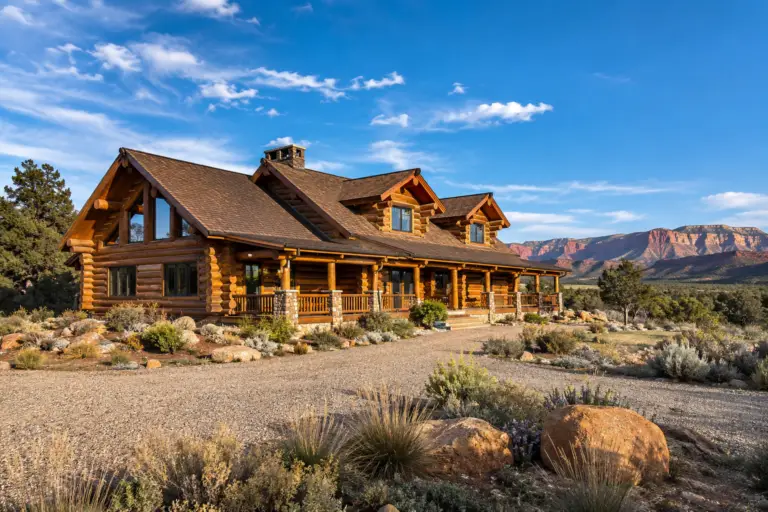








Owning a log home in Blanding means caring for a building that is constantly exposed to southeastern Utah’s high-desert environment. Strong sun, dry air, windblown dust, sudden temperature changes, winter freezes, and occasional heavy moisture events all affect exterior logs over time. A cabin can look solid from the driveway while its most exposed walls are already losing protection, developing open checks, or showing early signs of finish failure.
That is why log home restoration in Blanding, UT starts with more than choosing a new stain color. The condition of the existing finish, the direction each wall faces, roof runoff patterns, chinking, caulking, log ends, porch posts, and damaged wood all matter. A well-planned restoration helps protect the home’s character while addressing the small issues that can become expensive repairs when they are ignored.
Pencil Log Pros helps homeowners evaluate, restore, and maintain log homes, cabins, and timber-style properties throughout the Blanding area. Whether your exterior needs a detailed inspection, finish removal, wood repair, chinking, staining, or a long-term maintenance plan, the goal is the same: protect the logs before weather exposure turns into deeper deterioration.
Why Blanding Log Homes Need a Different Maintenance Plan
Blanding is not a damp mountain town, but that does not mean log homes here are free from weather-related problems. In fact, dry climates can create their own set of challenges. Long periods of direct sun can break down exterior coatings, dry exposed wood, and leave south- and west-facing walls looking faded long before shaded portions of the home show the same wear.
High-desert properties also experience broad seasonal changes. Summer heat can be intense, while winter temperatures can drop well below freezing. Wood naturally expands and contracts as moisture levels and temperatures change. That movement can gradually open small gaps in sealant lines, widen existing checks, and put stress on chinking or caulking around log joints, windows, doors, and transitions where different materials meet.
Sun Exposure Can Wear Down Exterior Finishes Quickly
On many Blanding properties, the south and west walls take the most punishment. These sides receive prolonged UV exposure, and a finish that once looked rich and even can eventually become dull, blotchy, chalky, or faded. Once a coating has thinned too far, the logs may begin to turn gray or show uneven color changes that are difficult to correct with a simple maintenance coat.
Homeowners often notice the problem when bare or dry-looking wood becomes visible in patches. By that point, the proper solution may require more than washing and staining. Failed coatings may need to be removed, loose surface fibers addressed, and damaged areas repaired before a new protective system can be applied.
Dry Air and Wood Movement Need Ongoing Attention
Logs are durable, but they are not static. Even well-built log homes move over time. In Blanding’s dry climate, checks and cracks can become more noticeable as wood loses moisture. Not every check is a structural concern, but deep cracks that collect water, dust, debris, or insects should be addressed. Horizontal checks on upper log surfaces and exposed log ends are especially important because they can hold moisture after rain or snow.
Annual inspections give homeowners a chance to identify open checks, failed sealants, loose chinking, and other minor maintenance needs before they worsen. The goal is not to eliminate every natural characteristic of the logs. It is to identify the places where weather, water, and air can enter the building envelope or vulnerable wood.
Wind, Dust, and Seasonal Moisture Find Weak Points
Windblown dust is part of life in the Four Corners region. Over time, dust can collect in log seams, checks, corners, and the lower areas of exterior walls. It can also mask the early signs of finish failure. When dust mixes with moisture, it can hold dampness against the wood longer than homeowners expect.
Rain and snow are less frequent than in many mountain communities, but localized moisture still matters. Roof valleys, gutters, splashback zones, deck connections, porch posts, window trim, and shaded wall sections can all develop trouble spots. A high-desert cabin may look dry overall, yet certain exterior areas are repeatedly exposed to water. Effective restoration identifies those patterns instead of treating every wall as though it has aged in the same way.
Log Home Restoration Services for Blanding, UT Properties
Every log home has its own history. Some Blanding cabins need routine cleaning and a maintenance coat. Others need full finish removal, localized wood replacement, new chinking, or a more involved restoration plan. The right scope depends on the existing coating, the home’s age, the condition of the logs, the property’s exposure, and whether previous work was completed using compatible products.
Log Home Inspection and Restoration Planning
A detailed inspection is the starting point for good restoration work. This includes checking the exterior finish, identifying sun-damaged elevations, looking for water staining, evaluating chinking and sealants, and examining log ends, lower wall sections, porch columns, trim, roof edges, and areas around windows and doors.
It also helps determine whether the existing finish can be maintained or has failed sufficiently to require more extensive preparation. A transparent stain that has simply faded may be handled differently from a peeling film-forming coating. An inspection helps create a realistic plan for the home rather than recommending the same process for every cabin.
Log Home Cleaning and Surface Preparation
Cleaning is often the first visible step in a restoration project, but it should never be treated as an afterthought. Exterior logs can collect dust, pollen, debris, old finish residue, and surface contaminants that interfere with adhesion. Proper preparation helps new stain and sealant perform more consistently.
The preparation method should fit the condition of the logs. Some homes benefit from careful washing and spot preparation. Others need deeper cleaning, sanding, or removal of failed coatings. The objective is to create a clean, sound surface without unnecessarily damaging the logs’ texture or character.
Log Sanding, Media Blasting, and Finish Removal
When a finish is peeling, flaking, heavily discolored, or unevenly layered from past maintenance attempts, a more complete reset may be the best path forward. Sanding, media blasting, and other finish-removal methods can help expose clean wood and create a more uniform surface for refinishing.
Not every Blanding cabin needs a full strip-back restoration. The appropriate method depends on the type of coating already on the home, the log profile, accessibility, repair needs, and desired appearance. A round-log home with heavy UV damage may require a different approach than a timber-frame cabin with log siding and isolated finish failure on a few exposed walls.
Log Home Staining and Protective Finishing
Staining is about more than changing the color of the wood. A quality stain system helps improve appearance while supporting the long-term protection of the logs. In Blanding, the finish should be selected with the home’s exposure in mind. Walls that receive strong afternoon sun may need more attention over time than protected north-facing elevations or covered porch areas.
Many homeowners want a finish that complements the region’s natural colors without making the cabin look too dark or artificial. Depending on the home and the owner’s goals, that may mean preserving a lighter natural tone, refreshing a warm, cedar-like appearance, or applying a richer color to bring more consistency to weathered logs. The best option depends on the condition of the wood, the amount of remaining stain, and how much ongoing maintenance the homeowner wants to plan for.
Log Repair, Wood Replacement, and Rot Correction
Wood damage should be addressed before a new stain is applied. Soft logs, deteriorated log ends, damaged trim, water-affected porch posts, and rot around roof runoff areas need a repair strategy that addresses both the damaged material and the underlying cause.
For example, replacing a damaged lower log without correcting splashback, failed flashing, missing drainage, or irrigation spray may only delay the next repair. Restoration should look at the full system: the wood, the water path, the finish, and the details that protect the structure from repeated exposure.
Chinking, Caulking, and Gap Sealing
Chinking and flexible sealants help close gaps between logs, around windows and doors, at corners, and in other transitions where air and moisture can enter. In a climate with both hot summers and cold winter nights, those details can affect comfort, efficiency, pest resistance, and the home’s exterior appearance.
Older chinking may crack, pull away, or lose adhesion over time. Caulking around trim and log joints can also fail as the building moves. Replacing compromised material helps maintain a more reliable weather barrier and keeps a small opening from becoming an entry point for water, drafts, dust, or insects.
Common Signs Your Blanding Cabin May Need Restoration
Many log home issues begin gradually. The first signs are often cosmetic, but cosmetic changes can signal that the protective finish is no longer doing its job. Watch for these common indicators that your Blanding log home may be ready for maintenance or restoration:
- Faded, chalky, dry-looking, or gray log walls.
- Peeling, flaking, blistering, or uneven exterior stain.
- Deep checks that hold debris, dirt, or moisture.
- Soft wood around log ends, lower wall sections, roof edges, windows, and deck connections.
- Gaps, cracks, or separation in chinking and caulking.
- Black staining, dark water tracks, or discoloration below rooflines.
- Visible daylight, drafts, or pest entry points around log joints.
- A cabin exterior that has not been inspected or maintained for several years.
One of the most common mistakes homeowners make is waiting for a large area of bare wood to appear before scheduling restoration. By then, the project may require more labor-intensive preparation than it would have needed earlier. A maintenance inspection can identify finish breakdown while there is still an opportunity to address the problem with focused cleaning, repairs, and protective coating work.
Protecting South- and West-Facing Log Walls in Blanding
Sun-exposed elevations deserve special attention on nearly every Blanding log home. South-facing walls receive strong sunlight for much of the day, while west-facing walls can take heavy afternoon exposure during the hottest part of summer. Those walls often fade first, especially where roof overhangs are limited, or the cabin sits on an open parcel without shade.
Look closely at these elevations at least once a year. Check for uneven color, dry wood, thin stain, open checks, and worn areas beneath windows or near log ends. Compare those walls with the home’s protected sides. If there is a large difference in color or surface condition, it may be time to plan maintenance before the exposed walls become significantly more weathered.
Simple property-care habits can also help. Keep gutters and downspouts functioning properly. Direct roof runoff away from the foundation and lower logs. Avoid allowing sprinklers or irrigation to repeatedly wet the exterior. Trim vegetation away from the home so air can move around the walls, and clear accumulated debris from log seams, porch corners, and areas beneath deck railings.
Homeowners who own cabins farther west often face similar sun-driven finish concerns. For comparison, see our log home restoration in Moab, UT page for more guidance on protecting exterior wood in southeastern Utah’s dry climate.
How Often Should a Log Home Be Refinished in Blanding?
There is no single calendar schedule that works for every log home. A cabin with deep roof overhangs, mature shade, a durable finish system, and regular maintenance may go longer between major restoration projects than a home exposed to full sun and wind on every side. The most important factor is the condition of the exterior, not simply the number of years since the last stain application.
South- and west-facing walls often need attention before other elevations. Log ends, upper gables, porch posts, and areas below rooflines can also age faster because of their exposure. Homeowners should plan for an annual visual inspection and take action when the finish begins to look thin, faded, dry, or uneven.
Early maintenance can often reduce the need for aggressive finish removal later. Once a coating has failed across large portions of the exterior, the project may require more extensive cleaning, sanding, blasting, and repair before a new stain can be applied. Staying ahead of wear is usually the most practical approach to preserving the home’s appearance and integrity.
Nearby communities can have similar seasonal patterns yet still exhibit different site conditions due to elevation, shade, and terrain. Learn more about regional considerations on our log home restoration in Monticello page.
What a Professional Log Home Restoration Process Looks Like
A successful restoration follows a sequence. Skipping steps may create a cleaner-looking exterior for a short time, but it can leave underlying problems untreated. A thorough process considers the condition of the logs, the existing finish, moisture pathways, and the homeowner’s long-term expectations for the property.
1. Evaluate the Logs and Existing Finish
The first step is understanding what is already on the wood and how it is performing. This includes looking for failed coatings, bare wood, heavy UV exposure, water staining, soft areas, open checks, loose chinking, and previous repairs. The evaluation should also identify whether certain elevations need more work than others.
2. Prepare the Exterior Correctly
Preparation may include cleaning, removing failed coatings, sanding rough areas, or using another appropriate method to create a sound surface. This step is essential because new finishes perform best when they are applied to properly prepared wood. Rushing surface preparation can lead to uneven appearance, poor adhesion, and a shorter maintenance cycle.
3. Repair and Seal Vulnerable Areas
Before refinishing, damaged wood and failed sealant should be addressed. That may include localized log repair, replacement of deteriorated material, chinking repairs, caulking, and sealing open checks where appropriate. The work should also account for roof runoff, splashback, deck intersections, and other moisture sources that could cause the same problem again.
4. Apply the Appropriate Stain and Protection System
Once the exterior is prepared and repaired, the stain and protective finish can be applied. Product selection should support the home’s condition and the desired appearance. A homeowner who wants a more natural finish may need a different maintenance plan than someone selecting a darker, more opaque color system.
5. Build a Practical Maintenance Plan
Restoration should not be viewed as the last time the exterior needs attention. Log homes benefit from routine observation and timely touch-ups. A practical maintenance plan helps homeowners monitor their most exposed walls, identify early signs of finish wear, maintain caulking and chinking, and reduce the likelihood of larger future repairs.
Log Home Styles and Properties We Can Help Restore Around Blanding
The Blanding area includes a wide range of rural and residential properties. Some are full-time homes, while others are second homes, family cabins, guest houses, retreat properties, or structures on larger acreage. Each can have different exposure conditions based on its orientation, elevation, nearby vegetation, and distance from the more protected terrain near the Abajo Mountains.
Pencil Log Pros can help evaluate and restore many types of wood exteriors, including full log homes, round-log cabins, hand-hewn structures, timber-frame cabins, log-sided homes, and properties with heavy timber accents. The approach should match the building. A hand-hewn cabin may need careful work to preserve its original texture, while a newer round-log home may need a more uniform finish, corrections, and updated chinking.
Properties closer to higher terrain or more exposed rural settings may face a different combination of weather conditions than homes located in town. That is why restoration planning should be based on the actual condition of the logs rather than assumptions about a neighborhood or zip code. For homeowners with cabins in the mountain-and-desert transition zones of southeastern Utah, our log home restoration in La Sal page offers additional regional context.
Planning Log Cabin Restoration Before Damage Spreads
Log home restoration is easier to manage when planned before damage becomes widespread. A faded wall may still be a maintenance issue. A gray wall with open checks, failed stain, and soft wood near a roof edge can become a more involved restoration project. The difference often comes down to timing.
Start by considering the most exposed parts of the home. Are the south and west walls much lighter than the others? Is there water staining beneath a roof valley? Are porch posts or lower logs receiving frequent splashback? Has the chinking pulled away near windows, corners, or log joints? These are the areas that should guide the restoration plan.
A Blanding cabin with heavily faded south walls, water staining below a roof edge, and open chinking would likely benefit from a full assessment before any new stain is applied. Depending on the condition of the logs, the work could involve cleaning, finish removal, localized wood repair, sealing, and a new protective finish. Applying stain over failing surfaces may hide the issue briefly, but it does not solve the underlying preparation or moisture problem.
For homeowners in nearby dry-climate communities, the same proactive approach applies. Visit our log home restoration in Spanish Valley page for more information about protecting cabins and wood exteriors in exposed southeastern Utah settings.
Why Blanding Homeowners Choose Pencil Log Pros
Log homes require a different approach than conventional siding. The exterior is both a structural material and a finished surface, so every decision matters. Cleaning methods, finish removal, repair techniques, chinking, caulking, stain selection, and moisture management all affect the home’s appearance and durability.
Pencil Log Pros takes a condition-based approach to restoration. Instead of treating every project as a quick stain application, the work begins with understanding the home’s needs. That allows homeowners to prioritize urgent repairs, make informed decisions about finish options, and build a maintenance plan that fits their property and budget.
The goal is to help preserve the character of your log home while giving the exterior a stronger foundation for future maintenance. Whether you own a small cabin, a full-time log home, or a larger rural property, the right restoration process can improve curb appeal, protect exposed wood, and help prevent minor weathering from turning into broader damage.
Homeowners across eastern Utah often share similar concerns about sun exposure, dry air, and weathered wood. You can also explore log home restoration in Green River for additional regional maintenance insights.
Schedule Log Home Restoration in Blanding, UT
Do not wait until your log walls are gray, soft, peeling, or visibly failing across the entire exterior. An early evaluation can help determine whether your Blanding property needs routine maintenance, targeted repairs, chinking work, finish removal, full refinishing, or a broader restoration plan.
Your log home is a major investment and a defining feature of your property. With the right preparation, repair work, and protective finish system, it can continue to look beautiful and withstand Blanding’s high-desert conditions for years to come.
Scroll to the bottom of this page to connect with Pencil Log Pros and discuss your Blanding log home, cabin, or high-desert property.