
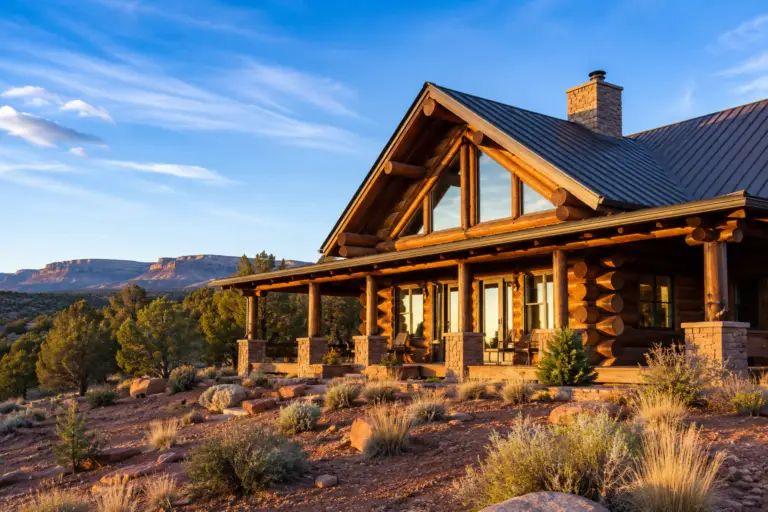








Log home restoration in Cortez, CO takes a different kind of planning than restoration work in wetter mountain towns or low-elevation neighborhoods with milder weather. Cortez sits in southwest Colorado’s high-desert country, where strong sun, dry air, wind, dust, winter cold, and seasonal snow all work on exterior logs year after year. A log home that looks solid from the road may still have faded stain, open checks, loose chinking, weathered corners, or lower logs that are starting to soften where water has been allowed to sit.
Pencil Log Pros helps Cortez-area homeowners protect, restore, and maintain log homes, cabins, ranch-style log houses, and vacation properties with a practical approach built around the condition of the wood. Some homes need a full restoration with cleaning or stripping, sanding, log repair, chinking, and a new stain system. Others only need maintenance coats, fresh sealant, or targeted repairs before the existing finish fails. The right answer depends on exposure, age, construction style, roof design, drainage, and how long the logs have gone without attention.
In Cortez, the biggest mistake is treating every log home the same. A shaded cabin tucked near piñon and juniper will weather differently than a wide-open ranch home with south- and west-facing walls exposed to full sun. A seasonal cabin near Mesa Verde country may have different issues than a year-round residence with decks, porches, and heavy daily use. Our goal is to help homeowners understand what their logs need now, what can wait, and what should be handled before small problems turn into expensive repairs.
Why Cortez Log Homes Need Climate-Specific Restoration
Cortez has a dry, sunny, high-desert climate. That sounds helpful for wood because dry air can reduce some moisture problems, but it also creates its own kind of wear. Logs can dry out, shrink, split, and lose stain protection faster when they are exposed to intense UV light and low humidity. Windblown dust can settle into the finish. Winter snow and freezing temperatures can still push moisture into checks, corners, and failed chinking. The result is a mix of dry-climate damage and seasonal weather stress.
A log home in this part of southwest Colorado needs a finish system that can handle sun exposure, temperature swings, and movement in the logs. It also needs sealants and chinking that stay flexible as the wood expands and contracts. A coating that might work reasonably well in a shaded, humid setting may not perform the same way on a Cortez home that gets full sun for most of the day.
Dry Air and Log Checking
Checking is common in log homes. As logs dry, they often develop cracks along the grain. Some checks are normal and do not automatically mean the log is failing. The concern comes when checks are deep, wide, upward-facing, or located where rain and snowmelt can collect. Even in a dry climate, water can sit in those openings long enough to create staining, decay, or hidden soft spots.
In Cortez, low humidity can make logs look dry, brittle, and rough when a finish has worn away. Once the outer wood fibers are exposed, the surface can gray, lift, and lose the ability to hold stain evenly. Before restaining, those damaged fibers often need to be cleaned, sanded, or removed so the new finish bonds to solid wood instead of weathered material.
Strong Sun Exposure on South and West Walls
Many Cortez homeowners first notice problems on the south and west sides of the home. These walls usually take the hardest sun, especially during long summer afternoons. Stain may fade unevenly. Logs may turn gray or blond. Clear coats may lose their water-shedding ability. In some cases, the finish looks acceptable on shaded walls but is badly worn on exposed elevations.
This is why a restoration plan should not be based only on the best-looking side of the house. A proper inspection looks at every wall, including corners, dormers, porch posts, rails, fascia transitions, and areas under roof overhangs. The sun-facing walls may need heavier prep or a different maintenance schedule than the protected sides.
Winter Snow, Freeze-Thaw, and Cold-Weather Stress
Cortez is known for dry weather, but winter still matters. Snow can sit on decks, along lower walls, against posts, and in open checks. When that moisture freezes and thaws, it can widen gaps, stress sealants, and push water deeper into vulnerable areas. If chinking or caulking has pulled loose, winter weather can also create drafts and allow dust, insects, or moisture to enter the home.
Good restoration work looks beyond the stain color. It asks where water travels, where snow sits, where shade slows drying, and where logs are most likely to stay damp after a storm. That kind of practical inspection is especially important in high-desert communities because homeowners may assume rot is unlikely simply because the climate is dry.
Common Log Home Problems Around Cortez
Log homes in the Cortez area can be sturdy and long-lasting, but they need consistent care. Most serious problems start small. A little stain failure turns into exposed wood. A small check starts holding water. A loose bead of caulking becomes a drafty joint. A lower log near splashback starts to soften. When caught early, many of these issues can be corrected without tearing into major sections of the home.
Faded or Patchy Log Stain
Faded stain is one of the most common reasons homeowners call for log home restoration in Cortez. The color may look washed out, uneven, or chalky. Some areas may still repel water, while others absorb moisture quickly. This patchy look is often a sign that the finish is no longer protecting the logs evenly.
Restaining over a failing finish without proper prep can lead to poor adhesion and uneven color. The surface has to be evaluated first. If the existing coating is still sound, a maintenance coat may be enough. If the finish has failed, the logs may need deeper cleaning, sanding, or stripping before new stain is applied.
Peeling Film-Forming Finishes
Some older log homes have finishes that form a heavy film over the wood. When these coatings begin to fail, they may peel, crack, or trap moisture underneath. That can create a frustrating cycle where the home looks freshly coated for a short time, then starts peeling again because the underlying issue was never corrected.
Many log homes do better with breathable stain systems designed for exterior logs. The goal is to protect the wood while allowing normal movement and moisture release. When a previous coating is incompatible with a new system, extra prep may be required before the home can be refinished correctly.
Failed Chinking and Caulking
Chinking and caulking are critical parts of a log home’s weather protection. In Cortez, dry summers and cold winters can cause logs to move enough that old sealants split, pull away, or harden. Gaps may appear between log courses, around windows, at butt joints, near corners, and where log walls meet trim or roof details.
Failed chinking is not just a cosmetic issue. It can let in drafts, dust, insects, and moisture. On a windy day, those gaps may be more noticeable. During winter, they can affect comfort inside the home. Restoration should include a careful look at every sealant joint, not just the obvious cracks.
Soft Logs, Rot Pockets, and Water Damage
Rot can still happen in a dry climate when water gets trapped. Common problem areas include lower log courses, porch posts, deck connections, corners, roof runoff zones, and areas where soil or vegetation sits too close to the wood. A log may look fine on the surface but feel soft when probed. Staining over soft wood will not solve the problem.
Good restoration work addresses the cause of the moisture first. That may mean improving drainage, trimming vegetation, adjusting splashback issues, repairing gutters, or sealing checks that collect water. Once the source is controlled, damaged wood can be repaired, stabilized, or replaced as needed.
Dust, Wind, and Surface Contamination
Wind and dust are part of life in southwest Colorado. Dust may not seem like a serious problem, but it can interfere with stain adhesion if logs are not cleaned properly before finishing. Pollen, dirt, old finish residue, and oxidized wood fibers can all prevent stain from penetrating evenly.
This is why prep work matters so much. The finished home is only as good as the surface underneath the stain. Rushing the cleaning and sanding stage can shorten the life of the restoration, especially on homes exposed to open country winds around Cortez.
Our Log Home Restoration Process in Cortez, Colorado
Every project starts with the same basic question: what does this specific home need? A newer cabin with minor fading may only need maintenance. An older home with gray logs, failed stain, and open checks may need a full restoration. Pencil Log Pros builds the plan around the home’s condition instead of forcing every property into the same process.
Inspection and Restoration Planning
The inspection looks at stain condition, log checking, chinking, caulking, moisture patterns, rot risk, and previous repair work. We pay close attention to sun-facing walls, lower logs, roof runoff areas, deck connections, and places where snow may sit against the structure. We also look at the type of coating already on the logs because that affects the prep method and stain options.
For homeowners, this stage is useful because it separates urgent issues from normal aging. Not every crack is an emergency. Not every faded wall needs stripping. At the same time, a small area of soft wood or failed sealant may need attention before it spreads.
Cleaning, Stripping, or Media Blasting
Some homes can be cleaned and lightly prepped before a maintenance coat. Others need old finish removed so the new stain can bond correctly. Depending on the coating and wood condition, this may involve washing, sanding, chemical stripping, or media blasting. The method should fit the home, the finish, and the desired result.
In Cortez, cleaning is especially important because dust and dry surface fibers can affect stain performance. The goal is not just to make the logs look better for a few weeks. The goal is to prepare the wood so the restoration lasts as long as possible under local weather conditions.
Sanding and Surface Prep
Sanding helps remove loose fibers, smooth rough areas, blend repairs, and create a better surface for stain. On sun-damaged walls, sanding can make a major difference in how evenly the new color absorbs. It can also reveal hidden defects that were covered by gray wood or old coatings.
Surface prep is one of the biggest differences between a quick stain job and a proper restoration. Logs need to be clean, dry, and ready to accept finish. If the wood is not prepared correctly, even a high-quality stain can fail early.
Log Repairs and Replacement Sections
When logs are damaged, the repair method depends on the severity and location. Small defects may be handled with compatible repair materials. Larger rot pockets may need dutchman repairs, partial log replacement, or more involved carpentry. The goal is to preserve as much sound wood as possible while removing or stabilizing areas that can no longer protect the home.
Lower log courses, exposed corners, and porch details deserve special attention. These areas often take splashback, snow contact, and roof runoff. Repairing the wood without fixing the water source usually leads to repeat damage, so drainage and exposure are part of the conversation.
Chinking and Sealant Work
Chinking and sealant help close gaps while allowing the log structure to move. In a climate like Cortez, flexibility matters. Logs can shrink during dry periods and move again as temperature and moisture levels change. Hard or brittle materials are more likely to crack or pull away.
Proper chinking work includes cleaning the joint, using suitable backing where needed, applying the material correctly, and shaping it for performance and appearance. The same care applies around windows, doors, trim, checks, and utility penetrations. Small gaps can become big comfort and maintenance problems when they are ignored.
Staining and Clear Coat Protection
The stain system is the home’s first line of defense against UV exposure and moisture. Cortez homes often benefit from stain choices that balance appearance with strong sun protection. Very light finishes may show the natural wood, but richer tones can often provide better UV resistance. The best choice depends on the homeowner’s goals, the log species, the existing color, and the amount of exposure.
Application conditions also matter. Dry weather is helpful, but extreme heat and direct sun can create problems during staining. A careful crew watches temperature, sun exposure, surface condition, and drying times so the finish has the best chance to perform.
Maintenance Planning
A restored log home still needs maintenance. In Cortez, the sun-facing walls may need attention before shaded walls. Homeowners should plan periodic inspections, especially after winter and before the strongest summer sun. Maintenance coats applied at the right time can help avoid the cost and disruption of a full strip and refinish later.
Log Cabin Staining in Cortez’s High-Desert Sun
Staining is one of the most important parts of log cabin maintenance in Cortez. Stain does more than change the color of the wood. It protects against UV damage, helps shed moisture, and slows the breakdown of exterior fibers. When stain fails, the logs begin taking direct weather exposure.
Many homeowners wait until the logs look gray before calling for help. By that point, the surface may already need more aggressive prep. A better approach is to watch for early signs of finish wear: dull color, dry texture, water soaking in instead of beading, open checks, or uneven fading on exposed walls.
Why Stain Fails Faster on Exposed Walls
South and west walls usually age faster because they receive more intense sunlight. Wind can add abrasion, and dust can settle into the surface. If a wall has little roof overhang, it may also take more rain, snow, and runoff. Over time, the finish loses its ability to protect the logs.
This uneven weathering is why a log home may not need the same amount of work on every wall. One side may need full prep and restaining while another only needs washing and a maintenance coat. A good restoration plan looks at the whole structure and prioritizes the areas that need the most protection.
Choosing the Right Stain Tone and Finish
Color choice should be more than personal preference. The tone, transparency, and finish type can all affect performance. In sunny climates, homeowners often choose colors that provide enough pigment to help block UV rays while still showing the character of the logs. A finish that looks beautiful but offers too little protection may not be the best fit for an exposed Cortez property.
The existing stain also matters. Not every product can be applied over every previous coating. Before choosing a new stain, the old finish needs to be identified as closely as possible. This helps avoid compatibility problems and early failure.
How Often Cortez Log Homes May Need Maintenance Coats
There is no single maintenance schedule that fits every log home. A shaded home with deep overhangs may hold its finish longer than a fully exposed home on open ground. South- and west-facing walls may need attention sooner than north-facing walls. Porch rails, posts, and deck-adjacent logs may weather faster because they take more direct exposure and physical wear.
The best schedule comes from inspection. If water no longer beads, color is fading, or the surface feels dry and rough, it may be time for maintenance. Handling it early can help prevent a larger restoration project.
Chinking and Caulking for Cortez Log Homes
Chinking and caulking are easy to overlook until they fail. On a log home, these materials help seal the building envelope while still allowing movement. In Cortez, where dry air and temperature swings can stress joints, flexible sealant work is an important part of long-term maintenance.
Older log homes may have chinking that is cracked, loose, or missing in sections. Newer homes may have caulking that has pulled away around windows, doors, corners, or checks. Either situation can allow air and moisture into places where they do not belong.
Where Gaps Usually Appear
Common gap locations include between log courses, at log ends, near corner notches, around window and door trim, along roof transitions, and around utility penetrations. Checks in individual logs may also need attention if they face upward or create a path for water.
Gaps are not always obvious from the ground. A wall may look tight until you inspect it closely. During restoration, each elevation should be checked carefully so sealant work is handled before stain or finish coats are completed.
Why Flexible Materials Matter
Logs move. They expand, contract, settle, and respond to changes in moisture and temperature. Sealants need to move with them. Materials that become hard and brittle are more likely to crack, which puts the home right back at risk for drafts and water entry.
Modern chinking and log home sealants are designed to stretch and maintain adhesion when properly applied. The preparation behind the sealant is just as important as the product itself. Dirty joints, wet wood, or poor backing can shorten the life of the repair.
Comfort, Dust Control, and Pest Prevention
Good chinking can improve comfort by reducing drafts and air leaks. It can also help keep dust and insects from entering through gaps. In a dry, windy area like Cortez, dust control is a real benefit. While no sealant system replaces good home maintenance, properly sealed joints make the home easier to live in and easier to protect.
Log Repair and Rot Prevention in a Dry Climate
Some homeowners are surprised to find rot in a dry region. The issue is not always how much precipitation falls. It is often how long water stays against the wood. A poorly drained deck connection, a leaking gutter, a shaded corner, or soil piled too close to the logs can create damp conditions even in a climate known for sunshine.
Rot prevention starts with water management. Logs need airflow. Lower courses need clearance. Rooflines need to shed water away from the walls. Decks and porches should not trap moisture against the structure. When those details are right, stain and sealant have a much better chance of doing their job.
Places Water Still Causes Problems
Lower logs are one of the first places to inspect. If sprinklers hit the wall, soil sits too high, or snow piles up against the home, the lower courses may stay damp longer than they should. Corners can also be vulnerable because log ends absorb moisture more readily than the face of the log.
Porch posts, railings, stairs, and deck connections see heavy exposure. These areas often have horizontal surfaces where water can sit. They may need more frequent maintenance than vertical wall logs.
Repair Before Stain
Stain should not be used to hide damage. If a log is soft, punky, or holding moisture, the issue needs to be addressed first. Applying stain over damaged wood may improve appearance temporarily, but it does not restore structural integrity or stop decay.
During restoration, damaged areas should be opened, evaluated, repaired, and allowed to dry as needed before finishing. This approach takes more care up front, but it helps protect the investment homeowners are making in the restoration.
Preventing Future Damage
Prevention often comes down to simple habits. Keep vegetation trimmed back from the walls. Maintain gutters and downspouts where they exist. Avoid letting sprinklers hit logs. Keep soil, mulch, and stored materials away from lower courses. Watch places where snow slides off the roof and lands against the structure.
These steps do not replace professional maintenance, but they can extend the life of the finish and reduce the chance of rot developing between inspections.
Cortez-Area Homeowner Scenarios
Every log home has its own history. Age, design, exposure, maintenance habits, and previous coatings all affect the restoration plan. The following examples are hypothetical, but they reflect the kinds of practical situations Cortez-area homeowners may face.
Full Restoration Outside Cortez
A 20-year-old log home outside Cortez with gray south-facing walls, open upward checks, and faded stain would probably need more than a quick maintenance coat. The likely plan would include cleaning or stripping, sanding weathered surfaces, sealing checks, repairing any soft areas, refreshing chinking, and applying a stain system suited for strong sun exposure.
If the shaded walls were still in better shape, the prep might vary by elevation. The goal would be to restore protection without doing unnecessary work where the existing finish is still sound.
Seasonal Cabin Near Mesa Verde Country
A smaller seasonal cabin near Mesa Verde country might only need a maintenance wash, touch-up staining, and fresh caulking around windows if the existing finish is still performing. If the cabin sits empty part of the year, the inspection should also look for pest entry points, loose sealant, and water stains that may have gone unnoticed between visits.
Seasonal properties can be easy to overlook because problems develop slowly while no one is there. A regular maintenance plan helps keep small issues from becoming surprises.
Ranch-Style Log Home With Lower-Course Wear
A ranch-style log home with splashback along the lower logs would likely need drainage corrections before finish work. If the lower courses are stained, soft, or darker than the rest of the wall, the restoration plan might include spot repairs, improved clearance, sealing, and protective staining after the wood is clean and dry.
This kind of problem is common when landscaping, grade, or roof runoff directs water toward the logs. Fixing the finish without correcting the moisture pattern would probably lead to the same damage returning.
Why Local Conditions Matter More Than a Generic Restoration Plan
Cortez is not the same as a higher alpine town with deep snowpack, and it is not the same as a humid region where moisture stays in the air for long periods. Local restoration planning needs to account for dry air, intense sun, wind, dust, and seasonal freeze-thaw. The best approach protects against UV exposure while still paying close attention to places where water can collect.
Homeowners comparing conditions across southwest Colorado may also want to look at how log homes weather in nearby Dolores, CO and Durango, CO, where elevation, tree cover, drainage, and snow patterns can vary from property to property. A home near Cortez may need a different maintenance rhythm than a cabin tucked in a cooler, more shaded setting.
The same principle applies across the Four Corners region. A property toward Dove Creek, CO may face open wind and sun exposure, while cabins farther west near Blanding, UT or Monticello, UT may have their own mix of high-desert weather, elevation, and seasonal moisture. The restoration plan should match the site, not just the ZIP code.
Maintaining a Log Home in Cortez Between Restorations
A full restoration can bring a weathered log home back to life, but maintenance is what keeps it protected. Cortez homeowners should think of log care as an ongoing cycle rather than a one-time project. A few simple checks each year can help catch problems before they spread.
Walk the Home After Winter
Spring is a good time to walk around the home and look for winter damage. Check for open checks, loose chinking, peeling stain, dark water marks, and areas where snow sat against the logs. Pay close attention to lower walls, deck connections, and corners.
Look at the home slowly from all sides. The most weathered wall may not be the one you see from the driveway. South- and west-facing elevations often tell the clearest story about finish condition.
Watch the South and West Walls
These walls usually need the most attention in Cortez. Look for fading, dry texture, rough wood fibers, and areas where water soaks in quickly. If the finish is wearing thin, a maintenance coat may be able to extend protection before deeper prep is required.
Waiting until the logs are gray and bare usually means more work. Early maintenance is often less disruptive and more cost-effective than full restoration after failure.
Keep Logs Clear of Soil and Vegetation
Logs need room to dry. Soil, mulch, shrubs, firewood, and stored items should not sit against the wall. Vegetation can trap moisture and limit airflow. It can also hide damage until it becomes more serious.
Good clearance around the home also makes inspection easier. When lower logs are visible, homeowners can spot splashback, staining, insect activity, and finish wear sooner.
Address Small Problems Early
Small checks, minor caulking gaps, and early stain wear are easier to handle than widespread coating failure or rot. If something looks different from the rest of the wall, it is worth looking at closely. A small repair at the right time can prevent a larger project later.
When to Schedule Log Home Restoration in Cortez
Timing matters for log home restoration. The wood needs to be dry enough for prep and finishing, and weather conditions need to support proper application. In Cortez, spring, summer, and early fall can all offer good restoration windows depending on the project and current conditions.
Spring Inspections
Spring is useful for finding damage caused or revealed by winter. Snowmelt, freeze-thaw, and cold-weather movement can expose weak spots in chinking, caulking, and stain. Scheduling an inspection in spring gives homeowners time to plan repairs before peak summer sun does more damage.
Summer and Early Fall Staining Windows
Warm, dry weather can be helpful for staining, but extreme heat and direct sun are not always ideal during application. Crews may need to work around sun exposure, surface temperatures, and drying times. Early fall can also be a good window if temperatures remain suitable and the home is dry.
The key is not just picking a season. It is choosing conditions that allow the prep, repair, and finish work to be done correctly.
Before Buying or Selling a Log Home
Log home restoration is also worth considering before a sale or purchase. Sellers may want to correct visible wear before listing. Buyers may want to understand whether faded logs are mostly cosmetic or whether there are deeper concerns like failed chinking, water damage, or rot.
A log home can be a great investment, but it should be evaluated differently than a conventional home. The exterior logs are both structure and finish, which makes maintenance history especially important.
Choosing Pencil Log Pros for Cortez Log Home Restoration
Pencil Log Pros focuses on practical, condition-based restoration for log homes and cabins. We look at the logs, the existing finish, the exposure, the sealant joints, and the areas where moisture or sun has done the most damage. Then we build a plan that makes sense for the home.
That may mean a full restoration with stripping, sanding, repairs, chinking, and staining. It may mean targeted repairs and maintenance coats. It may mean dealing with lower-course damage before refinishing the rest of the wall. The goal is always to protect the home, improve appearance, and help the homeowner avoid preventable damage.
For Cortez homeowners, local climate awareness matters. Strong sun, dry air, dust, wind, and winter weather all affect how logs age. A good restoration plan accounts for those conditions from the start instead of simply applying stain and hoping it holds.
Ready to Restore Your Cortez Log Home?
If your Cortez log home is faded, cracked, drafty, dry-looking, or overdue for maintenance, it may be time to take a closer look at the logs. The right restoration plan can improve curb appeal, protect the wood, seal problem areas, and help your home stand up to southwest Colorado weather.
Whether your property needs full log home restoration, log cabin staining, chinking, caulking, log repair, or a maintenance plan, Pencil Log Pros can help you understand the next best step. Scroll to the bottom of the page and connect with Pencil Log Pros to talk about your Cortez log home, what you are seeing now, and what should be handled before the next season of sun, wind, snow, and dry high-desert weather.