
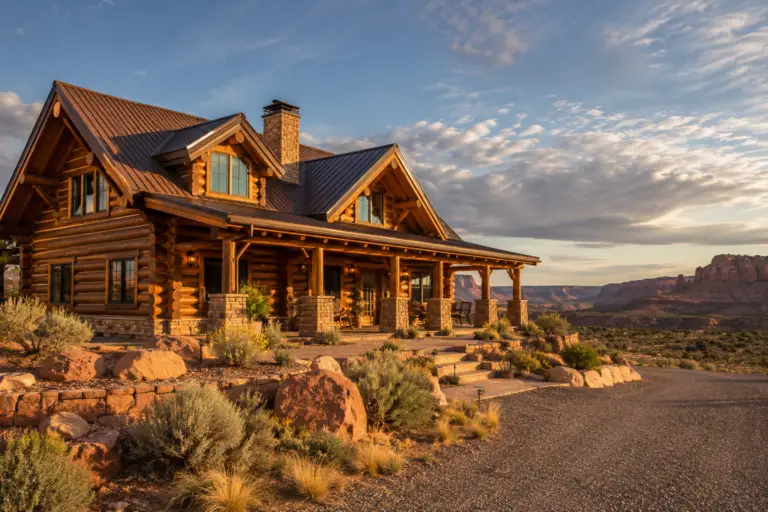








Owning a log home in Green River means protecting natural wood in a climate that can be hard on exterior finishes. The area’s high-desert setting brings long stretches of direct sun, dry air, windblown dust, sharp temperature changes, and occasional storms that test every part of a log home’s exterior. A cabin can look solid from the driveway while its south-facing walls, window details, sealant joints, or lower log courses are already showing early signs of wear.
That is why log home maintenance in Green River is not simply about keeping the stain looking fresh. It is about protecting the wood itself, keeping water out of vulnerable areas, maintaining flexible seals around joints and checks, and addressing damage before it turns into a larger restoration project. When log homes are maintained on a practical schedule, owners can often avoid more extensive stripping, repair, or replacement work later.
Green River properties range from full-time homes to second homes, remote cabins, and recreation-oriented places used throughout the year. Some sit in open, exposed areas where wind and sun work on the same elevations every day. Others have porches, landscaping, mature trees, or nearby rock formations that create a mix of intense exposure and shaded areas. Each setting changes how exterior logs age. A wall that receives hard afternoon sun may fade and dry out quickly, while a shaded side of the home may hold dirt, moisture, or staining longer after a storm.
Pencil Log Pros helps homeowners evaluate what their log home actually needs, whether that means a maintenance coat, a full refinishing process, targeted log repair, chinking work, cleaning, or a more complete restoration plan. The goal is not to over-treat every surface. The goal is to identify the areas where Green River weather, sun exposure, drainage, and wood movement are putting the home at risk.
Why Green River Log Homes Need a Different Maintenance Plan
Green River is not a wet mountain town where rain and snow are the only major threats to a cabin exterior. Here, the high-desert climate creates a different pattern of wear. Log homes still need moisture control, but homeowners also need to consider UV exposure, dry-wood movement, dust, wind, and how sudden weather changes affect exterior coatings and sealants.
Intense Sun Can Wear Down Log-Home Finishes
Sunlight is one of the biggest long-term maintenance concerns for a Green River log home. Exterior stain and clear-coat systems are designed to protect the logs, but prolonged UV exposure gradually breaks down that protection. The most exposed walls often begin to lose color first. South- and west-facing elevations may fade faster, look dry or washed out, and show more visible finish wear than shaded walls.
Homeowners often notice the problem when the cabin no longer has an even color. One side may still look rich and protected, while the other looks pale, grayish, or dull. In other cases, the finish may begin to feel chalky, flaky, or dry to the touch. The wood grain can become more pronounced, and small cracks may stand out more than they did when the finish was intact.
Dry-looking logs do not always mean the entire home needs to be stripped immediately. Sometimes a maintenance coat can restore protection if the existing finish is still sound and properly prepared. But when a coating is peeling, failing unevenly, or no longer bonded to the wood, simply adding more stain over the top can create a short-lived fix with inconsistent results.
Dry Air and Temperature Swings Can Lead to Wood Checking
Logs naturally expand and contract as temperatures and moisture levels change. In a dry, sunny climate, that movement can lead to checking: the long cracks that form as wood dries and relieves internal stress. Some checking is normal and does not automatically mean the home has a structural problem. The concern is whether a check is collecting water, debris, insects, or windblown dust, especially when it faces upward or sits in a place where water can remain after a storm.
A deep check can become a maintenance issue when it gives moisture a path into the log. Even in a dry region, short periods of rain or snow can matter when water enters a crack and remains trapped. Over time, that can contribute to staining, softening, decay, or finish failure around the affected area. Professional evaluation helps determine which checks need treatment and which can remain as natural surface characteristics of the wood.
Wind and Dust Add to Exterior Wear
Open-country wind can carry fine dust and grit against exterior walls, decks, trim, and window areas. This buildup can make a finish look dull, especially around lower log courses, porch posts, entryways, and horizontal surfaces. It can also settle into gaps where chinking, caulking, or sealant has begun to pull away.
Cleaning matters, but the method matters just as much. High-pressure washing can damage wood fibers, force water into joints, and create a rough surface that holds dirt more easily afterward. A proper log-home cleaning process should account for the existing finish, the wood’s age, the level of surface contamination, and whether the home is being cleaned as part of a larger refinishing project.
For homeowners with properties across southeastern Utah, similar high-sun conditions can affect finishes in nearby desert communities as well. The maintenance priorities for a cabin in log home restoration in Moab territory may overlap with Green River concerns, especially when the property receives heavy sun exposure and windblown grit.
Common Log Home Problems Green River Homeowners Should Watch For
Log-home problems do not always begin with an obvious leak or a large damaged area. More often, they start as small changes in the finish, sealant, or wood surface. Regular inspections help homeowners find those changes before they spread.
Faded, Dry, or Peeling Stain
Fading is common on exposed exterior walls, but not all fading is the same. A finish that has only begun to lose some of its richness may still be a good candidate for maintenance work. A finish that is peeling, blistering, flaking, or separating from the wood usually needs more thorough preparation before a new protective system can be applied.
One practical way to inspect a log home is to compare areas under deep eaves with areas that receive direct sun. If the protected section still has strong color and the exposed wall looks significantly lighter, the finish may be nearing the end of its useful life. Another sign is uneven absorption. When rain or washing causes certain logs to darken quickly while others repel water, the coating may be wearing inconsistently.
Spot-staining can help in limited situations, but it can also produce visible color differences when the existing finish is faded unevenly. Before attempting touch-ups, homeowners should consider whether the issue is isolated or signals a broader finish breakdown across an entire elevation.
Water Intrusion Around Openings and Rooflines
Low annual rainfall does not eliminate water-related problems. In fact, homes in dry climates can develop hidden water issues because they are not exposed to frequent rain that would reveal them early. A short storm can send water into poorly flashed windows, failed caulk lines, roof-to-wall transitions, deck attachments, and lower walls near splash zones.
Inspect around windows, doors, porch roofs, chimneys, utility penetrations, and roof valleys. Look for darkened wood, stained log ends, cracking caulk, swollen trim, or finish that has lifted away from the wood. Also, pay attention to where downspouts discharge. Water that repeatedly hits one section of the exterior wall can create localized finish failure and eventually damage the logs underneath.
A hypothetical Green River cabin with dark staining below a roof runoff point would likely need more than a quick touch-up. The drainage issue should be corrected first, then the affected logs should be inspected for softened wood, finish failure, and possible repair needs before refinishing begins.
Failed Chinking, Caulking, or Sealant
Chinking and flexible sealants help control air movement, dust entry, insects, and moisture at log joints and transition points. Over time, these materials can crack, shrink, lose adhesion, or pull away from the log surfaces. In Green River, heat, sun exposure, and wood movement can make this more noticeable on exposed walls.
Homeowners may first notice a problem as a visible gap between logs, a draft near an exterior wall, fine dust entering the interior, or a separation line around windows and doors. Failed sealants can also allow water to get behind trim or into the joint area, where it may be harder to see until staining or wood damage becomes visible.
Not every crack in chinking requires full replacement. Sometimes a localized repair is enough. The right approach depends on the condition of the surrounding material, the movement of the logs, the depth of the gap, and whether the existing product is still compatible with the repair system.
Soft Wood, Rot, or Insect Damage
Wood decay in Green River is often tied to localized moisture problems rather than constant wet conditions. A shaded lower wall, a leaking roof detail, irrigation overspray, trapped debris, or a deck connection that holds water can all create the conditions that lead to soft wood and rot.
During an inspection, pay close attention to lower log courses, wall sections behind shrubs, areas near concrete or decking, roof runoff zones, and places where logs meet trim or structural attachments. Press gently on suspicious areas with a tool rather than relying on appearance alone. Soft spots, crumbling wood fibers, deep dark stains, or recurring finish failure may indicate that the wood needs closer evaluation.
It is important not to assume that every dark spot is rot. Some discoloration comes from dirt, old coatings, tannin bleed, or water staining. A skilled log-home restoration contractor should be able to distinguish surface issues from areas that may require repair or partial log replacement.
Dark Stains, Surface Growth, and Dirt Buildup
Although Green River is dry much of the year, shaded areas can still develop dark staining or surface growth when moisture lingers. This can happen below leaking gutters, along north-facing walls, behind stored materials, near landscaping, or where runoff repeatedly reaches the same area.
Dirt buildup can resemble biological staining, especially when dust mixes with old finish residue. The solution should match the cause. Some surfaces need controlled cleaning. Others need finish removal, wood brightening, repairs, or improved drainage before any coating is applied. Treating the symptom without addressing the source can cause the issue to return quickly.
Professional Log Home Restoration Services for Green River, UT
Log-home restoration is a sequence of related tasks, not just a fresh coat of stain. The best results come from evaluating the home as a system: the wood, existing finish, joints, drainage, trim, roof details, and exposure patterns all work together.
Log Home Inspection and Restoration Planning
A thorough inspection gives homeowners a practical starting point. It should include the condition of the stain, the integrity of the logs, the depth and placement of checks, the condition of chinking and caulking, any visible soft wood, roof drainage details, window and door transitions, decks, railings, and the most exposed elevations.
This inspection helps separate maintenance needs from restoration needs. A home with an intact finish and a few worn areas may need cleaning, minor sealing, and a maintenance coat. A home with peeling stain, widespread fading, deep checks, failed chinking, and localized rot may need a more complete restoration sequence that includes stripping or media blasting, repairs, sanding, sealing, and refinishing.
Pencil Log Pros can help homeowners understand which work is urgent, which work can be planned, and which areas should be monitored. That approach keeps the project focused on actual conditions rather than treating every log home the same way.
Log Home Cleaning and Surface Preparation
Surface preparation is the foundation of a durable finish. Before staining or sealing, the logs need to be free of loose dirt, degraded coating residue, contaminants, and other materials that could interfere with adhesion. The cleaning method should be chosen based on the type of finish already on the home and the condition of the wood.
For some homes, gentle washing and targeted cleaning are enough. For others, old coatings may need to be removed more aggressively. The objective is to create a clean, sound, properly prepared surface that accepts stain evenly and allows the finish system to perform as intended.
Preparation also includes detail work around log ends, corners, trim, checks, and transitions. These areas often show wear first because they receive more exposure or hold moisture differently than broad wall sections. Skipping that detail work can shorten the lifespan of the overall restoration.
Media Blasting and Old Finish Removal
When a log home has heavily failed stain, thick layers of incompatible coatings, or an uneven old finish that cannot be corrected with basic cleaning, media blasting may be an appropriate option. This process can remove old coatings and prepare the wood for a more consistent finish, but it must be handled carefully.
Improper blasting can damage wood fibers, alter the log surface, create roughness, and make future maintenance harder. A controlled log-home restoration process considers the media used, the pressure, the condition of the logs, and the areas that need more careful preparation. After blasting, the wood may need sanding, brightening, cleaning, or detail work before the new stain and protective finish are applied.
Homeowners in nearby desert-edge communities often face similar questions when older finishes begin to fail. A project involving log home staining in Spanish Valley may require the same careful approach to UV-worn surfaces, finish compatibility, and proper preparation before recoating.
Log Repair and Rot Replacement
Damaged logs should be repaired with attention to both appearance and moisture control. Replacing or repairing wood without addressing the underlying cause of its deterioration can lead to recurring problems. Before repair work begins, the contractor should identify whether the source was roof runoff, failed flashing, poor drainage, an open joint, trapped debris, irrigation, or another moisture pathway.
Targeted log repair may involve addressing localized decay, deteriorated trim, damaged log ends, failed transitions, or areas where the wood has lost structural integrity. The exact method depends on the size and location of the damage. Some areas can be repaired. Others may require partial replacement or more extensive restoration.
Careful material matching and proper integration with the surrounding logs matter. A repair should not create a new water trap or make future staining and maintenance more difficult. Once the wood is sound, the repaired area requires compatible sealants and finishes that complement the overall restoration plan.
Chinking, Caulking, and Check Sealing
Flexible joint systems are essential for many log homes because the wood continues to move over time. Chinking and caulking should stretch and compress with that movement while maintaining a weather-resistant seal. On a Green River home, these materials also help limit dust infiltration from wind and protect vulnerable joints during rain and winter weather.
Check sealing is more selective. Some checks are natural and harmless. Others are deep enough, positioned in a way, or exposed enough that sealing is a smart preventive measure. The goal is to stop water from entering the log while allowing the wood to function naturally.
Sealants should be compatible with the finish system. Applying products in the wrong sequence or mixing incompatible materials can cause adhesion issues and make future maintenance more difficult. A coordinated restoration plan avoids those problems by treating cleaning, repair, sealants, stain removal, and topcoats as interconnected parts of the same system.
Log Home Staining and Protective Finishes
Stain selection for a Green River log home should account for direct UV exposure, the wood’s condition, the desired appearance, and the owner’s maintenance goals. A darker color may show sun fading differently from a lighter tone. A transparent system may highlight the natural grain but require closer monitoring. A more pigmented finish may provide additional UV protection, but still needs sound preparation and regular inspection.
Protective finish systems should be chosen with realistic maintenance in mind. A finish is not permanent. Every coating eventually needs attention, especially on walls that receive heavy afternoon sun. The right system helps extend the time between major restoration projects and makes future maintenance more manageable.
At the same time, finish selection should not ignore practical details such as roof overhangs, porch coverage, drainage, and wall orientation. A protected front porch wall may age very differently from an exposed side wall. Treating those areas as though they will weather at the same rate can lead to uneven performance.
How Green River’s Climate Affects Exterior Log Finishes
The biggest maintenance advantage a homeowner can have is understanding which parts of the home will age first. In Green River, that usually means looking closely at sun-facing elevations, exposed corners, upper walls near rooflines, and areas where wind and dust settle.
South- and West-Facing Walls Usually Age First
South- and west-facing walls often receive the strongest and longest periods of direct sunlight. These elevations may show fading, dry appearance, finish chalking, and checking before other sides of the home. Homeowners should make a habit of comparing these walls with shaded or protected sections under eaves.
Look for uneven color, exposed wood grain, loss of sheen, small finish cracks, and areas where water seems to absorb more quickly than on adjacent logs. These are early warnings that maintenance may be needed before the stain fails completely.
Dry Conditions Can Hide Problems Until a Storm Arrives
Long dry periods can make a home appear problem-free even when sealant gaps, flashing issues, or open checks are developing. Then a sudden storm can reveal dark stains near windows, water marks below a roofline, or drafts where dust and wind have been entering through a joint.
For that reason, it is smart to inspect after notable weather events. Walk around the home after rain or snowmelt and look for wet spots, drips, staining, or areas that stay damp longer than they should. These observations can point directly to drainage or sealing problems that need attention.
Winter Weather Still Matters
Green River does not experience the same prolonged snow loads as higher-elevation mountain communities, but winter weather still tests exterior details. Freeze-thaw cycles, wind, snow, and cold temperatures can expose weak sealant joints and drainage issues. A small opening that seems harmless in summer can allow water intrusion when winter weather reaches the wall.
Homeowners who maintain cabins or second homes in other parts of the region may recognize the difference between dry-country and mountain-country maintenance. Even so, the basic need for careful sealing, drainage, and finish protection remains important in places such as log home restoration in Castle Valley, where exposed wood is also exposed to strong sun and changing weather.
When Does a Green River Log Home Need Restoration Instead of Routine Maintenance?
Routine maintenance and full restoration are not the same thing. Understanding the difference can help homeowners budget properly and avoid either under-treating or over-treating the home.
A home may be a good candidate for routine maintenance when the stain remains well bonded, the color is generally even, there are only small areas of wear, and the sealants remain flexible and intact. In that case, cleaning, limited repairs, and a maintenance coat may be enough to restore protection.
A more complete restoration may be needed when bare wood is visible across large areas, the finish is peeling or flaking, old coatings are uneven or incompatible, deep checks are collecting debris, chinking has failed in multiple locations, or visible wood damage is developing around roof runoff zones and openings.
Consider a realistic example: a Green River log home with heavily faded south walls, cracking finish around window trim, dark staining below a leaking gutter, and several open checks on the upper courses would probably need more than a basic maintenance coat. The owner would likely benefit from correcting the drainage issue, properly preparing the wood, repairing affected areas, sealing vulnerable joints, and applying a compatible finish system.
Delaying that work can expand the project’s scope. A finish problem that could have been handled with preparation and recoating may eventually lead to bare wood, deeper checking, damaged sealants, or localized rot repair. The earlier the underlying issue is addressed, the more options the homeowner usually has.
A Smart Maintenance Schedule for Log Homes in Green River
A simple seasonal maintenance plan can make a major difference in how long a log-home finish lasts. Green River homeowners do not need to perform a full restoration every year, but they should inspect their homes regularly and address changes before they become severe.
Spring Inspection
Spring is a good time to inspect the home after winter weather. Check rooflines, gutters, downspouts, flashing, window trim, deck connections, and areas where snowmelt or rain may have reached the logs. Look for dark streaks, soft wood, peeling finish, failed caulking, and water marks around openings.
Pay special attention to lower log courses and wall sections near hard surfaces. Water can splash up from concrete, stone, decking, or bare ground, repeatedly wetting the same area. Correcting those small drainage issues can protect the logs and reduce future repair needs.
Summer Sun Check
During summer, inspect the home’s most exposed walls. Check the south and west elevations for fading, dry-looking wood, chalking finishes, and visible color changes. Look at the log ends, corners, porch posts, railings, and trim, as these details often receive intense sun from multiple angles.
Do not wait until the entire wall turns gray or the finish begins peeling. Early maintenance is generally easier and more cost-effective than full restoration after the wood has been exposed for an extended period.
Late-Fall Preparation
Before winter, inspect chinking, caulking, sealants, roof transitions, and the areas around windows and doors. Clear leaves, dirt, and debris from deck edges, roof valleys, and places where material can trap moisture against the home. Confirm that downspouts carry water away from the structure.
This is also a useful time to look for gaps that could allow windblown dust or cold air into the home. Small sealing repairs can improve comfort while also protecting the structure from water intrusion.
Everyday Habits That Protect Exterior Logs
Many log-home maintenance problems begin with routine conditions around the property. Keep firewood, equipment, planters, and stored materials away from the walls. Avoid placing landscaping directly against the logs. Make sure irrigation does not repeatedly spray the exterior. Trim vegetation back so air can move around the home and the lower walls can dry after weather events.
Monitor recurring trouble spots instead of assuming every wall needs the same attention. A shaded back wall may need cleaning and drainage improvements, while a sun-facing wall may need finish maintenance sooner. This targeted approach helps owners protect the areas that are aging fastest without performing unnecessary work elsewhere.
Homeowners with additional cabins or family properties farther south may find the same seasonal habits useful for log home maintenance in Monticello, where sun exposure, dry conditions, and periodic storms can create similar exterior maintenance needs.
Choosing the Right Log Home Contractor for a Green River Property
Log homes need a different level of expertise than a standard exterior painting project. A contractor should understand wood movement, finish compatibility, surface preparation, log repair, chinking, sealants, drainage, and the way different wall exposures age over time.
When speaking with a contractor, ask how the home will be inspected before work begins. Ask whether the existing finish will be tested or evaluated for compatibility. Ask how checks, failed caulking, stained areas, and soft wood will be addressed. Ask how roof runoff and water-management details will be considered before new stain is applied.
It is also important to ask about maintenance after the work is complete. A responsible restoration plan should help the homeowner understand what to inspect, what signs to watch for, and when a maintenance coat or follow-up service may be appropriate. The goal is not simply to make the home look better for one season. The goal is to create a finish-and-repair plan that can be maintained over time.
Regional experience matters because exposure patterns vary from one location to another. A property in the Green River corridor may age differently than a higher-elevation or more sheltered home, while a cabin needing log home restoration in La Sal may face a different combination of sun, weather, and seasonal temperature conditions.
Protect Your Green River Log Home Before Small Problems Grow
Green River’s high-desert climate can be beautiful for log homes, but it requires an active maintenance mindset. Strong sun, dry air, windblown dust, changing temperatures, roof runoff, and periodic storms all affect how exterior logs age. The best way to protect the home is to inspect it regularly, maintain the finish before it fails completely, keep joints sealed, correct drainage issues, and address damaged wood early.
A log home does not need to be in poor condition before professional help makes sense. An inspection can identify whether you are dealing with normal weathering, early finish wear, failed sealants, wood damage, or a larger restoration need. Acting at the right time can preserve the appearance, comfort, and long-term condition of the home.
To discuss a Green River log-home inspection, refinishing project, repair need, chinking concern, or full restoration plan, use the contact form at the bottom of this page to connect with Pencil Log Pros.