
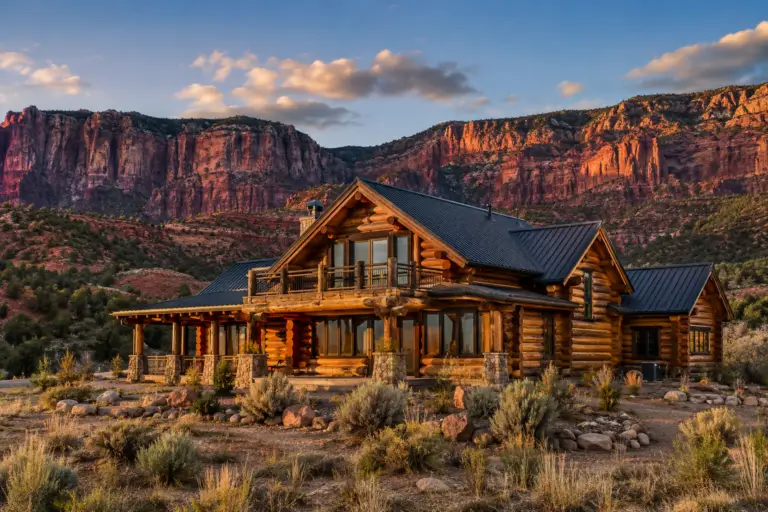








Log home restoration in Gateway, CO requires a different approach than restoration work in colder alpine towns or wetter forested valleys. Gateway sits in western Colorado canyon country, where red rock, dry air, open sun, wind, dust, and seasonal moisture all work on exterior logs year after year. A log home that looks solid from the road may still be losing stain protection, opening up along checks, or allowing chinking and caulking to pull away from the wood.
Pencil Log Pros helps Gateway-area homeowners protect and restore log homes, cabins, ranch-style log structures, and timber-accented properties with practical repair and maintenance methods built around the local environment. Whether your home is near Highway 141, tucked into a canyon setting, or located on a rural property outside the main Gateway area, the goal is the same: keep the logs dry, sealed, breathable, structurally sound, and protected from the high-desert climate.
In Gateway, log home maintenance is not just about appearance. Faded stain, gray wood, loose chinking, cracked sealant, and exposed checks can lead to bigger problems if they are ignored too long. The right restoration plan can bring back the natural beauty of the logs while helping the home stand up to Colorado sun, wind-driven dust, dry-season checking, and the occasional rain or snow event.
Log Home Restoration in Gateway, CO’s Canyon Climate
Gateway’s setting creates a very specific maintenance challenge for log homes. The area does not behave like a deep-snow mountain town, and it does not behave like a humid woodland climate. Instead, Gateway homeowners often deal with a high-desert pattern: bright sun, low humidity, dusty wind, large temperature swings, and periodic moisture that can enter vulnerable cracks, joints, corners, and lower log courses.
That combination can be hard on log structures. The sun dries and fades exposed walls. Wind pushes dust and grit into the finish. Dry air can make existing checks more visible. When moisture does arrive, it often finds the weakest spots first: open upward-facing checks, failed caulking around windows, loose chinking between courses, and areas where runoff splashes against lower logs.
A good Gateway log home restoration plan starts with understanding these conditions. Pencil Log Pros does not treat every cabin the same way. A home with heavy UV exposure on the south and west walls may need different preparation than a shaded home with moisture problems around decks, porches, or rooflines. A rural ranch-style log home with wide overhangs may need targeted maintenance, while an older cabin with failing stain may need more complete restoration.
Why Gateway Log Homes Weather Differently
Log homes in Gateway often show uneven wear. One side of the house may look sun-bleached and dry, while another side still has color and finish protection. This is common in canyon country. South-facing and west-facing elevations usually take the strongest sunlight, especially on open lots with limited tree cover. These walls may fade faster, develop surface checking sooner, and lose water repellency before the rest of the home.
Shaded areas can have the opposite problem. Around decks, covered entries, retaining areas, or landscape irrigation, logs may hold moisture longer than expected. Even in a dry climate, repeated wetting can damage lower courses, window trim, corners, and log ends. This is why restoration in Gateway should never be based on appearance alone. The logs need to be inspected wall by wall.
The Palisade, Unaweep Canyon, and the surrounding red-rock landscape make Gateway a beautiful place for log and timber homes, but that beauty comes with exposure. A home that looks natural in the canyon setting still needs a finish system that can handle sun, dryness, and movement in the wood.
Sun, Wind, Dust, and Dry Air
Gateway’s dry canyon conditions can make log home damage look less urgent than it really is. A faded wall may seem cosmetic. A few open checks may seem normal. Dust on the siding may look like simple dirt. But when stain wears thin, the wood begins taking the punishment directly. Over time, unprotected logs can turn gray, absorb moisture unevenly, and become harder to restore without more aggressive preparation.
Wind is another factor. Dust and fine grit can cling to old stain, settle into checks, and build up around corners, decks, and trim. If a new coat of stain is applied over a dirty or degraded surface, it may not bond correctly. That is why proper cleaning and surface preparation are so important for log cabin staining in Gateway, CO.
Dry air also affects movement in the logs. Logs naturally expand and contract with changes in moisture and temperature. Sealants must be flexible enough to move with the structure. When caulking or chinking becomes brittle, pulls away, or cracks, gaps can open that allow air, water, pests, and dust into the building envelope.
Our Log Home Restoration Services in Gateway
Pencil Log Pros approaches Gateway log home restoration as a complete exterior protection process. Some homes need a full restoration with cleaning, sanding or media preparation, log repairs, chinking, caulking, and staining. Others need a maintenance coat and targeted sealing before the finish deteriorates too far. The right solution depends on the age of the home, the type of logs, the existing coating, the level of exposure, and the condition of the wood.
For homeowners comparing service options in western Mesa County, it helps to work with a company that understands both the structure and the local climate. Pencil Log Pros focuses on log homes and log cabins, not generic exterior painting. Logs need breathable coatings, proper joint sealing, and repair methods that respect how wood moves through the seasons.
Log Home Inspection and Maintenance Planning
Every strong restoration plan begins with a careful inspection. In Gateway, that inspection should look closely at sun exposure, stain failure, checking, water entry points, lower log courses, corners, log ends, window and door openings, decks, porches, and roof runoff patterns. A log home may not need the same level of work on every elevation, but it does need a plan that protects the whole structure.
During an inspection, Pencil Log Pros looks for the signs that matter: finish that no longer sheds water, gray or roughened wood, loose chinking, failing caulking, dark staining near joints, soft spots, insect activity, and logs that may be holding moisture. The goal is to separate cosmetic wear from conditions that could lead to deeper damage.
Gateway homes can be remote or spread out, so it is especially important to plan efficiently. A clear scope of work helps the homeowner understand what should be handled now, what can be monitored, and what maintenance should be scheduled later.
Log Cleaning and Surface Preparation
Surface preparation is one of the most important parts of log home restoration in Gateway, CO. Stain can only perform well when it bonds to clean, sound wood. Dust, dead fibers, failed coatings, mildew, and old sealant residue can all interfere with the finish.
Depending on the condition of the home, preparation may include log washing, hand sanding, mechanical sanding, media blasting, detail cleaning, and removal of failing caulking or chinking where needed. Not every home requires aggressive stripping. Some homes only need a proper cleaning and a maintenance coat. Others have finish failure that must be removed before new stain is applied.
Gateway’s sun-baked walls often need extra attention. When old stain becomes brittle, chalky, or patchy, simply coating over it can trap problems beneath the new finish. Pencil Log Pros evaluates the existing coating and recommends preparation that gives the new stain the best chance to protect the logs properly.
Log Cabin Staining in Gateway, CO
Log cabin staining in Gateway should focus on protection, breathability, and UV resistance. Exterior log stain is not just color. It is the layer that helps shield wood from sun, moisture, and surface wear. In a high-desert canyon setting, a poor stain choice can fade quickly or fail to move with the logs.
A quality log home stain should be compatible with the existing coating or applied after proper removal of the old finish. It should allow the wood to breathe, resist UV damage, and be maintained over time. The color should also make sense for the home and setting. Many Gateway homeowners prefer natural wood tones that complement red rock, canyon walls, desert vegetation, and rustic architectural details.
Application matters as much as product choice. Logs must be dry enough, clean enough, and prepared correctly. Weather conditions during application matter too. Applying stain in direct heat, high wind, or poor drying conditions can affect the final result. Pencil Log Pros builds the staining plan around the home, the weather window, and the condition of the wood.
Chinking and Caulking for Log Homes
Chinking and caulking help seal the vulnerable areas of a log home. Chinking is commonly used between log courses on homes designed for it, while caulking is often used around checks, corners, windows, doors, trim, and smaller joints. In Gateway, these materials need to remain flexible because logs move as temperature and moisture levels change.
Loose chinking is more than an appearance issue. When chinking separates from the logs, gaps can allow air leakage, dust, insects, and water intrusion. Failed caulking around windows and doors can create similar problems. Even small openings can become bigger issues when wind pushes dust and moisture against the home.
Proper chinking and caulking require clean joints, correct backer material where needed, and products designed for log construction. Pencil Log Pros evaluates whether existing material can be repaired or whether failed sections should be removed and replaced. The goal is a durable seal that looks clean and performs well through seasonal movement.
Log Repair and Log Replacement
When logs show deeper damage, restoration may require repair or replacement. Gateway’s dry climate can slow certain moisture problems, but it does not eliminate them. Lower logs, log ends, corners, and areas near decks or grade can still deteriorate if water repeatedly collects or if stain and sealants have failed.
Log repair may include removing damaged wood, treating affected areas, using appropriate repair materials, replacing sections of logs, or replacing full logs when needed. The right method depends on the extent and location of the damage. A small area of surface deterioration does not require the same approach as a soft lower course or a structural corner problem.
Pencil Log Pros takes a practical approach to log repair in Gateway. The purpose is not to oversell a major restoration when targeted work will solve the issue. It is also not to cover up damage with stain and hope it holds. The wood needs to be sound before it is sealed and finished.
Maintenance Coats and Long-Term Protection
A maintenance coat can often save a homeowner from a more expensive restoration later. When the existing stain is still bonded and the logs are in good condition, cleaning and applying a compatible maintenance coat may restore protection without stripping the home.
Gateway homeowners should not wait until all walls are gray or rough before thinking about maintenance. In canyon sun, the most exposed walls may need attention sooner than shaded sides. A smart maintenance plan can focus on the elevations that take the hardest weather while keeping the rest of the home on a reasonable schedule.
Long-term log home protection is about consistency. Cleaning, inspecting, sealing checks, maintaining chinking, and refreshing stain before failure spreads can extend the life of the home and help avoid larger repairs.
Common Log Home Problems We See Around Gateway
Gateway-area log homes can develop several predictable issues. Some are tied to sun exposure. Others come from water movement, poor drainage, aging sealants, or neglected finish maintenance. Homeowners who catch these problems early usually have more restoration options and lower repair risk.
Faded South-Facing Walls
One of the most common problems in western Colorado canyon country is fading on south- and west-facing walls. These elevations take long hours of direct sun, especially on homes with open views, limited shade, or reflective ground surfaces. Over time, stain can lighten, dry out, and lose its protective qualities.
Faded stain does not always mean the logs are ruined. In many cases, the home can be cleaned, sanded where needed, and re-stained. But if the finish has failed completely and the wood has turned gray or rough, more preparation may be needed to restore the surface.
Cracked or Open Checks in Logs
Checks are natural cracks that form as logs dry and move. They are common in log construction and do not automatically mean there is a structural problem. However, upward-facing checks can collect water, dust, and debris. If they are deep or located in vulnerable areas, they may need to be cleaned and sealed with proper log home caulking.
In Gateway, dry air can make checks appear more noticeable during certain seasons. The key is knowing which checks are harmless and which ones could lead to moisture problems. Pencil Log Pros evaluates checks based on size, location, direction, and exposure.
Failed Finish Near Decks, Porches, and Rooflines
Decks, porches, and rooflines often create concentrated wear zones. Splashback from rain, snowmelt, or cleaning water can repeatedly wet lower logs. Debris can collect where decks meet the wall. Roof runoff can strike the same area again and again if gutters, flashing, or drainage are not working correctly.
These areas deserve close inspection. A wall may look good at eye level while the lower logs near a deck are losing finish or beginning to soften. Restoration should address both the wood and the cause of the moisture exposure when possible.
Loose Chinking or Gaps Between Logs
Loose chinking is common on older or poorly maintained log homes. It can happen when the original joint was not prepared correctly, when the logs moved beyond the flexibility of the material, or when age and weather broke the bond. Once chinking pulls away, gaps can allow drafts, dust, insects, and water to enter.
Repairing chinking is not just a matter of filling the visible gap. Failed material may need to be removed. The joint may need cleaning. Backer rod or other backing may be required. Then the new chinking must be installed at the right thickness and shaped correctly so it can stretch and adhere.
Lower Log Course Deterioration
Lower log courses are especially vulnerable because they are closest to grade, splashback, snow accumulation, and vegetation. Even in a dry area like Gateway, poor clearance and drainage can create moisture problems. Logs should not be buried by soil, blocked by debris, or constantly wetted by irrigation.
If lower logs feel soft, show dark staining, or have areas where the surface breaks apart, a closer inspection is needed. Some lower-course issues can be repaired in sections. Others may require more significant log replacement. The sooner the problem is identified, the better the chance of limiting the repair area.
Gateway Homes Need a High-Desert Restoration Approach
Log home restoration in Gateway should not be copied from a generic mountain cabin checklist. Gateway homes need a high-desert restoration approach that accounts for sun, dryness, dust, and canyon exposure. The work must protect the logs without trapping moisture, and it must be realistic for homes that may sit on rural roads, canyon lots, ranch properties, or open acreage.
This is where local understanding matters. A homeowner in Gateway may not be dealing with the same snowpack concerns as a homeowner in a higher-elevation community, but they may deal with harsher UV exposure and more wind-driven dust. The finish schedule, product selection, prep method, and sealant strategy should reflect that reality.
Different From Alpine Log Home Maintenance
In alpine towns, log home maintenance often focuses heavily on snow load, freeze-thaw cycles, shaded moisture, and long winters. Gateway still has seasonal weather, but its maintenance concerns often lean toward dry exposure. Sun and wind can wear down exterior finishes before the homeowner notices deeper damage.
That does not mean moisture is not a concern. It simply means moisture often shows up in specific vulnerable places: open checks, lower logs, roof runoff areas, deck connections, and failed joints. A dry climate can give homeowners a false sense of security because logs may not look wet for long. But short periods of moisture can still damage unprotected wood when the finish has failed.
Stain Choices for Red-Rock and Canyon Settings
Gateway’s landscape influences how many homeowners think about stain color. Natural browns, warm wood tones, and rustic finishes often fit well with the red-rock surroundings. But appearance should never be the only deciding factor. The stain must also protect the wood and be maintainable over time.
Clear or very light finishes may show the natural wood beautifully, but they may not provide the same level of UV protection as more pigmented options. Darker stains can create a rich look, but they may absorb more heat and change the appearance of the home more dramatically. Pencil Log Pros helps homeowners think through the balance between color, protection, maintenance, and the existing condition of the logs.
Protecting Rustic Log and Timber Styles
Gateway-area properties may include full log homes, rustic cabins, ranch-style structures, timber-frame details, log accents, and hybrid homes with wood siding and log features. Each style needs the right level of care. Round logs, hand-crafted details, exposed log ends, and timber accents all weather differently.
A full log home may need chinking, caulking, stain, and log repair across the entire exterior. A timber-accented home may need focused work on beams, posts, railings, trusses, or decorative log features. A cabin with older logs may need more careful preparation to avoid unnecessary damage to aged wood. Pencil Log Pros evaluates the structure before recommending a restoration process.
When Should Gateway Homeowners Restore a Log Home?
The best time to restore a log home is before damage spreads. Many homeowners wait until the home looks obviously worn, but by then the project may require more labor. In Gateway, the early signs are often visible on the most exposed walls first. Watching those areas can help you stay ahead of bigger repairs.
Signs Your Log Home Needs Restoration
Your Gateway log home may need restoration if water no longer beads on the surface, stain looks chalky or patchy, logs are turning gray, the wood feels rough, or the color has faded unevenly. Chinking that pulls away from the logs, caulking that cracks, and open checks that face upward are also warning signs.
Other concerns include dark staining around windows, doors, corners, and lower courses. Soft wood, insect activity, musty smells, or drafts between logs should be inspected promptly. These signs do not always mean the home needs a full restoration, but they do mean the protective system is no longer working as it should.
Restoration vs. Maintenance Coat
A maintenance coat is usually appropriate when the existing finish is still bonded, the logs are sound, and the home mainly needs renewed protection. This process may involve cleaning, light prep, sealing checks, touching up caulking or chinking, and applying a compatible coat of stain or finish.
A full restoration is more involved. It may include removing failed coatings, sanding or blasting, repairing logs, replacing failed sealants, re-chinking, and applying a new stain system. Homes with gray wood, peeling finish, widespread adhesion failure, or neglected joints typically need more than a simple maintenance coat.
Pencil Log Pros helps homeowners understand which category their home falls into. That clarity matters because applying a maintenance coat over a failed finish can waste time and money. At the same time, stripping an entire home that only needs targeted maintenance may be unnecessary.
Why Waiting Can Cost More
Waiting too long usually increases the amount of preparation required. Once stain fails and wood fibers degrade, the logs may need sanding or more aggressive surface preparation before they can be stained again. If water enters open checks or failed joints, repairs can become more complex.
Delaying chinking and caulking repairs can also increase energy loss and allow pests or dust into the home. What starts as a small gap can become a larger section of failed material. For Gateway homeowners, regular inspection is one of the simplest ways to avoid unnecessary restoration costs.
Realistic Project Examples for Gateway-Area Log Homes
Every log home is different, but common Gateway-area conditions lead to predictable restoration needs. The following examples describe realistic situations that could occur around Gateway and how a proper restoration plan would likely address them.
Sun-Faded Cabin Near Highway 141
A cabin near Highway 141 with faded south-facing walls would probably need a careful inspection of the existing stain, followed by cleaning and surface preparation. If the stain is still bonded in some areas but failed in others, the home may need targeted sanding to even out the surface before a new finish is applied.
Open checks on the sun-exposed walls would need to be evaluated and sealed where appropriate. If the wood has turned gray, more preparation may be required to remove damaged surface fibers. The final stain choice should provide UV protection while preserving the natural character of the logs.
Canyon Ranch-Style Log Home With Failed Chinking
A ranch-style log home in the Gateway area with gaps between log courses would likely need chinking inspection and selective removal of failed material. The joints would need to be cleaned, backed where necessary, and re-chinked with a flexible product designed for log homes.
If the stain around the chinking has also failed, the restoration plan should coordinate joint repair with exterior staining. Doing the work in the right order helps create a cleaner appearance and better long-term performance.
Lower-Course Log Repair on a Dry-Lot Home
A dry-lot home can still develop lower-course damage if drainage is poor, vegetation grows too close, or water splashes against the same logs repeatedly. A Gateway-area home with soft lower logs would probably need targeted repair or replacement, along with changes to reduce future moisture exposure.
That might include improving clearance, redirecting runoff, trimming vegetation, or correcting areas where soil or debris holds moisture against the logs. After the wood is repaired and dry, the affected area can be prepared and stained to match the rest of the home as closely as possible.
Why Gateway Homeowners Choose Pencil Log Pros
Gateway homeowners need more than a contractor who can apply stain. They need a log home restoration company that understands wood movement, sealant performance, surface preparation, and western Colorado exposure. Pencil Log Pros focuses on the details that help log homes last: sound wood, clean surfaces, flexible joints, breathable finishes, and practical maintenance planning.
For homeowners who also spend time in nearby communities, Pencil Log Pros brings the same log-home-specific approach used across western Colorado, including work for property owners looking for help around Grand Junction, CO. The conditions may vary from one community to the next, but the core principle stays the same: restore the logs correctly before cosmetic wear becomes deeper damage.
Local Understanding of Western Colorado Conditions
Gateway’s canyon environment rewards preparation and punishes shortcuts. A finish that is applied over dust, failed stain, or damp wood will not perform the way a homeowner expects. Caulking that is not designed for log movement can split or pull away. Chinking installed over dirty or poorly backed joints can fail early.
Pencil Log Pros approaches each home by looking at the environment first. Which walls take the most sun? Where does water hit the home? Are the lower logs protected from grade and splashback? Is the existing stain still bonded? Are the checks and joints sealed correctly? These questions lead to better decisions and stronger results.
Restoration That Starts With the Wood
The logs determine the restoration plan. If the wood is sound and the finish is only lightly worn, the project may be straightforward. If the logs are gray, rough, soft, or unevenly coated, the home may need deeper preparation. If chinking or caulking has failed, those joints need attention before the home is considered protected.
Pencil Log Pros does not approach Gateway log homes with a one-size-fits-all package. The work should match the home’s actual condition. That means recommending maintenance when maintenance is enough and recommending more complete restoration when the logs need it.
Clean Work, Practical Communication, and Durable Results
Log home restoration can feel overwhelming for homeowners because it involves multiple steps. Pencil Log Pros keeps the process practical by explaining what is happening, why it matters, and what should be prioritized. A homeowner should understand whether the biggest concern is UV wear, failed stain, open checks, chinking separation, or actual log damage.
Durable results come from doing the basics correctly. Clean the wood. Remove failed coatings when needed. Repair damaged areas. Seal vulnerable joints. Apply the right stain under the right conditions. Maintain the home before the finish fails again. That is the kind of process Gateway log homes need.
Serving Gateway and Nearby Western Colorado Communities
Pencil Log Pros serves Gateway homeowners as part of a broader western Colorado and nearby red-rock service area. Many log home owners in this region compare conditions across canyon, desert, foothill, and mountain communities because they may own property in more than one location or know someone dealing with similar log home issues nearby.
A Gateway cabin exposed to canyon sun may have some similarities to a log home near Naturita, CO, where dry air and rural exposure can also affect stain life. Homeowners coming from Montrose, CO may be familiar with valley sun and seasonal moisture, while properties closer to Ridgway, CO may face more mountain-influenced conditions. Across the state line, red-rock homes near Moab, UT can also deal with intense sun, dust, and dry-climate wood movement.
Gateway deserves its own restoration strategy, but it is part of a larger pattern across the region: log homes need consistent inspection, breathable finishes, sealed joints, and maintenance before weathering turns into repair work.
How to Protect Your Gateway Log Home Between Restoration Visits
Homeowners can do several simple things to help protect a Gateway log home between professional maintenance visits. Start by walking the exterior at least once or twice a year. Look closely at the walls that receive the most sun. Check whether the stain still has color and whether water beads on the surface. Watch for gray patches, rough wood, and areas that look dry compared to the rest of the home.
Next, inspect checks, corners, and joints. Upward-facing checks should not be ignored if they are collecting water or debris. Chinking should remain tight against the logs. Caulking around windows, doors, and trim should be flexible and well-adhered. Gaps may seem small, but they can allow dust, air, insects, and moisture into places where they do not belong.
Pay close attention to the lower logs. Keep soil, weeds, leaves, and stored materials away from the walls. Make sure sprinklers do not spray the logs. Watch how water moves during storms. If roof runoff or splashback hits the same area repeatedly, the logs may need extra protection or the drainage may need to be corrected.
Decks and porches also deserve attention. Dirt and debris can build up where horizontal surfaces meet the log wall. Railings, posts, steps, and exposed beams may weather faster than vertical walls because they catch more sun and moisture. These details are easy to overlook until the finish is already failing.
A Practical Maintenance Mindset
The best maintenance mindset for Gateway is simple: do not wait for the whole home to look bad. The harshest elevations usually show wear first. If those walls are maintained early, the rest of the home may stay on a longer cycle. This targeted approach can help control costs and protect the home more effectively.
It also helps to keep records. Note when the home was last stained, what products were used, which sides were repaired, and where chinking or caulking was replaced. Good records make future maintenance easier and help avoid compatibility problems with stains and sealants.
When in doubt, ask for an inspection before the problem spreads. A small area of failed stain or loose chinking is easier to address than a wall full of weathered logs or a lower course with moisture damage. Pencil Log Pros can help determine whether your Gateway home needs light maintenance, targeted repair, or a more complete restoration.
Protect Your Gateway Log Home Before Damage Spreads
A log home in Gateway, CO is built to belong in a rugged and beautiful landscape, but it still needs care. Canyon sun, dry air, wind, dust, and seasonal moisture all test the exterior over time. When stain fades, checks open, chinking loosens, or lower logs begin to show wear, the home is telling you that its protection needs attention.
Pencil Log Pros helps Gateway homeowners restore and maintain log homes with a process built around the wood, the structure, and the local environment. From cleaning and sanding to staining, chinking, caulking, log repair, and maintenance planning, the right work can protect your home and preserve the character that made you choose a log structure in the first place.
If your Gateway log home is fading, cracking, leaking air, showing gray wood, or losing its finish, scroll to the bottom of the page and connect with Pencil Log Pros about the right restoration plan for your home.