








 Own a log home in Colorado? Then you already know the weather at 5,000–10,000 feet does not go easy on your cabin. Intense UV, low humidity, snow loads, and big temperature swings can turn small gaps between your logs into big problems fast.
That’s where professional log home chinking comes in. Quality chinking creates a flexible, weather-tight seal between your logs, keeping out cold air, wind-driven snow, rain, dust, and insects while still allowing the logs to move. In Colorado’s high-elevation climate, that seal is the difference between a comfortable, efficient home and one that constantly battles drafts and moisture.
Pencil Log Pros is a restoration company based in Grand Junction, CO, that specializes in log home chinking, sealant work, and full log home weatherproofing across Colorado and neighboring states. We understand how pine, spruce, fir, and cedar logs behave at altitude—and we design chinking systems that hold up in real mountain conditions.
What Is Log Home Chinking & Why It Matters So Much in Colorado
Chinking is the flexible material you see filling the gaps between logs on a traditional log home. Older cabins used rigid mortar that cracked over time. Modern log home chinking is an advanced, elastomeric product that stretches and compresses as the logs naturally move.
In a mild climate, you might get by with basic caulking or minimal chinking. In Colorado’s mountains, that approach usually leads to drafts, leaks, and damaged logs. The combination of dry air, strong UV, and freeze–thaw cycles demands a high-performance chinking system, not just a bead of generic sealant.
Proper log home chinking does more than just fill gaps. It helps control energy loss, protects against wind-driven precipitation, reduces noise, and keeps insects and rodents from treating your walls like a highway system. When the chinking fails, your logs and interior comfort pay the price.
How Colorado’s Climate Beats Up Your Log Home Chinking
Colorado’s average elevations run from about 5,000 feet on the plains to over 8,000 feet in many mountain communities. At these heights, the sun is stronger, UV levels are higher, and weather changes faster than it does at sea level.
In practice, that means your log home chinking is constantly dealing with expansion and contraction, extreme temperature swings, and intense sunlight. Add in winter snow, ice dams, and wind, and you’ve got a recipe for stress on every joint between your logs.
Here are some of the most common chinking issues we see across the region:
- Cracked or brittle chinking. Older products or incorrect applications can turn hard and brittle, especially on south- and west-facing walls that get blasted by sun.
- Chinking pulling away from the logs. As logs move, settle, or shrink, chinking that doesn’t have proper joint design or backing can pull loose and create gaps.
- Gaps and air leaks. Even tiny separations can add up to significant drafts, cold spots, and higher energy bills—especially on windy days.
- Water intrusion. Gaps around windows, corners, and log intersections let water in, where it can trigger rot, mold, and staining.
- Insect and rodent paths. Carpenter ants, wasps, and small rodents love to find weaknesses in your chinking and use them as entry points.
If you live in a ski-town valley, a foothills community, or on the open plains, the details may change—but the story is the same. High-elevation weather exposes every weakness in your chinking system.
Our Log Home Chinking & Sealant Process
Effective log home chinking in Colorado is not a matter of squeezing product into gaps and hoping for the best. At Pencil Log Pros, we follow a detailed process built for high-elevation homes, combining modern materials with proper joint design and prep.
1. Inspection & Joint Design
Every project starts with a thorough inspection of your home’s exterior. We walk the perimeter, note sun exposure, check existing stain and chinking, and pay close attention to problem zones like corners, window and door openings, log-to-roof transitions, and areas near decks.
We look at the size, shape, and movement of your log joints and determine whether you need full re-chinking, partial repairs, or targeted sealant upgrades. This is also where we discuss color preferences and how the chinking will coordinate with your log stain.
From that inspection, we design the appropriate joint profile and backing system so the new chinking can stretch, compress, and adhere the way it’s supposed to.
2. Removing Failing Chinking & Sealants
New chinking is only as good as the surface it’s bonded to. That’s why we carefully remove loose, cracked, or failed chinking and caulking from your log joints. In some cases, this means fully stripping out old materials. In others, it involves cutting back to a sound, well-bonded edge.
We also remove dirt, insect debris, and loose stain where necessary. The goal is a clean, stable surface that will hold the new chinking system for years—not just another season or two.
In many restorations, this step overlaps with broader prep work like media blasting and sanding, especially if we’re also refinishing your logs.
3. Backer Installation for Proper Joint Shape
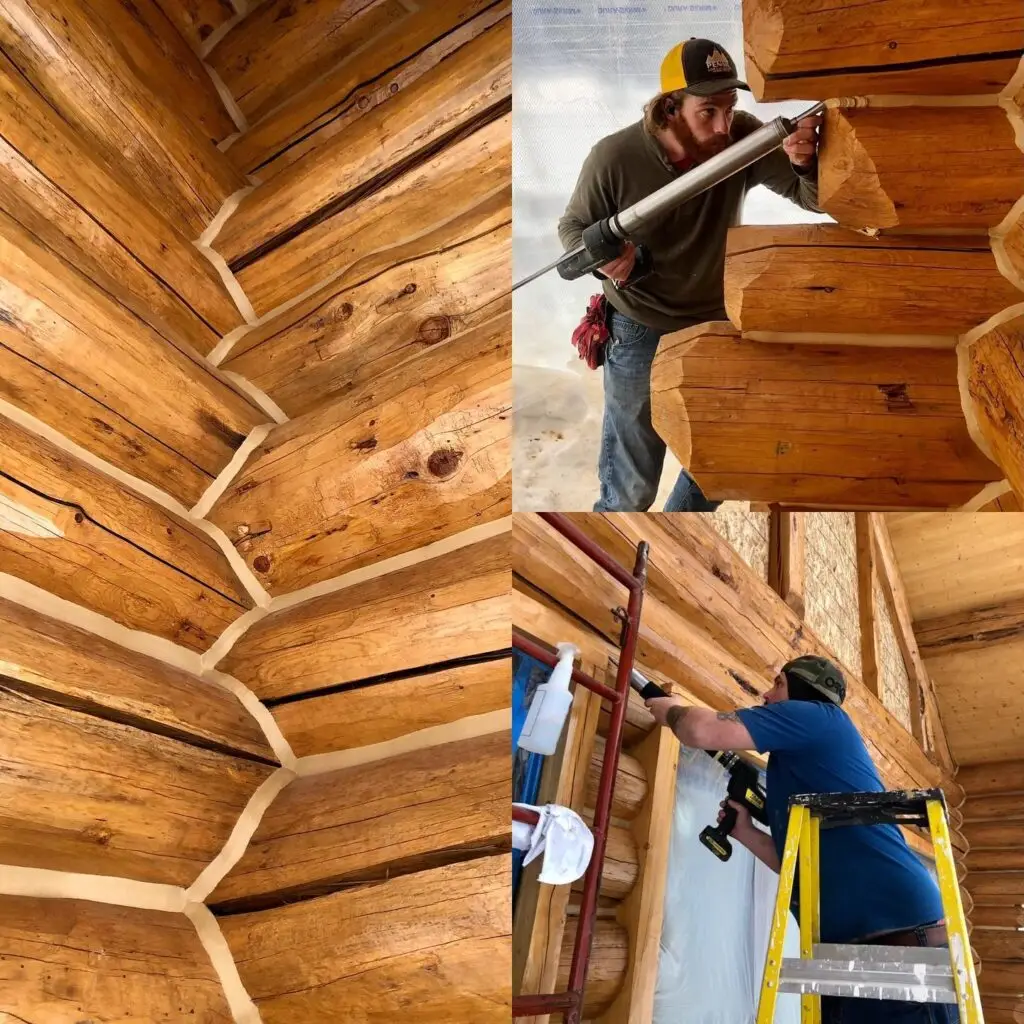
Professionally installed log home chinking always uses an appropriate backing material, such as foam backer rod or specialized backer systems. This backing sets the depth and shape of the chink joint and prevents three-sided adhesion, which can cause premature failure.
We size and install the backer correctly so the chinking can form a wide, shallow “bridge” that stretches as your logs move. Without this step, even the best chinking product can pull away, crack, or tear over time.
This is one of the most overlooked parts of log home chinking DIY projects, and it’s a big reason homeowners eventually call us to redo the work.
4. Applying High-Performance Chinking Products
With joints prepped and backing in place, we apply high-quality, flexible log home chinking designed for severe climates. These products are engineered to handle the expansion and contraction that comes with Colorado’s large temperature swings and high UV exposure.
We tool the material carefully to ensure good contact with the logs, smooth appearance, and proper thickness. Corners, T-intersections, and log-to-trim transitions get extra attention, since they are the most common leak points.
If you’d like a deeper dive into the specific sealant systems we use, you can learn more on our dedicated log chinking and sealant page.
5. Color Matching & Aesthetics
Modern log home chinking comes in a range of colors—from traditional light “mortar” shades to tones that closely match your logs. We help you select a color that creates the look you want while balancing practical considerations like stain choice and maintenance.
On partial chinking repairs, we work to blend new material with your existing chinking and stain so the finished result looks intentional, not patchy. For full re-chinking projects, we can completely update the visual character of your home.
The right color combination can make log courses look cleaner, highlight the hand-crafted character of the home, and add major curb appeal.
6. Integrating Chinking with Staining & Log Protection
Chinking is one part of a larger protective system for your log home. In many projects, we combine log home chinking with full or partial restoration work, including media blasting, rot repair, and re-staining.
Doing the work as a coordinated system avoids gaps, overlaps, and compatibility issues between stain and sealants. It also makes scheduling and long-term maintenance easier, because everything starts on the same timeline.
As log home specialists, we know how to sequence chinking and staining so both perform as designed in the Colorado climate.
7. Final Inspection & Homeowner Walk-Through
Once the chinking is installed and cured, we perform a detailed inspection to confirm adhesion, joint shape, and coverage. We check high-risk areas again and address any small touch-ups needed.
Then we walk the home with you, explain what was done, and point out the improvements you’ll notice right away—like fewer drafts, tighter-feeling rooms, and a cleaner, more finished exterior.
We also outline simple maintenance steps and recommended inspection intervals so you know exactly how to take care of your new chinking system.
Want a ballpark before you call anyone? The Log Home Repair Estimator scopes your project in a few minutes, and a free consultation with Pencil Log Pros costs nothing either way.
Log Home Chinking Services We Offer
Pencil Log Pros provides a full set of log sealing and chinking services for Colorado and nearby high-elevation regions. Whether your cabin is 30 years old or brand new, we can design the right solution.
- Complete log home re-chinking and resealing
- Chinking repair and targeted gap sealing
- Conversion from old mortar or rigid filler to modern flexible chinking
- Energy-sealing and air-leak reduction around windows and doors
- Log end sealing and detail work at corners, posts, and beams
- Integration of chinking work with log home staining and restoration
- New-construction log home chinking and sealant installation
- Annual or periodic inspection and maintenance of existing chinking
Because we focus on log structures, we understand how chinking interacts with your logs, deck connections, trim, and overall building envelope—not just the visible gaps.
Real-World Log Home Chinking Projects Across Colorado
Every log home is different, but the challenges of altitude and weather are consistent. Here are a few example scenarios that show how professional log home chinking makes a difference.
Foothills cabin with shrinking logs and growing gaps. An older pine log home near Evergreen had obvious gaps forming between the courses after decades of log shrinkage. The original mortar-style chinking was cracked and falling out. We removed the failing material, installed proper backer, and applied modern flexible chinking throughout. The homeowners immediately noticed warmer rooms and less dust on windy days.
High-country retreat facing heavy snow and wind. A second home in a ski-area community similar to Breckenridge had chinking that looked fine in summer but leaked when snow piled against the walls. We identified problem areas where chinking had pulled away, especially around log-to-deck connections. After repairs and fresh chinking, snowmelt no longer found its way inside.
Western slope lodge with insect issues. On the western slope, near a destination like Steamboat Springs, a large lodge had wasps and small rodents using gaps in old chinking as access routes. We stripped out compromised material, sealed hidden voids, and installed new chinking and sealant. Closing those pathways significantly reduced pest activity and protected the logs from further damage.
Southwest mountain home with mixed chinking and caulking. In a climate like Durango or Pagosa Springs, a log home had a patchwork of DIY caulking and failing chinking around windows and corners. We removed incompatible products, redesigned joints, and installed a uniform chinking system that worked with the log movement instead of fighting it.
Across Colorado and neighboring states, the theme is consistent: the right log home chinking system solves real comfort, moisture, and maintenance problems—not just cosmetic issues.
Chinking or Caulking — Which Does Your Log Home Need?
Chinking fills the wide joints between logs with a thick textured bead meant to look like traditional mortar. Narrower gaps — checks, butt joints, window and door perimeters, and log-to-log seams — are sealed instead, which is log home caulking. Most log homes need both. A perfect chinking job still leaks if the checks are open, so Pencil Log Pros scopes them together.
For the wood-science background on moisture movement and durability, the USDA Forest Products Laboratory Wood Handbook covers it thoroughly.
Maintenance Tips to Keep Your Log Home Chinking Performing
Once your chinking is installed correctly, it should deliver many years of service in Colorado’s climate. A few simple habits will help you get the most out of that investment.
- Do a quick visual check each season. Look for cracks, gaps, or areas where the chinking is pulling away from the logs, especially on sun-exposed walls and windy corners.
- Watch high-stress locations. Corners, log intersections, areas under roof valleys, and spots where decks or porches intersect the log wall deserve extra attention.
- Protect the logs above and below. Keeping your stain and clear coats in good shape reduces UV and moisture stress on the chinking edges.
- Address drainage issues promptly. Fix leaking gutters and direct downspouts away from the log walls to avoid constant wetting at specific joints.
- Avoid harsh power washing. Too much pressure can damage both stain and chinking. Gentle cleaning methods are safer for your log home envelope.
- Schedule periodic professional inspections. A log home specialist can spot small issues before they become big problems, especially after extreme winters.
With these practices and a solid chinking installation, most homeowners enjoy long stretches of trouble-free performance between touch-ups.
Why Homeowners Trust Pencil Log Pros for Log Home Chinking
Many contractors can run a bead of caulk. Fewer understand how to design and install a full log home chinking system that actually works at high elevation. Here’s what sets Pencil Log Pros apart.
- Log homes are our specialty. We focus on log home restoration, chinking, sealing, and exterior wood protection—not general painting or wood siding.
- We know high-elevation behavior. Our process is built around how pine, cedar, spruce, and fir logs move and weather in Colorado.
- System-based approach. We don’t treat chinking as a stand-alone patch job. We consider stain, log condition, rot risk, and overall building envelope together.
- Quality materials and joint design. We use proven, flexible log home chinking products and backer systems sized and shaped for your specific joints.
- Attention to aesthetics. We help you choose chinking colors and profiles that enhance your home’s appearance instead of distracting from it.
- Clear communication and education. We explain what we see, what we recommend, and how to maintain the finished system so you’re never left guessing.
Where We Provide Log Home Chinking Services
Based in Colorado, Pencil Log Pros offers log home chinking, sealant work, and related restoration services throughout Colorado — Pencil Log Pros is licensed in Colorado and takes chinking projects in Colorado only.
We routinely work in mountain communities, foothills neighborhoods, river valleys, and high-plains locations. Whether your cabin is near a resort town, tucked back on acreage, or sitting on the open prairie, we can tailor our process to your environment.
Some of the types of areas we often serve include:
- Front Range and foothills log homes around communities like Evergreen
- High-country and resort-area cabins in and around destinations similar to Breckenridge
- Western slope lodges and retreats near hubs like Steamboat Springs
- Southwest Colorado mountain homes in areas such as Durango and Pagosa Springs
If your log home sits in a comparable high-UV, four-season environment in a neighboring state, reach out and we can discuss options and logistics for bringing our log home chinking expertise to your property.
Get Expert Log Home Chinking for Your Colorado Log Home
If you feel drafts between your logs, notice gaps or cracking in your chinking, or see signs of water staining or insect activity, now is the time to act. In Colorado’s climate, small chinking failures rarely fix themselves—they usually grow into bigger comfort and moisture problems.
Pencil Log Pros can evaluate your existing chinking, identify weak spots, and design a log home chinking system that fits your home, your climate exposure, and your long-term plans. Whether you need full re-chinking, targeted repairs, or chinking integrated with a broader restoration project, we’re here to help.
Reach out today to start a conversation about your log home. Share your location, describe what you’re seeing, and we’ll walk you through practical, clear options to keep your home tight, efficient, and protected in the high-country weather you love.
Log Home Chinking FAQs
How often does log home chinking need to be replaced in Colorado?
In Colorado and similar high-elevation regions, good log home chinking can last many years when installed correctly and paired with proper log maintenance. There isn’t a fixed schedule like “every five years,” because performance depends on exposure, log movement, and overall care.
Instead of watching the calendar, we recommend regular visual inspections. If you see cracking, gaps, or areas where the chinking has pulled away from the logs, it’s time to bring in a professional to evaluate whether targeted repairs or broader re-chinking are needed.
What’s the difference between chinking and caulking?
Caulking is usually a narrow bead of sealant meant for small gaps around windows, doors, and trim. Chinking is a wider, more substantial band of flexible material designed specifically for the gaps between log courses and log intersections.
While both help seal your home, log home chinking is engineered to handle the larger movements and joint widths found in log construction. Using simple caulk in place of proper chinking often leads to premature failure, drafts, and water leaks.
Can you match the color of my existing log home chinking?
In many cases, yes. Modern chinking products come in a range of colors, and we can often find a close match to your existing material or adjust your chinking color as part of a broader restoration and staining plan.
On full re-chinking projects, we can coordinate stain and chinking colors for a fresh, cohesive look. On partial repairs, we’ll focus on blending the new work with the existing system so it looks as natural as possible.
Do I need to re-stain my logs when I re-chink my home?
Not always—but it’s often a smart time to address both. Because chinking adheres to the log surface, it’s best when the surrounding stain is sound and compatible. If your stain is failing, grayed, or peeling, we may recommend combining chinking work with a staining or full restoration project.
Doing both at once provides a cleaner, more durable result and gets your logs and chinking on the same maintenance schedule.
Is log home chinking only for older cabins?
No. New-construction log homes benefit from professional chinking just as much as older cabins do, especially in Colorado’s extreme climate. Proper joint design and chinking from the start can reduce drafts, moisture issues, and callbacks.
We work on both brand-new builds and homes that have been standing for decades, tailoring the chinking system to the age and behavior of the logs.
Can you fix small problem areas without re-chinking the whole home?
Yes. If your home’s chinking is generally in good shape but has specific trouble spots—like corners, high-sun walls, or areas near decks—we can often perform targeted repairs.
During an inspection, we’ll let you know whether spot repairs make sense or whether the chinking system as a whole is nearing the end of its useful life and would benefit from a more comprehensive approach.
How does log home chinking affect my energy bills?
Properly installed chinking dramatically reduces uncontrolled air leakage through the log walls. That means your heating and cooling systems don’t have to work as hard to keep the house comfortable, especially on windy days and cold winter nights.
While every home is different, homeowners often report warmer rooms, fewer drafts, and more consistent temperatures after a professional log home chinking project.
How do I get started with a log home chinking project?
The first step is simple: contact Pencil Log Pros and share a bit about your home, where it’s located, and what you’re noticing with your existing chinking or drafts. Photos can be helpful, but they’re not required for an initial conversation.
From there, we can schedule an on-site evaluation, walk through what we find, and provide a clear plan for log home chinking and related work to keep your Colorado cabin sealed, comfortable, and protected for years to come.
Get Your Log Home Chinking Scoped Properly
Book a free consultation with Pencil Log Pros and you will get an honest assessment of which joints need chinking, which need repair first, and what can safely wait — from a licensed general contractor rather than a crew selling product. Prefer a number first? Use the Log Home Repair Estimator.