
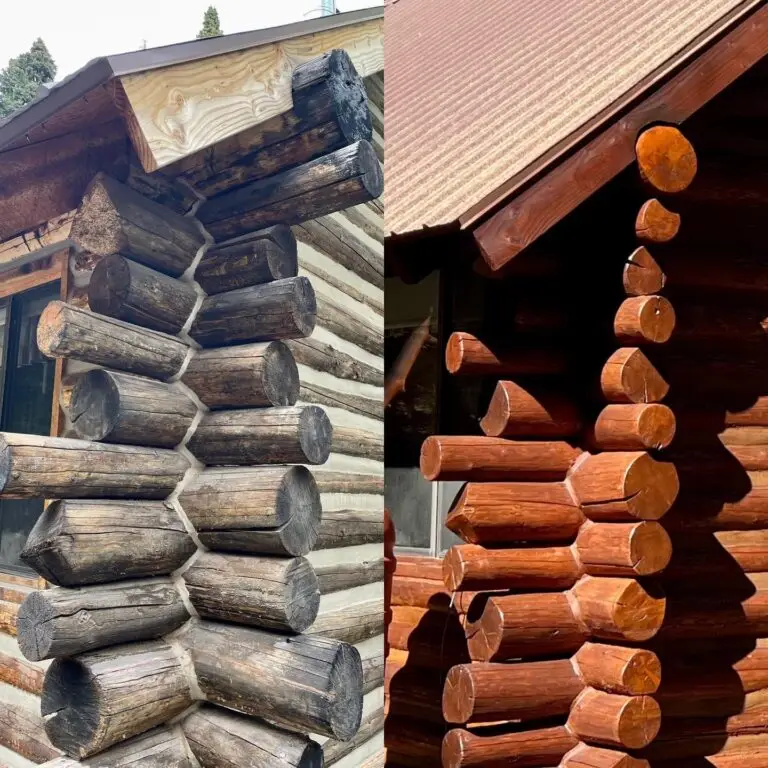
Most log home problems come down to two things: water getting into the wood, and sun breaking down the finish that keeps water out. The nine that cost owners the most are failing stain, greyed wood, wet log ends, rot, open checks, failed chinking, settling gaps, wood-boring insects and hidden moisture. Pencil Log Pros, led by Brad Siler, a Certified Licensed General Contractor Class C, has diagnosed and repaired these failures in Colorado and surrounding states since 2013. Caught early, most are maintenance. Caught late, they become carpentry.
Not sure what you’re looking at? Call or text (970) 462-7706 for a free consultation, or get a ballpark number first with the Log Home Repair Estimator.
In this guide:
- The 9 problems at a glance
- What causes them
- Each problem, its signs and its fix
- Buying a log home: what to check
- What can wait and what can’t
- Frequently asked questions
The 9 most common log home problems at a glance
Start with what you can see. Each sign below points to one of the log cabin problems covered in this guide, and to how soon it needs attention.
| What you see | What it usually means | How soon |
|---|---|---|
| Chalky, blotchy or peeling stain | UV has broken down the finish | This season |
| Logs turning grey or silver | Surface fibers are weathering | This season |
| Dark streaks at log ends and bottom logs | Water is wicking into the end grain | Soon |
| Wood gives when you probe it | Rot has started | Now |
| Wide cracks on the tops of logs | Open checks are holding water | Soon |
| Drafts, daylight or bugs at the joints | Chinking or caulking has failed | Soon |
| Sticking doors, cracked trim, gaps over windows | The walls are settling | Soon |
| Round holes or fine sawdust | Wood-boring insects | Now |
| Musty smell, cold spots, peeling interior finish | Hidden moisture | Now |
What causes most log home problems: water and sun
Wood rots only when it stays wet. The USDA Forest Products Laboratory’s Wood Handbook puts it plainly: serious decay occurs only when the wood’s moisture content is above the fiber saturation point, about 30 percent. Air-dried wood at 20 percent or less has a safe margin. All log home problems that end in rot start the same way: water gets in and can’t dry out.
Sun is the other half. The same handbook notes that UV light starts breaking down lignin, the natural glue that holds wood fibers together, within hours of exposure. Bare wood loses about a quarter inch to weathering per century, and the loose grey fibers left behind will not hold stain.
Altitude makes both worse. The World Health Organization estimates UV levels rise about 10 percent with every 1,000 meters of elevation, so a log home at 9,000 feet takes roughly a quarter more UV than the same home at sea level. Add freeze-thaw cycles, dry winters and summer monsoon storms, and a Colorado log home wears faster than most product labels assume.
The 9 log home problems, one by one
1. Faded, peeling or failing stain
Of all log home problems, failing stain is the first most owners notice and the least expensive to fix. The finish turns chalky, blotchy or thin. Water stops beading. Color fades unevenly, worst on the south and west walls, which take the most sun. The Wood Handbook notes that the north side of a house may not need re-staining nearly as often as the south side.
The fix depends on how far it has gone. If the finish is still sound, a cleaning and a sectional re-coat of the exposed walls restores protection. If the finish powders off or alligator-cracks, it has to come off before anything new will bond. See how we approach log staining and clear coat in a high-UV climate.
2. Grey, weathered wood
Grey logs mean the surface fibers are already damaged. Light greying can be cleaned and brightened. Deep greying has to be removed, because new stain applied over loose fibers peels off with them.
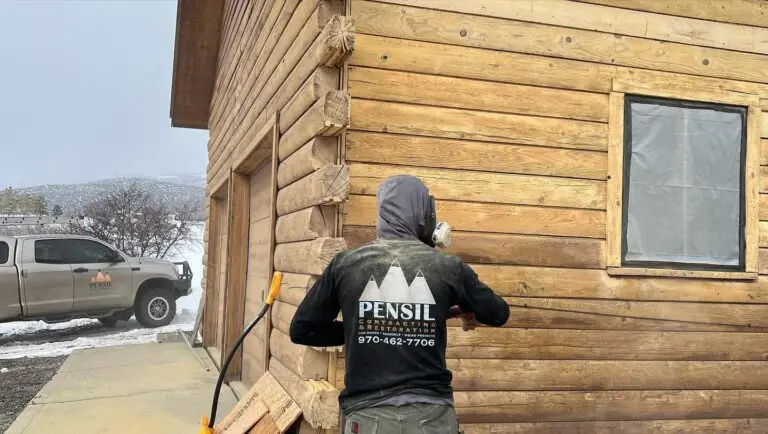
Removal is where many DIY projects go wrong. High-pressure washing can raise the grain and drive water deep into the logs. Pencil Log Pros uses low-pressure washing for cleaning and mobile media blasting with soft media, such as walnut shell or corncob, to strip failed finish and damaged wood without gouging the logs.
3. Dark, wet log ends and bottom logs
Log ends pull water in like a bundle of straws. That is why so much damage starts at corners, log tails and the bottom two or three courses, where roof runoff, snow piles, sprinklers and splash-back keep the wood wet. Dark streaks, black staining and mildew at these spots are early warnings.
The fix has two parts: seal the end grain, then stop the water source. That can mean adding gutters, moving sprinkler heads, clearing snow away from the walls or regrading so water runs away from the sill logs. Stain alone will not solve a drainage problem.
4. Log rot
Of all log home problems, rot is the one that turns maintenance into carpentry. Push an awl or a screwdriver into suspect wood. Sound wood resists. Rotted wood gives, crumbles or feels spongy. Check log ends, the undersides of window sills, the bottom courses and anywhere a deck or roof meets a wall.
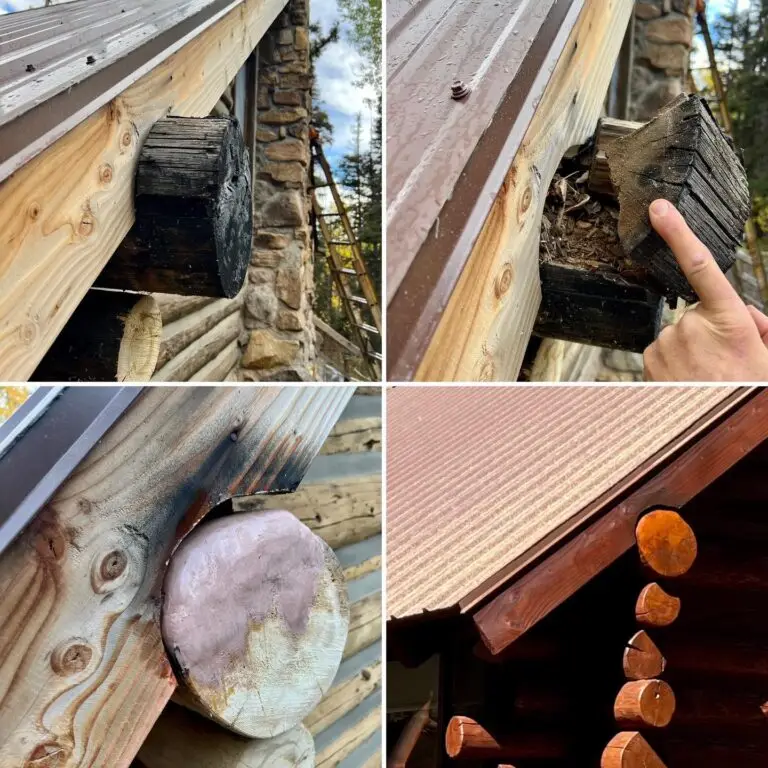
Localized rot can often be repaired without tearing out the wall. For smaller damage, our carpenters use Dutchman patches, scarf joints and epoxy consolidation. When decay runs through the core, the section or the whole log is replaced. Here is how that work is done in log repair and replacement.
5. Open checks that hold water
Checks are the cracks that open as a log dries. Most are normal and are not log home issues at all. The ones that matter face upward on the top half of a log, where they catch rain and snowmelt and feed it into the core. That is how a log can rot from the inside while the surface still looks fine.
Upward-facing checks get sealed with a flexible sealant that moves with the log. Downward-facing checks can usually be left alone. A healthy finish also slows new checking: the Wood Handbook notes that water-repellent treatments decrease checking.
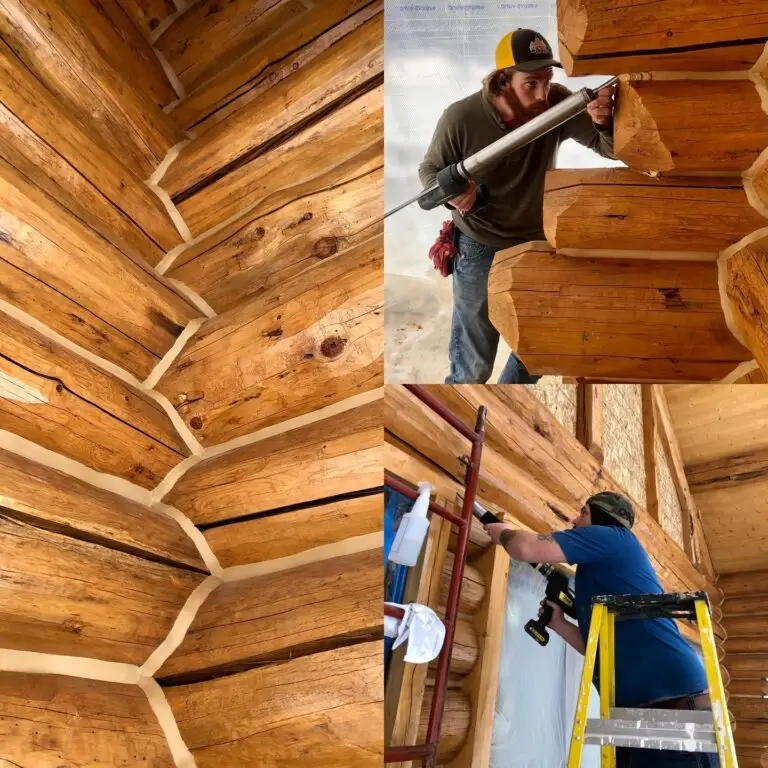
6. Failed chinking and caulking
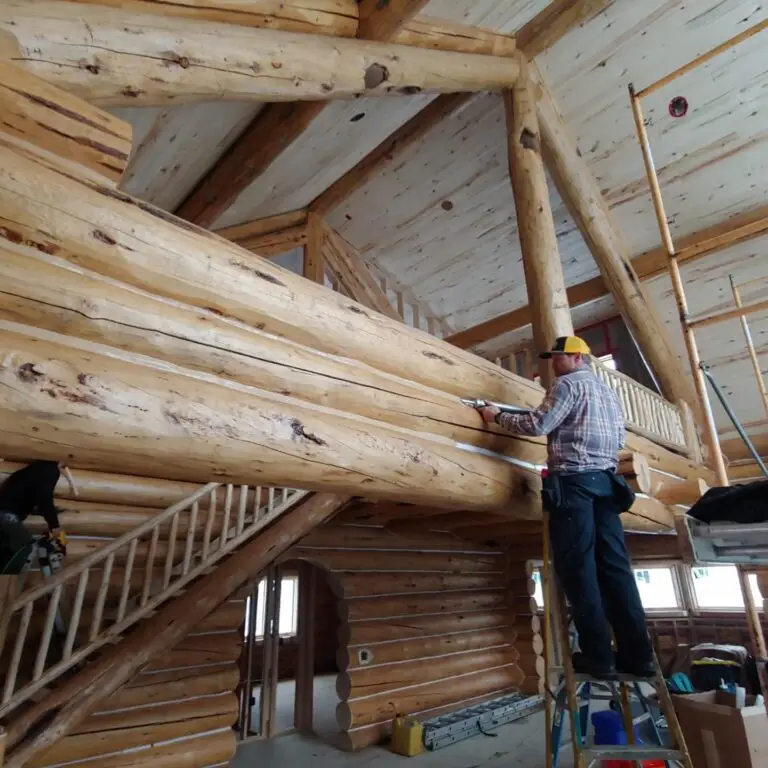
Chinking and caulking are the flexible seals between logs and around corners, windows and doors. When they fail, you feel drafts, see daylight or insects at the joints, and find damp streaks below the gaps. Look for sealant pulling away from the log, cracking down the middle or hardening until it no longer stretches.
A failed seal lets air and water through at the same spot, which is why it sits behind so many rot and energy complaints. Pencil Log Pros holds Perma-Chink applicator certification and Sashco Zero Failures training, and matches the sealant system to each joint and the movement it has to handle. Learn more about log chinking and sealant.
7. Settling gaps and sticking doors
Log walls lose height as the logs dry and compress under the weight of the roof. Windows, doors and interior walls built without room for that movement pay for it. Doors stick, trim cracks, drywall buckles and gaps open above frames.
Settling is one of the log cabin problems most common in younger homes, and it can continue for years. The fix is usually carpentry at the openings, restoring the space the wall needs to move and resealing the gap. Have it assessed before you force a door or shim a frame, because the wrong fix can crack glass or trap moisture.
8. Wood-boring insects
Perfectly round holes with sawdust below them point to carpenter bees. Pinholes with a fine, flour-like powder point to powderpost beetles. Coarse sawdust with no clear entry hole can mean carpenter ants, which usually follow moisture already in the wood. Woodpecker damage often follows the bees.
Insects are one of the few log cabin problems that act as both symptom and cause. Bare or weathered wood invites them, and their tunnels let water in. An active infestation needs a licensed pest professional first. The repair and the refinish that keep insects out come after. Our guide to log cabin pest and insect damage treatment walks through the process.
9. Hidden moisture
Some of the most expensive log home problems give no outside warning. Water can travel inside a log, behind trim or under a failed seal for years. The clues are usually indoors: a musty smell, interior finish that clouds or peels, cold spots, stained window sills or rising heating bills.
Finding it takes instruments, not guesswork. Pencil Log Pros takes moisture readings at suspect locations and uses thermal imaging to map hidden moisture and air leaks around windows, doors and log-to-frame joints. See how log home inspections and thermal imaging work.
Buying a log home? Check for these problems with log homes first
Most problems with log homes are visible if you know where to look. Before you make an offer, walk the outside with this list:
- The south and west walls. Compare their color and finish to the north side. A big difference means the finish is overdue.
- The bottom three courses and every log end. Probe for soft wood.
- The chinking and caulking. Look for gaps, cracks and sealant pulling away.
- Roof overhangs, gutters and grade. Water should shed away from the walls, not onto them.
- The records. Ask when the home was last stained, with what product and by whom.
Then ask your home inspector whether they will take moisture readings in the logs. If the answer is no, book a log-specific inspection before your inspection period ends. Rot found after closing is your problem, and problems with log homes rarely get cheaper with time.
Which log home problems can wait, and which can’t
Not every issue is an emergency. Use one rule: if water is getting in or wood is soft, act now. If the finish is tired but the wood is sound, plan it.
Act now:
- Soft or crumbling wood anywhere on the structure
- Water stains or musty smells inside
- Fresh insect holes or new sawdust
- Joints where you can see daylight
Plan for this season:
- Fading or blotchy stain on sun-facing walls
- Light greying that has not spread
- Hairline cracks in chinking
- Small checks that face down
Waiting changes the scope. A tired finish on sound wood is a re-coat. The same wall two winters later can need stripping, rot repair and new chinking before stain goes back on. A log home maintenance program keeps small log home issues small with an annual wash and inspection, a photo report and scheduled touch-ups.
How Pencil Log Pros diagnoses log home issues
Pencil Log Pros treats a log home as a structure, not a paint job. Every assessment starts with the root cause, because sealing over a leak or staining over rot only hides the problem for a season.
- Licensed leadership: Brad Siler is a Certified Licensed General Contractor Class C.
- Manufacturer training: Perma-Chink certified applicator and Sashco Zero Failures trained.
- Documented findings: moisture readings, photos and a written scope, so you see what we see.
- Protected work: bonded and insured, with workers’ compensation for a team of 16+ employees.
- Proven record: 99+ verified customer reviews with a 5.0 average, collected independently by Trustindex.
- Local and established: in business since 2013, based in Grand Junction and serving Colorado and surrounding states.
Log home problems: frequently asked questions
What are the most common log home problems?
The most common log home problems are failing stain, UV-greyed wood, water damage at log ends and bottom logs, rot, upward-facing checks, failed chinking and caulking, settling gaps, wood-boring insects and hidden moisture. Nearly all of them start with water getting into the wood or sun breaking down the finish. They usually show up first on south- and west-facing walls and the bottom courses.
Are log homes high maintenance?
Log homes need more scheduled care than a sided house, but not constant work. The core tasks are an annual wash and inspection, sealing checks and joints as they open, and re-coating sun-exposed walls before the finish fails. Keeping that schedule prevents most log cabin problems. Skipping it for years is how a re-coat turns into a restoration.
How often does a log home need to be stained?
It depends on sun exposure and the product. In Colorado’s high-UV climate, the most exposed walls often need a sectional re-coat every 2 to 4 years, while shaded walls can go longer. Water that no longer beads, chalky color and fading on the south and west walls are the signs it is time.
Can a rotted log be repaired without replacing it?
Often, yes. If rot is limited to the outer wood or a log end, it can be cut out and repaired with a Dutchman patch, a scarf joint or epoxy consolidation. When decay runs through the core, the section or the whole log is replaced. A probe test and moisture readings tell you which case you have.
How much does it cost to fix log home problems?
Cost depends on which problem you have and how far it has gone. Re-coating sound wood costs far less than stripping, chinking and log repair on a neglected wall. For a ballpark number based on your home’s size and condition, use our log home repair estimate tool, then book a free consultation for an exact scope.
Get a straight answer on your log home
You don’t have to guess which log home problems you have. Text a few photos or call (970) 462-7706 for a free consultation with Pencil Log Pros. We will tell you what is urgent, what can wait and what it takes to fix it.