

Most business posts try to sell.
Most viral posts do one job first.
They earn attention.
Attention creates memory.
Memory turns into calls when the need shows up.
A real example from Pencil Log Pros
https://www.instagram.com/pencillogpros/reel/DVSFA0UCX3B/
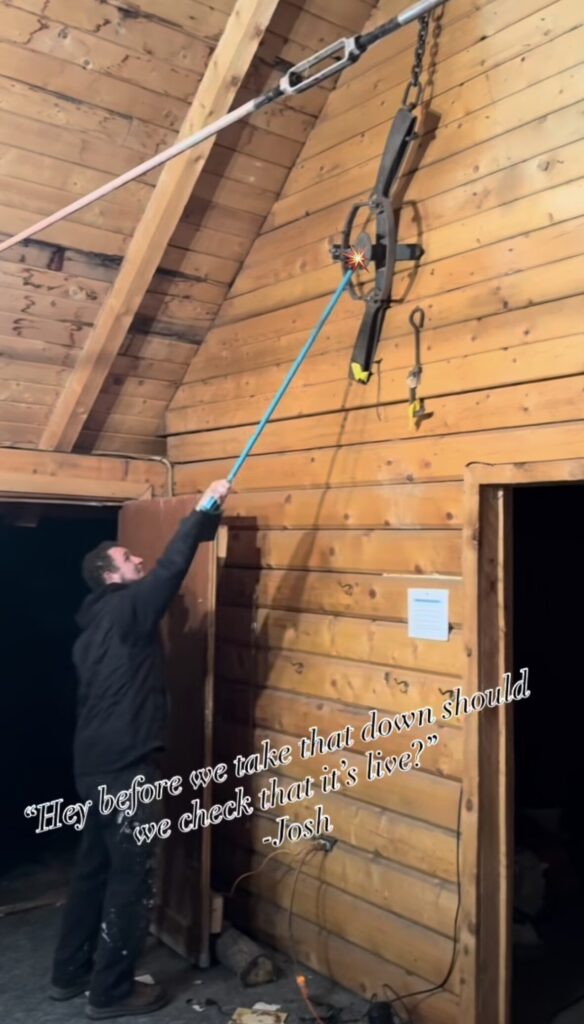 Pencil Log Pros posted an 8-second Instagram Reel from a log home restoration job.
A massive bear trap hung on the wall.
A team member tapped the trigger plate with a broom.
The trap snapped shut and chopped the end of the broom off.
This post did not sell anything.
It still drove massive reach and engagement.
– Over 1,300,000 views in under 20 hours
– Shared over 1,148 times on Instagram
– 19,900+ likes
– 102+ comments (funny, arguing, all engaging)
The comments did the rest.
People debated safety.
People joked.
People argued.
People posted theories on how the trap was hung without snapping.
People speculated what would have happened if nobody tested it with the broom.
That mix is a repeatable growth engine.
The lesson
Virality often comes from moments that are not “about your business.”
They are about what your business runs into.
They spark repeat watching.
They spark sharing.
They spark debate.
You do not need a pitch to grow.
You need a moment people can’t ignore.
Why this Reel worked
1) It starts with something rare
- A bear trap on a wall is not normal
- Viewers stop to figure out what they’re seeing
2) It creates tension fast
- The broom approaches the trigger
- Everyone expects a snap
3) It delivers a clean payoff
- The trap closes hard
- The broom breaks
- Proof is visible
4) It invites opinions
- “Would you test it?”
- “Is it real?”
- “How was it mounted?”
- “What could go wrong?”
5) The brand is present without begging for attention
- Jobsite setting
- Real people
- Real work
What viral content really does for your business

Viral clips do not need a short-term financial benefit to be valuable.
They create long-term advantage.
- Followers who keep seeing you
- Trust signals from repeated exposure
- Brand recall when someone needs your service
- Inbound leads from “I’ve seen you before”
Ask yourself:
When someone needs a business like yours, will they remember you?
The No-Pitch Viral Clip Framework
Use this framework to create clips that grow your audience without selling.
Step 1: Pick a “stop-scroll” moment
- Something strange
- Something risky (safe to film, safe to do)
- Something mysterious
- Something loud
- Something that breaks, snaps, pops, collapses, or reveals
Your goal: make viewers think, “What is this?” in under 1 second.
Step 2: Structure it like a tiny story
- Hook (0.0–0.7s): show the object or the problem
- Build (0.7–2.5s): one clear action
- Payoff (2.5–6.0s): the moment
- Loop (last frame): end where the start can restart cleanly
Step 3: Make it easy to understand with sound off
Many viewers watch muted.
Use simple on-screen text.
On-screen text examples:
- “Bear trap on the wall. Still live?”
- “Would you test this?”
- “Found this during a restoration job.”
- “Watch the broom.”
Step 4: Cut dead time
- Start closer to the action
- Keep the payoff early
- Use a quick replay if the moment happens fast
How to build an endless supply of “viral moments” in any business
You already have content.
You just are not collecting it.
Create a “Viral Inventory List”
Keep a running list in your phone.
Add items daily.
- Weird finds
- Hidden hazards
- Tools that look intense on camera
- “Does this still work?” tests
- Before/after transformations
- Fast fixes
- Fails that teach a lesson
- Old mechanisms, parts, or systems
Ask yourself:
What do customers always react to in person?
Caption and comment strategy that drives shares
Use one question that forces a choice
- “Keep it or remove it?”
- “Test it or walk away?”
- “Real or staged?”
- “What would you do first?”
Pin a comment that invites debate
- “One word: Decor or danger?”
- “What would you tap it with?”
- “How do you think it was mounted?”
Reply like a growth machine
- Reply fast in the first hour
- Reply short
- Ask one follow-up question
- Let people disagree
Turn a viral clip into business growth
A viral clip is a spike.
Your job is to turn it into a series.
Post this 3-part follow-up sequence within 7 days
- Behind the scenes: “Here’s where we found it.”
- The lesson: “Why we tested it first.”
- The work: “What we fixed next in the restoration.”
You do not need a sales pitch.
You need momentum.
Update your profile so new viewers know what to do
- Clear “what you do” line
- Clear service area
- One call to action
- Pin 3 best clips
Repurpose one viral clip into evergreen content
One strong clip can become a full content set.
- Blog post (this article)
- YouTube Short
- TikTok repost
- Facebook Reel
- LinkedIn post on attention and recall
- Email to your list: “What we found on a job”
- A “3 lessons” carousel
Metrics to track
Do not obsess over views.
Track signals that predict growth.
- Shares (strongest signal)
- Saves
- Average watch time
- Rewatches
- Profile visits
- Follows per 1,000 views
Ask yourself:
Did the clip create a reaction strong enough to share?
FAQ
Do viral videos help local service businesses?
Yes.
They create familiarity at scale.
People hire what they remember.
What makes a short clip go viral?
A rare moment.
Fast tension.
Clear payoff.
A reason to share.
What should I post after a viral clip?
Post follow-ups that keep the story going.
Show the setting.
Show the lesson.
Show the work.
How do I grow without selling?
Film the moments your work creates.
Post them consistently.
Let the audience build memory of you.
Your next move
Make a list of 25 “stop-scroll” moments in your business.
Film 5 this week.
Post 3.
Track shares and profile visits.
Repeat.