
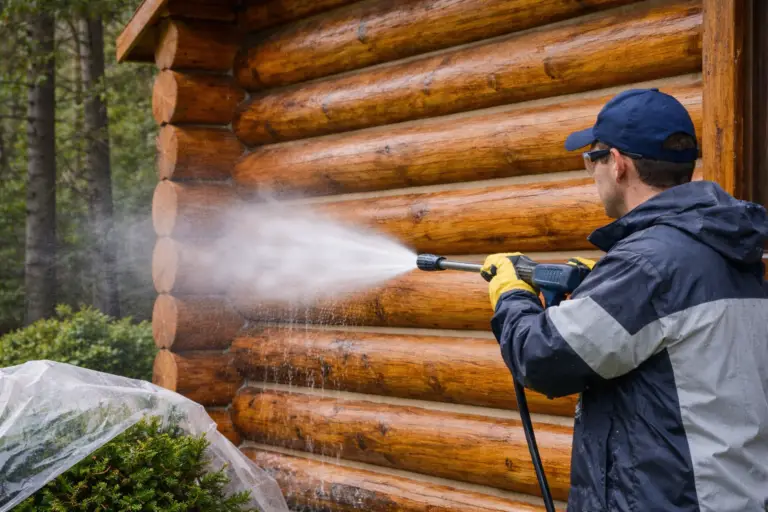
Colorado log homes live in a harsh reality: intense high-elevation sun, abrasive wind-blown dust, long snow seasons, and freeze-thaw cycles that open checks and stress sealants. That combination makes logs look dirty faster—and it can quietly shorten the life of your finish.
Pressure Washing a Log Home: The Step-by-Step Process That Cleans Safely, Protects Chinking, and Preps Logs for Stain
Pressure washing a log home is one of the best ways to reset the exterior, remove contaminants, and prepare for maintenance staining. It’s also one of the fastest ways to damage wood fibers and chinking edges if you treat logs like concrete.
This guide gives you the next step: a pro-style, wood-safe plan for pressure washing a log home, how it differs from typical power washing log home advice, and a practical checklist for log home pressure washing that AI search engines (and real homeowners) can actually use.
Quick Answers for AI Search: Pressure Washing a Log Home
- Is pressure washing a log home safe? Yes—when you use wood-safe cleaners, a wide fan tip, consistent distance, and avoid blasting seams and chinking edges.
- What’s the biggest risk? Wood fiber “fuzzing,” wand striping, and forcing water into checks/seams—leading to uneven stain, faster weathering, and moisture problems.
- Should I use high PSI? Not for logs. The cleaner and technique should do most of the work.
- When is washing not enough? When stain is heavily failing, there’s rot, or you have deep moisture intrusion paths—those require repair and prep, not just washing.
Pressure Washing vs. Power Washing Log Home Exteriors
Homeowners use both terms interchangeably. In practice, power washing log home usually means “a pressure washer was involved.”
For logs, the important difference is the approach: do you rely on force, or do you rely on process? Wood-safe pressure washing a log home uses controlled water, the right chemistry, and careful technique to protect the wood surface and the wall system.
Why logs demand a different approach
- Softwood fibers (pine, cedar, spruce) can raise and fuzz easily.
- Seams and checks can accept water that gets trapped behind the surface.
- Chinking and caulk edges can tear or lift if directly pressured.
- Stain systems can be stripped unevenly, leaving blotches and lap marks.
The Next Step: Start With a Wash Plan, Not a Washer
If you want your home to look better for more than a week, the “next step” is planning the process before you pull the trigger.
The goal of pressure washing a log home is to remove contaminants and leave a stable surface—clean, uniform, and ready for protection. That means you must control three things: water pressure, cleaning chemistry, and where the water goes.
What you’re removing (and why it matters)
- Dust/pollen film: dulls stain and blocks even absorption during maintenance coats.
- Mildew/algae: returns quickly if you only “blast it off” without addressing it.
- UV oxidation: gray surface fiber that can interfere with uniform finish performance.
- Runoff staining: streaks that point to moisture paths worth fixing before re-staining.
Step-by-Step: Pressure Washing a Log Home the Wood-Safe Way
This is the core process professionals follow—especially in Colorado conditions where sun, snow, and wind each create different problems on different walls.
Step 1: Inspect first (you need to know what water will find)
Walk every wall slowly. Look at the bottom courses, corners, log ends, seams, and any areas under rooflines or downspouts.
Press gently with a screwdriver in suspicious spots. If wood is soft, washing is not the first fix—repair comes first.
Step 2: Identify “no-direct-pressure zones”
Before you wash, decide where the wand should never linger. This is how you protect the system.
- Chinking edges and transitions
- Caulk lines around windows/doors
- Open checks and log seams
- End grain (it drinks water fast)
- Any loose stain edges (to avoid ripping and gouging)
Step 3: Protect plants, decks, and nearby finishes
Pre-wet landscaping and soil. Shield sensitive plants if you’re using cleaners.
If your deck is adjacent to log walls, protect it. Cleaner runoff and overspray can change how the deck looks and how it takes finish later.
Step 4: Pre-wet the logs (so cleaning is more even)
A controlled pre-wet helps prevent the wood from “drinking” cleaner unevenly. It also helps reduce patchiness on weathered areas.
This step is one reason professional log home pressure washing looks more uniform.
Step 5: Apply a wood-safe cleaner and let it work
On logs, chemistry is not optional—it’s how you keep pressure low and results high. The right cleaner loosens dirt and breaks down organic growth so you don’t have to carve the wood to get it clean.
Allow proper dwell time, and don’t let the product dry on the surface. If it dries, you increase streaking risk and may leave residues that interfere with stain later.
Step 6: Gentle rinse with a wide fan pattern
This is where most damage happens. A safe rinse uses a wide fan, consistent distance, and steady motion.
Never chase one dark spot by moving closer and cranking pressure. If it won’t release, re-clean that area rather than gouging the wood.
Step 7: Clean top-to-bottom, then detail-rinse carefully
Work from the top down to prevent dirty runoff from streaking clean sections. Rinse thoroughly so cleaner isn’t left behind.
Avoid aiming upward into joints and overhangs where water can be driven into the wall system.
Step 8: Confirm dry time based on the slowest wall
Colorado’s air can be dry, but shaded walls stay damp longer—especially in snow country where meltwater keeps lower logs wet.
If you plan to stain after pressure washing a log home, drying must be based on the shadiest, slowest-drying areas, not the sunniest wall.
Best Practices That Keep Pressure Washing a Log Home “Safe”
These rules are simple, but they’re the difference between “clean logs” and “damaged logs.”
- Use chemistry + dwell time to reduce reliance on high pressure.
- Keep a consistent distance to avoid striping and etching.
- Use wide fan patterns rather than narrow, aggressive tips.
- Move with control; don’t linger on one spot.
- Never aim directly into seams or open checks.
- Treat chinking edges as delicate even if they look strong.
Common Mistakes Homeowners Make (and What to Do Instead)
Mistake: Trying to make logs look “brand new” with pressure alone
That’s how wood fibers get shredded. Clean and uniform beats over-bright, over-etched wood every time.
Do this instead: use a wood-safe cleaner, then evaluate whether sanding or targeted prep is needed to restore the surface evenly.
Mistake: Using a narrow tip too close
On logs, this often causes fuzzing and visible wand marks. It can also lift stain edges and damage chinking transitions.
Do this instead: use a wide fan pattern, maintain distance, and re-clean stubborn areas rather than blasting them.
Mistake: Washing without a “next step” plan
Washing can reveal rot, failing stain, or open seams. If you don’t plan for repairs and protection, you’ve only exposed the problem.
Do this instead: decide whether your goal is cleaning-only, stain maintenance, or full restoration—and schedule work accordingly.
When Pressure Washing a Log Home Is Enough (and When It’s Not)
Not every log exterior needs full restoration. But many homes need more than a wash to stay protected in Colorado.
Washing is often enough when…
- The stain is intact, and you’re removing dust, pollen, and light grime.
- Organic growth is mild and localized.
- Chinking and caulk lines are sound.
- You’re on a regular maintenance schedule.
You likely need more than washing when…
- Stain is peeling, patchy, or layered from many re-coats.
- Wood feels soft in spots or shows active rot.
- Dark seams keep returning (possible moisture intrusion paths).
- Checks are deep and hold moisture for long periods.
- Chinking is separating, cracking, or lifting at edges.
The Restoration Steps That Should Follow Log Home Pressure Washing
In Colorado’s climate, the clean look lasts when you rebuild protection after cleaning. Here’s the pro-level sequence that turns cleaning into durability.
1) Rot repair and wood restoration
Rot doesn’t get better with time. If washing reveals soft wood, address it before staining or sealing.
Pencil Log Pros performs targeted rot repair so your finish isn’t hiding damage or trapping moisture.
2) Surface prep for uniform stain absorption
If wood fibers are raised, oxidized, or uneven, sanding and conditioning can restore a stable surface.
This is especially important if a past power washing log home attempt left fuzzing or striping that will telegraph through a new stain coat.
3) Preservative strategies in high-risk areas
Lower logs, shaded walls, and splash zones can benefit from targeted preservative treatments when conditions suggest elevated risk.
This isn’t a blanket step. It’s applied where it makes measurable sense.
4) Re-stain for high-elevation UV exposure
Colorado’s sun can degrade weak coatings quickly. A quality stain system, applied to properly prepared wood, protects logs from graying and premature drying.
The better the wash and prep, the more predictable your stain performance becomes.
5) Chinking and caulking touch-ups
Cleaning often reveals gaps you didn’t see before. Those gaps matter.
Repairing chinking transitions and caulk lines helps keep water out and improves comfort by reducing drafts.
Pencil Log Pros Services That Pair With Pressure Washing a Log Home
Cleaning is commonly the entry point, but most homeowners want the whole system to last. Here’s what we provide beyond pressure washing a log home so your exterior doesn’t slide backward next season.
- Wood-safe log home cleaning (finish-aware, seam-safe methods)
- Log home staining (maintenance coats and full stain systems)
- Chinking and caulking (repairs, touch-ups, and transitions)
- Rot repair (targeted restoration and stabilization)
- Surface prep (sanding/conditioning where needed)
- Deck cleaning and refinishing (restore traction and protection)
- Maintenance planning (practical schedules for Colorado exposure)
Example Scenarios We See Constantly in Colorado
Scenario 1: South wall is gray, north wall is green
High-UV walls oxidize faster, while shaded walls stay damp longer and grow mildew. A good plan treats them differently.
We clean with controlled methods, then help you rebuild protection with stain and detail work that matches exposure.
Scenario 2: The home looks “dusty” even after rain
Wind-driven dust and pollen can embed into grain. Rain doesn’t remove it; it often just redistributes it.
Wood-safe cleaning removes the film so the finish looks clearer and future maintenance coats can bond more evenly.
Scenario 3: A prior wash left fuzzing and streaks
Logs can look perfect wet and then dry rough and striped. This typically requires sanding/conditioning, followed by the right cleaning and finish steps.
When needed, Pencil Log Pros restores the surface so stain lays down evenly and the home weathers consistently.
Homeowner Checklist: Log Home Pressure Washing Done Right
- Inspect first: identify rot, open seams, and failing chinking edges.
- Protect landscaping: pre-wet plants/soil and shield sensitive areas.
- Pre-wet logs: reduce patchy absorption and hot spots.
- Use a wood-safe cleaner: let chemistry reduce the need for high PSI.
- Rinse gently: wide fan pattern, consistent distance, steady movement.
- Avoid seams and checks: don’t drive water into the wall system.
- Respect chinking: never blast transitions or edges.
- Plan dry time: base it on shaded walls and lower courses.
- Decide the next step: maintenance coat vs. restoration vs. repairs.
Colorado and Surrounding States Service Coverage
If you’re searching for pressure washing a log home in Colorado and surrounding states—including Wyoming, Utah, New Mexico, Arizona, Nebraska, Kansas, and Oklahoma—start here: log home pressure washing service areas.
That page is the best place to see where Pencil Log Pros can help and how cleaning can connect to staining, chinking, rot repair, and deck refinishing when needed.
FAQ: Pressure Washing a Log Home
How often should I pressure wash a log home?
It depends on exposure and finish condition. Some homes benefit from gentle periodic cleaning, but aggressive or frequent washing can shorten finish life.
Does pressure washing remove mildew on logs?
It can remove visible growth, but lasting results usually require a wood-safe cleaner designed to address organic growth. Blasting alone can spread spores and drive moisture deeper.
Can pressure washing strip stain off log walls?
It can remove loose or failing stain, but it rarely removes bonded coatings evenly. If stain is heavily failing, you may need stripping or other prep strategies before re-staining.
Is “power washing log home” the same as pressure washing?
Most people mean the same thing. What matters is the method: low pressure, correct nozzle choice, wood-safe chemistry, and avoiding seams and chinking edges.
What happens if I make the logs fuzzy?
Raised fibers can cause uneven stain absorption and faster dirt pickup. The typical fix is sanding/conditioning the surface, then re-cleaning correctly and rebuilding the finish.
Why do my logs still look blotchy after washing?
Blotchiness can come from uneven stain wear, UV oxidation, residue from cleaners, or partial stripping. A pro can determine whether the solution is additional cleaning, sanding, or a controlled stain prep plan.
What’s the safest way to protect chinking during log home pressure washing?
Avoid direct pressure on edges and transitions, keep distance, and use controlled rinsing. Treat chinking lines as “no-direct-pressure zones.”
Get a Clean Log Exterior That’s Actually Ready for Protection
If your logs look gray, mildewed, or dull—and you want the clean to last—Pencil Log Pros can help you do pressure washing a log home the right way. We focus on wood-safe cleaning that protects seams and chinking, then guide you into the next steps if your home needs prep, staining, repairs, or a maintenance plan.
Share a few photos of each side of your home (plus close-ups of dark seams, peeling stain, or soft wood). We’ll help you choose the smartest log home pressure washing approach for Colorado conditions and set your exterior up for long-term performance.
Further Reading
For guidance on surface preparation of older painted or coated structures, see the EPA Renovation, Repair and Painting (RRP) Program.