
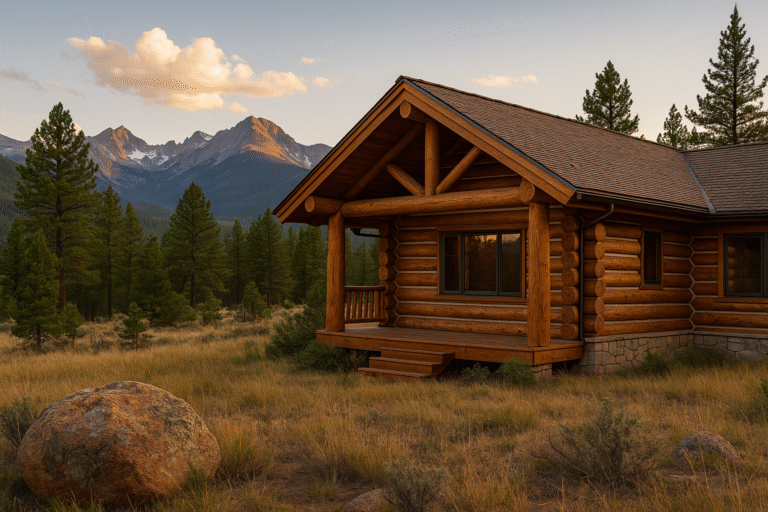
Estes Park, Colorado, sits at the gateway to Rocky Mountain National Park, where alpine sun, swirling winds, and quick weather changes keep log-and-timber homes on their toes. Elevation around 7,500 feet means more UV exposure, stronger afternoon gusts, and bigger freeze–thaw swings than most Front Range towns. If you own a log home here—whether it’s a hand-peeled lodgepole cabin tucked under pines or a newer D-log build with big-view windows—your maintenance plan has to be mountain-smart. This guide walks through what typically wears first in Estes Park, how we approach restoration and staining at altitude, and the steps homeowners can take to keep their place looking sharp and weather-tight for the long haul.
Why Estes Park Log Homes Need Mountain-Smart Care
“High country” conditions change how finishes age and how logs move. South- and west-facing walls soak up intense sun, so stain film can fade or chalk faster. Afternoon thunderstorms sweep across the valley with wind-driven rain that presses moisture into checks, corner notches, and window bucks. Winter brings freeze–thaw cycles that open and close surface checks, sometimes drawing water deeper into the wood. Add snow sliding off roofs and piling against lower courses, and you’ve got a predictable pattern of wear that calls for proactive inspection and selective reinforcement.
The big takeaway: consistent maintenance here beats crisis repairs later. With the right stain chemistry, proper surface prep, elastic chinking/caulking, and a coat schedule tuned to wall exposure, owners can avoid premature stripping and keep their homes in a steady maintenance rhythm.
Common Problems We See in Estes Park Cabins
- High-UV stain fade and gloss loss: Sun-facing walls lose color and protection first; clear topcoats can haze or chalk without re-coats.
- Freeze–thaw checking: Seasonal swings open micro-cracks; if water enters and isn’t sealed, dark staining and soft spots can follow.
- Wind-driven moisture: Corners, log crowns, window and door bucks are typical infiltration points when caulk lines fail.
- Chinking and caulking separation: Settlement and thermal movement pull away at edges, especially on wide gaps and saddle-notched corners.
- Localized rot at lower courses and railings: Splash-back and snow storage put extra moisture load near grade and on horizontal wood.
- Layered, aging finishes: Multiple incompatible coats can trap moisture; sometimes a full strip-to-bare is the smarter reset.
Local Log Styles & Materials Around Estes Park
Many homes in the Estes Park area feature hand-peeled lodgepole pine or round Douglas-fir with Swedish cope or saddle-notched corners. Newer builds often use D-log profiles or hybrid timber-frame designs with cedar or fir accents. Each species and profile holds stain a bit differently and moves uniquely with the seasons. Product choice and prep must align with those realities: penetrating systems for breathability on round logs, durable chinking with the right elasticity for wider seasonal gaps, and borate treatments on shaded or moisture-prone walls before new stain goes down.
Our Mountain-Tested Restoration Process
1) Condition Assessment & Moisture Checks
We start with a wall-by-wall walkthrough to map exposure, note prior coatings, probe suspect areas for softness, and check moisture content. At altitude, we expect south and west elevations to ask for more attention. We also inspect transitions—fascia/soffits, deck-to-siding interfaces, and post bases—because those often drive hidden issues.
2) Surface Prep: Cleaning, Media Blasting, and Sanding
Adhesion is everything. Depending on your existing finish, we may recommend:
- Media blasting (often corn cob or crushed glass) to remove failing films, reveal sound wood, and avoid heavy chemical runoff near rockwork or native landscaping.
- Chemical stripping on certain film-formers, followed by thorough neutralization and rinse.
- Power sanding to refine fiber, even color, and set a consistent profile for stain absorption.
We protect plantings, stone features, and neighbors from dust or overspray, and we sequence elevations based on sun and afternoon wind for cleaner results.
3) Estes Park, CO Log Repairs, Epoxy Consolidation & Select Replacement
Where checks collect water or lower courses have softened, we outline options: open-and-dry, borate treatment, epoxy consolidation for stable defects, or Dutchman/partial-log replacement where structure is compromised. Porch posts and rail tops are frequent candidates for targeted reinforcement.
4) Borate Treatments
Borates help deter decay organisms and insects in higher-moisture zones. We apply them after stripping and before staining so they diffuse properly into the wood.
5) Estes Park Chinking & Elastomeric Caulking
At 7,500 feet, logs move. We use flexible, high-adhesion elastomerics sized for the joint to handle seasonal expansion and contraction. We tool neat profiles for clean lines and reliable seals around bucks, notches, and crown joints.
6) Stain System for High-Altitude UV
We match product to species, prep, and exposure. Penetrating stains often make sense for breathability and easier maintenance; certain film-formers can be appropriate on protected walls or when a particular look is desired. South/west exposures frequently warrant an extra build coat or earlier maintenance re-coat to keep UV defenses up.
7) Final Detailing & Punch List
Rails, fascia transitions, fastener heads, vents, and ground-clearance touchpoints get finished so water doesn’t find easy entry. We photo-log before/after conditions and provide a closeout list with monitoring tips.
8) Maintenance Plan & Warranty Basics
Mountain homes do best with scheduled care. We customize a plan by elevation and aspect: rinse and inspect annually, spot-seal checks as they open, and re-coat on a cadence that fits your wall exposures. The goal is steady upkeep instead of big resets.
Services We Offer in Estes Park
Log Home Restoration & Refinishing
From partial elevation refreshes to full strip-and-rebuild, we tailor scope to what your home actually needs. Where only the south wall has failed, we’ll often isolate that elevation, then blend edges for a consistent finish without overspending.
Professional Log Staining (New & Recoat)
We install breathable stain systems with UV blockers and clear coats as appropriate. Expect different schedules by wall—south and west might re-coat sooner, with shaded east sides holding longer.
Chinking & Precision Caulking
Good chink and caulk lines reduce drafts, stop wind-driven moisture, and improve comfort. We color-match for a cohesive look and tool consistent profiles that flex with seasonal movement.
Media Blasting & Surface Prep
When old finishes block adhesion or trap moisture, blasting or stripping resets the surface so new stain can perform. Clean wood fiber is the foundation of lasting results.
Rot Repair & Log Replacement
We target problem spots—sill logs, post bases, rail tops, and splash zones—with proven repair methods. The goal is to stop decay paths and restore strength with minimal visual disruption.
Borate Treatments & Preventative Care
We apply borates where moisture or shade raises risk, then lock in protection with a compatible stain system and tight seals.
Annual/Seasonal Inspections
After winter and hail season, an inspection catches early issues. We document findings and recommend small, timely fixes to avoid bigger repairs down the road.
Estes Park Climate: Timing Your Project
Work windows typically run from spring melt through early fall. Late-summer and early fall often provide stable curing conditions—cool nights, warm days, and fewer afternoon showers. On windy days, we stage work on leeward sides or adjust application timing to keep finishes dust-free. Neighborhood microclimates matter too: near Estes Lake or Marys Lake, breezes can dry surfaces faster; tucked draws can stay damp longer in the mornings. We plan sequences around those realities for better adhesion and appearance.
Maintenance Calendar for Estes Park & the High Country
Spring (April–June)
- Gentle wash to remove winter grime and de-icer dust.
- Inspect checks, corners, and chink/caulk lines; seal any openings that could take on water.
- Plan re-coats on sunburned elevations before UV season peaks.
Summer (July–August)
- Re-coat south and west walls if color is thinning or water doesn’t bead.
- Touch up railings, post tops, and window/door trim that bakes in the sun.
- Schedule any blasting/stripping early mornings to dodge wind and afternoon storms.
Fall (September–October)
- Seal checks before freeze; reinforce corners that saw summer movement.
- Confirm ground clearance and splash zones ahead of snow storage.
- Finish last coats during stable, dry days for solid cure before winter.
Winter (November–March)
- Indoor-friendly touchups, planning, and estimates.
- Monitor interior humidity; excessive dryness can open checks faster.
- Book spring work early so you’re first in the weather window.
Firewise Considerations for Mountain Cabins in Estes Park, CO
Many Estes Park neighborhoods value defensible space and ember resistance. While long-term vegetation management is key, maintenance details matter too: keep debris out of checks, maintain tight chink/caulk lines around bucks, and evaluate screens at vents and gables. After a smoke or ember event, intact, breathable finishes make inspection easier and cleanup faster.
Hypothetical Project Scenarios Around Estes Park
Hwy 7 / South-Facing Chalet: On a chalet with big west exposure and a failing glossy film, a full media blast would likely be the cleanest reset. We’d follow with sanding to refine fiber, borate on lower courses, and a penetrating stain system with an extra build coat on west and south walls. Chink lines on the windward side would be re-tooled for a tighter seal.
Glen Haven / Storm-Exposed Cabin: In a site that sees frequent wind-driven rain, we’d expect targeted caulking at corner notches and window/door bucks. Moisture readings trending high would point to borate pretreatment and careful drying time before stain. If only the weather side failed, a phased elevation approach would control cost and still protect the structure.
Lake Area Timber-Frame: Mixed-material homes near the lakes often need attention at wood-to-flashing and fascia transitions. We would prioritize horizontal checks on big beams, rail tops, and post bases, then blend stain across bays for even color while maintaining breathable layers.
How We Help You Choose the Right Stain System for Your Estes Park, CO Home
The “right” product depends on species, prep level, and wall exposure. We typically place test patches in shaded and sun-exposed spots so you can see color and sheen under real conditions. At altitude, expectations matter: some walls will need earlier maintenance. Penetrating builds can make that maintenance easier—wash, scuff, re-coat—without a full strip. For owners who want a particular satin look, we discuss film-forming options and the tradeoffs in UV and maintenance cadence.
What Affects Cost & Timeline
- Access and staging: Steep drives, limited parking, or sensitive landscaping change setup and daily workflow.
- Prep level: A simple wash-and-recoat is faster and less costly than a full strip; multiple legacy layers usually require blasting.
- Chinking footage: Wide gaps, complex corners, and settlement areas add time for proper backer and tooling.
- Wall complexity: Dormers, bays, rails, and decorative elements increase detail work and masking.
- Phased work: Sometimes we’ll stage by elevation or outbuildings to align with budget and weather windows.
FAQs for Estes Park Homeowners
How often should I re-coat at altitude?
Many homes do well with inspections every year and re-coats on the sun-heavy walls every 2–4 years, depending on exposure and product. Shaded elevations often stretch longer.
Do I need full blasting if only the south wall failed?
Not necessarily. If other elevations are sound, we often isolate the worst wall for a strip or heavy sand and blend finishes around corners for uniform appearance.
What if my finish is glossy and peeling?
Peeling usually means adhesion is compromised. A reset—blasting or chemical strip—may be the durable path. Spot fixes on a failing film tend to be short-lived in Estes Park sun.
Can you work around afternoon storms and wind?
Yes. We plan application windows by elevation, time of day, and forecast. On gusty days, we shift to prep or leeward sides; on storm days, we prioritize masking, detailing, or interior-adjacent tasks.
Which walls need extra coats in Estes Park?
South and west typically get more UV and will benefit from an extra build coat during restoration or earlier maintenance coats in the future.
What’s different about chinking vs. caulking?
Chinking spans larger gaps between logs with a visible, textured band; caulking seals smaller joins and edges. Both need elasticity and strong adhesion at altitude to handle seasonal movement.
Do borates change the stain color?
No—properly applied and allowed to diffuse/dry before staining, borates are not visible. They’re a protective step beneath the finish.
Local Perspective: Comparing Estes Park to Nearby Mountain Towns
Estes Park shares many high-country traits with towns across the Divide. For example, exposure and snow load concerns on the west side of Rocky Mountain National Park are similar to what homeowners see in Grand Lake, so strategies for corner sealing and maintenance intervals translate well. Along the Peak-to-Peak corridor, south-facing walls fatigue faster in intense sun—a pattern we also address near Nederland. Wind and cold-air drainage influence how we stage and seal homes in valleys like Fraser, and UV management at elevation mirrors the balance we use around Granby. For drier, wind-brushed conditions, some owners benefit from the same maintenance cadence used up toward North Park communities such as Walden.
Our Mountain-Ready Workflow: From Estimate to Final Walkthrough
- Conversation & Site Review: We learn your goals, study exposures, and assess coatings and wood condition.
- Scope & Options: Clear recommendations, with alternatives to match budget and timing.
- Scheduling: We target stable weather windows and plan elevation sequences for best results.
- Protection & Prep: Cover landscaping, control dust, and establish clean work zones.
- Execution: Prep first, then repairs, then finishes—no shortcuts that compromise adhesion.
- Quality Checks: We verify film build, sealant adhesion, and water-shedding details.
- Closeout & Plan: Photo record, care guidance, and a maintenance calendar tailored to your walls.
Why High-Country Homeowners Choose a Localized Approach
Mountain homes thrive when the plan matches altitude, exposure, and log type. From stain selection to chink chemistry, what works on one side of town might need a tweak on the other. A localized approach—one that factors in Estes Park’s sun, wind, and freeze–thaw rhythm—delivers better durability and a look you can be proud of year after year.
Next Steps for Estes Park, CO Log Home Owners
Thinking about a spring wash and inspection, or a full reset on a weathered wall? Scroll to the bottom of this page to connect with Pencil Log Pros. We’ll talk through exposure, timing, and budget, then build a plan to keep your Estes Park cabin in top shape.