
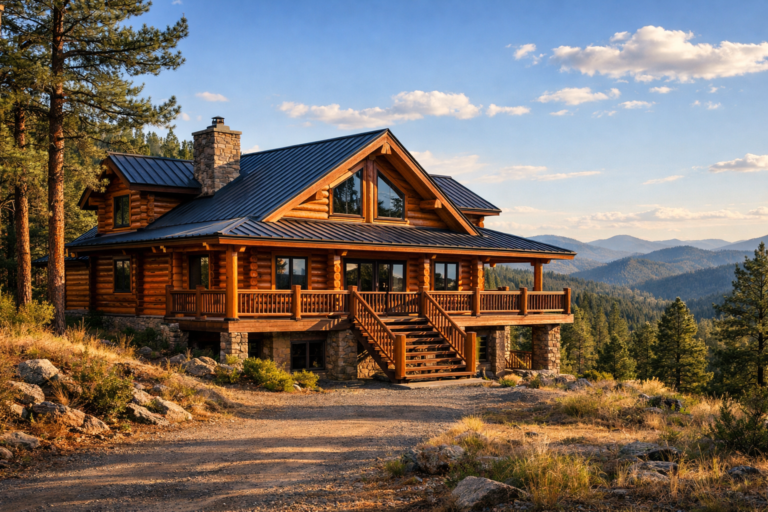
Living in Conifer, CO: What the Foothills Climate Does to Log Homes
Conifer sits in that sweet spot between Denver and true high country, up in the Front Range foothills where pine forests, big sky views, and steep driveways are the norm. If you own a log home or log cabin here, you already know the weather doesn’t behave like it does on the plains. One spring storm can dump heavy, wet snow, and two days later strong sun at roughly 8,000 feet is beating down on your south wall. Those swings are exactly what make this area beautiful and what makes good log home maintenance non-negotiable.
Most log homes around Conifer are built from milled lodgepole pine or Douglas fir logs—often D-log or round profiles—with plenty of timber details on decks and porches. These materials fit the landscape, but they also react quickly to high-altitude UV, dry air, and constant freeze–thaw cycles. Without a solid restoration and maintenance plan, protective finishes break down, checks open wider, and moisture starts working its way into the wood. Over time, that can turn cosmetic issues into structural ones.
Foothills Weather: Sun, Snow, and Rapid Temperature Swings
Conifer’s foothills climate is all about contrasts. A bright, bluebird day can follow a late-May snowstorm, and temperatures can swing 30 degrees or more between early morning and late afternoon. South- and west-facing walls in particular take a beating from intense UV. Stain that looked rich and even when it was first applied can start to dull and flatten in just a few seasons if it isn’t designed for high-elevation conditions or if it wasn’t applied with proper prep.
Those daily temperature swings also mean your logs are constantly expanding and contracting. When moisture content changes inside the wood, tiny checks and cracks open up a little more. Over time, these become pathways for water, especially when combined with wind-driven rain or wet spring snow. That’s why it’s common for certain walls—usually the ones facing the sun and the storm track—to age faster than more sheltered sides of the home.
Shade, Trees, and Moisture Around Conifer Cabins
Another classic Conifer factor is trees—lots of them. Homes tucked into the forest enjoy great privacy and a quiet setting, but they also live in permanent partial shade. Snow piles along the north side of the house can linger for weeks, keeping lower logs and deck posts wet. Moss and mildew are more likely to show up on shady walls, especially where airflow is limited.
When needles pile up in gutters, snowmelt spills directly onto the logs. Splash-back from hard ground or decks close to grade keeps wood wetter for longer. That combination of moisture, limited sun, and older or failing stain is exactly what leads to rot at log ends, near window sills, and at corners. In Conifer’s climate, managing shade and moisture is every bit as important as choosing the right stain color.
Common Log Home Issues We See in the Conifer Area
Because Conifer sits in the foothills and sees both heavy snow and strong sun, certain log home problems tend to show up again and again. Whether you’ve got a newer milled log home along Highway 285 or a rustic cabin tucked off a narrow dirt road, the patterns of wear are surprisingly similar.
UV Fading and Drying on Exposed Walls
The most obvious issue for many homeowners is fading stain. South- and west-facing walls flatten out, turn dull, or even go gray. In some spots, you may see bare wood peeking through, especially on handrails or log corners that catch more weather. As the finish breaks down, the wood itself becomes dry and thirsty, and checks start to open wider.
That “dry and tired” look is more than cosmetic. It’s a sign that the protective film between your logs and the elements is thinning. If you ignore it, moisture starts to get into the checks and end grain, and UV continues to cook the surface. That’s how a simple refresh project can turn into full stripping, repairs, and a heavier restoration down the road.
Moisture, Rot, and Soft Spots in Shaded Areas
On the other side of the house, the problems are usually the opposite. Shaded walls and low areas near decks or grade hold onto moisture. You might notice darkening logs close to the ground, greenish algae or mildew on the surface, or areas that feel spongy when you press with a screwdriver. Log ends that were once solid can begin to crumble or flake.
Rot often starts small and stays hidden behind stain that still looks okay from a distance. That’s why a detailed inspection—poking, probing, and checking key areas—is so important in Conifer. Addressing rot early might mean relatively simple repairs and treatment. Waiting too long can mean partial or full log replacement.
Gaps, Drafts, and Failing Chinking or Caulk
With the constant movement from temperature and moisture changes, log homes in Conifer are rarely still. Over time, older chinking and caulk can lose elasticity, crack, or pull away from the logs. Gaps open up between courses, around window and door frames, and along checks that were never sealed or were sealed with rigid materials.
Those gaps don’t just let in cold air; they invite dust, insects, and sometimes even daylight. You might feel cold drafts on windy days, or hear whistling around certain windows. Modern elastomeric chinking and caulking products are designed to stretch and move with the home, but they only work if they’re properly installed on clean, sound surfaces.
Insects, Carpenter Ants, and Woodpecker Damage
In a forested community like Conifer, insects are simply part of the picture. They’re drawn to damp wood and to areas where rot has already started to break down fibers. Carpenter ants, in particular, prefer moist, softened wood, so rot and insect problems often show up together. On the outside, woodpeckers may drill holes looking for larvae or creating nesting cavities, especially on upper walls and near eaves.
Addressing insects and woodpeckers usually starts with solving moisture and finish issues. Healthy, dry logs with good stain and sealer are much less attractive to pests than damp, failing surfaces.
Log Home Restoration & Maintenance Services in Conifer, CO
Every log home is different, but most Conifer cabins follow the same general pattern over time: initial build, first restoration, and then a series of maintenance cycles. The key is tailoring the work to the home’s age, exposure, and previous coatings, and to the realities of Conifer’s foothills climate.
Log Home Inspections and Maintenance Planning
A smart starting point for most homeowners is a thorough inspection. That usually includes checking:
- Condition of stain and clear coats on all walls and exterior timbers
- Logs near grade, decks, and porch posts for moisture and rot
- Chinking and caulk between logs and around windows and doors
- Deck boards, railings, and stair treads for peeling, checking, and softness
- Upper walls and eaves for woodpecker holes and insect activity
From there, it’s possible to build a 3–5+ year maintenance plan that fits your budget and the home’s needs. In Conifer, that plan often includes more frequent attention to south and west walls, and targeted work in heavily shaded or damp areas.
Media Blasting, Sanding, and Surface Prep
When coatings have failed or when multiple layers of incompatible products have been applied, the only long-term answer is usually full removal. Gentle media blasting can strip old finishes off logs without gouging or scarring the wood when done correctly. In other cases, careful sanding and chemical strippers may be enough, especially on smaller areas or homes that have been reasonably well maintained.
Good prep is non-negotiable at this elevation. Dust, loose fibers, and old, chalky stain all prevent new coatings from bonding. A properly prepped surface takes stain more evenly, absorbs product where it’s needed, and helps your next finish perform as it should.
High-Altitude Staining and Clear Coatings
Not all log home stains are created equal, and not all of them are suited for a foothills climate like Conifer’s. Products that might last for many years at lower elevation can break down much faster under high-altitude UV. That’s why it’s important to choose finishes with adequate pigment, UV inhibitors, and flexibility.
Application matters as much as product choice. Proper coverage, back-brushing, and attention to log ends and checks help build a durable finish. In Conifer, it’s common to schedule shorter maintenance intervals on the most exposed walls and slightly longer ones where shade protects the home.
Chinking, Caulking, and Energy Sealing
Modern chinking and caulk systems are engineered to work with log movement instead of fighting it. They bond tightly to sound wood but stretch as logs expand and contract. In a place like Conifer, where winter winds can howl down the valley, a good sealing system makes a noticeable difference in comfort and energy use.
Sealing often includes:
- Re-chinking or touching up existing chink lines that have cracked or pulled away
- Sealing checks (larger cracks) that catch water
- Caulking around windows, doors, fixtures, and trim
- Addressing gaps at corners, saddle notches, and post-to-beam connections
Log Repair, Rot Treatment, and Log Replacement
When rot does take hold, there are several ways to handle it depending on how advanced the damage is. Early-stage rot in limited areas can sometimes be stabilized with structural epoxies and preservatives, then rebuilt and shaped to match the surrounding profile. More extensive decay, especially in critical structural logs, may require partial or full log replacement.
Matching replacement materials matters for both appearance and performance. In Conifer, that often means replacing with milled pine or Douglas fir logs, shaped to blend with existing D-log or round profiles. Careful detailing at joints and end grain helps prevent the same issue from returning.
Deck, Railing, and Exterior Timber Restoration
Decks and exterior timbers often wear out faster than the house itself. They see foot traffic, snow shovels, and some of the harshest exposure. Restoring these areas might include stripping or sanding off old flaking finishes, tightening or replacing deteriorated boards, and applying penetrating coatings designed to handle Colorado sun and snow.
Railings, posts, and beams that sit close to grade deserve special attention. Moisture wicks up from concrete or soil, and rot can be hidden inside even when the outside looks fine. Regular inspections and timely maintenance extend the life of these important elements.
Ongoing Log Home Maintenance Programs
Instead of waiting until the home “looks bad,” many owners find it easier to follow a consistent maintenance program. That might include annual or biennial wash-downs, touch-up coats on high-exposure walls, and small chinking or caulk repairs. A little work done regularly in Conifer’s climate typically adds up to lower costs and fewer large-scale restorations over the life of the home.
Our Approach to Working on Conifer Log and Timber Homes
Log home work in Conifer isn’t a one-size-fits-all job. Access, elevation, exposure, and trees all influence how a project is planned and executed. A thoughtful approach makes the work smoother for you and better for your home.
Choosing Products for Foothills Conditions
Product selection starts with your home’s specific setting. A cabin open to big southern exposure and wind will need a different emphasis than one buried deep in the trees. In both cases, the goal is to use stains, sealers, preservatives, and chinking that have proven themselves in Colorado’s foothills and high-country climates.
That often means:
- High-quality, UV-resistant stains with enough pigment to shield the wood
- Breathable systems that let moisture escape instead of trapping it
- Flexible chinking and caulk products matched to joint size and movement
Planning Around Weather, Access, and Wildfire Season
Project timing in Conifer has to respect the seasons. Spring storms, summer monsoon patterns, and early fall freezes all influence when prep and staining can be done. Access is another factor; steep, narrow, or dirt roads off Highway 285 may limit when heavier equipment or materials can be brought in.
Wildfire season is also part of the planning conversation. While stain work itself isn’t a fire prevention measure, some homeowners use a restoration project as a good moment to tackle Firewise improvements around the home at the same time.
Protecting Your Property While Work Is Underway
During any restoration, protecting your property is just as important as restoring the logs. That typically includes masking windows, doors, fixtures, and stonework; covering decks and railings during blasting or washing; and protecting landscaping and neighboring structures from overspray and media.
A clean, organized job site, along with careful end-of-day clean-up, goes a long way toward keeping the project comfortable for you, your family, and your neighbors.
Example Log Home Projects That Might Come Up Around Conifer
Every Conifer home has its own story, but a few common scenarios help illustrate what certain projects might look like. These are examples of the kinds of work a typical cabin in the area would likely need over time.
Foothills Cabin Near Highway 285 Needing a Full Refinish
Imagine a 20-year-old milled log cabin set on a sunny hillside above Highway 285. The south and west walls are bleached, with patchy, thin stain and visible checks in many logs. In this situation, the home would probably need careful media blasting or stripping to remove the old finish, light sanding to smooth the surface, and a full restain with a high-performance product suited for Conifer’s UV exposure.
Along the way, checks that collect water would likely be sealed, and any failing caulk around windows and doors would be replaced. The result would be a more uniform, protected exterior and a better baseline for future maintenance.
Heavily Treed Lot With Shaded Walls and Decks
On a densely treed lot with limited sun, the challenge looks different. A log home tucked deep in the forest might show darkening near the bottom of walls, algae growth, and early rot on deck posts. Restoration in this case would typically start with cleaning, mildew removal, and a careful inspection for soft spots in the logs.
From there, spot repairs or treatments might address problem areas, and a breathable, water-shedding finish would be applied. Homeowners might also consider improvements to drainage, gutters, or grading to keep future moisture under control.
Ridge-Top or Meadow-Side Home With Wind and UV Exposure
A ridge-top or meadow-side home may avoid heavy shade issues but pay the price in sun and wind exposure. Southwest-facing walls, decks, and railings in this setting often age quickly. A common approach would be more frequent inspection and touch-up coats on those walls, with a slightly longer schedule on the more sheltered sides.
By adjusting the maintenance rhythm to match each wall’s exposure, you can extend the life of your finishes and keep the home looking balanced instead of having one side perpetually behind.
How Often Should You Maintain a Log Home in Conifer?
There’s no single answer that fits every home, but Conifer’s climate does push the schedule a bit compared to lower-elevation areas. A realistic plan focuses on inspecting often, acting early, and tailoring work to the most vulnerable sides of the home.
Typical Stain and Sealer Schedules in the Foothills
As a general guideline, many log homes in the foothills benefit from a significant maintenance coat every 3–5 years on average. That range can tighten on south and west walls or stretch on shaded walls that stay protected but dry. The exact schedule depends on product choice, exposure, and how well the surface was prepped.
Instead of waiting for peeling or bare wood, it’s wise to treat the first signs of fading or dryness as your signal to act. At that stage, a maintenance coat is simpler and less expensive than a full restoration.
Quick Annual Checkups Homeowners Can Do Themselves
A yearly walkaround is one of the most powerful tools a Conifer log home owner has. Once the snow melts and the weather settles, grab a notepad and look for:
- Flat, faded, or chalky looking stain—especially on south and west walls
- Darkened or damp-looking areas near the bottom of walls and around decks
- Soft spots or crumbling wood at log ends, window sills, and corners
- Gaps or cracks in chinking and caulk, particularly at corners and windows
- Peeling or splintering deck boards and railings
- Woodpecker holes or insect activity near eaves
Noting small changes year to year helps you catch patterns before they become bigger issues.
Signs It’s Time to Call a Log Home Specialist
While small touch-ups and inspections are doable for many homeowners, some signs call for a closer look from a log home specialist. These include:
- Visible rot or large areas of soft wood
- Water stains inside the home or musty smells near log walls
- Finish that has peeled or failed over large sections
- Persistent drafts or visible daylight through gaps in logs
Getting help early can often turn a major repair into a more manageable project.
Practical Maintenance Tips for Conifer Log Home Owners
Beyond stain and chinking, everyday choices around your property can make a big difference in how your logs age. Conifer’s mix of snow, trees, and wildfire risk makes it worth taking a holistic look at the home and its surroundings.
Snow, Ice, and Drainage Management
Repeatedly burying lower logs in snowbanks is a fast track to moisture problems. Whenever possible, try to:
- Shovel snow away from the base of the house instead of piling it against the walls
- Keep gutters and downspouts clear so meltwater is directed away from logs
- Check that grading around the home slopes away, not toward, the foundation
- Watch for ice dams and icicles that indicate drainage issues up on the roof
Firewise Practices Around Log Cabins
Conifer sits in a wildfire-prone landscape, and log homes deserve careful defensible space planning. That can include:
- Raking pine needles and debris away from the foundation and decks
- Moving firewood stacks away from the house
- Choosing less flammable landscaping close to the structure
- Keeping decks and under-structure areas free of stored items that can ignite
These steps don’t replace restoration or maintenance, but they complement it by helping protect the home you’ve invested in.
Ventilation, Roof Overhangs, and Exterior Details
Good design details pay off over time. Generous roof overhangs help keep rain and snow off the walls. Proper attic and soffit ventilation reduce ice dams and moisture build-up in the roof system. Flashing around chimneys, dormers, and bump-outs should be checked periodically to make sure water is being directed away from logs instead of behind them.
Serving the Wider Mountain and Foothills Region
Log and timber homes in Conifer share a lot in common with cabins in other Colorado mountain and foothills towns. Homeowners in the nearby mountain town of Evergreen face many of the same UV, snow, and wildfire challenges, even though every property is unique.
Higher up the hill, log cabins near Nederland or cold-weather homes around Fraser experience even more snow and long stretches of freezing temperatures, which makes proper chinking and moisture control a priority. Farther west, log homes around the ski terrain and open meadows near Winter Park or the Grand County properties near Granby deal with similar combinations of sun, wind, and snowpack.
Across all these communities, local climate knowledge matters. The same stain system or maintenance schedule that works in a lower valley may not hold up in the foothills or high country. That’s why it’s important to think about your Conifer log home not just as any house, but as a mountain property that needs mountain-aware care.
Working With Pencil Log Pros on Your Conifer Project
Restoring or maintaining a log home is a big decision, and it helps to know what the process looks like from the homeowner’s side. Clear communication and realistic expectations make the work smoother and less stressful.
What to Expect From Your Initial Conversation and Estimate
An initial conversation typically starts with the basics: age of the home, what type of logs or timbers you have, any previous restorations, and what problems you’re seeing now. Photos are often helpful, especially of the most affected sides or areas. From there, an in-person inspection can give a better sense of what’s going on under the surface and what options make the most sense.
From Prep to Final Coat: A Typical Project Flow
While every job is tailored to the home, a typical project might follow steps like:
- Protection and masking of windows, stone, decks, landscaping, and adjacent surfaces
- Washing or media blasting to remove dirt and failing finishes
- Detail sanding and surface prep where needed
- Log repairs, rot treatment, and chinking or caulk work
- Application of stain and/or clear coats according to product guidelines
- Final touch-ups and walk-through so you know exactly what was done and how to care for it
How to Prepare Your Conifer Cabin Before Work Begins
Homeowners can keep things moving smoothly by getting the site ready ahead of time. That might include moving vehicles and trailers away from the work zone, clearing deck furniture and grills, and securing outdoor gear. If you have pets, planning their routine around the project days helps reduce stress. Letting nearby neighbors know that there will be temporary work happening is also a courtesy that tends to go a long way.
Ready to Take Care of Your Log Home in Conifer, CO?
Owning a log home in Conifer is a privilege, but it also comes with responsibility. Sun, snow, shade, and time will always have their say—but with the right plan, you can stay comfortably ahead of the curve. Whether your cabin needs a full restoration or you’re just starting to see early signs of wear, it’s easier and more cost-effective to act before problems get serious.
If you’re ready to talk about what your Conifer log home needs next, scroll down to the bottom of this page to connect with Pencil Log Pros. Share a bit about your home, your goals, and what you’re noticing, and start a conversation about a maintenance or restoration plan that fits both your property and your foothills lifestyle.