
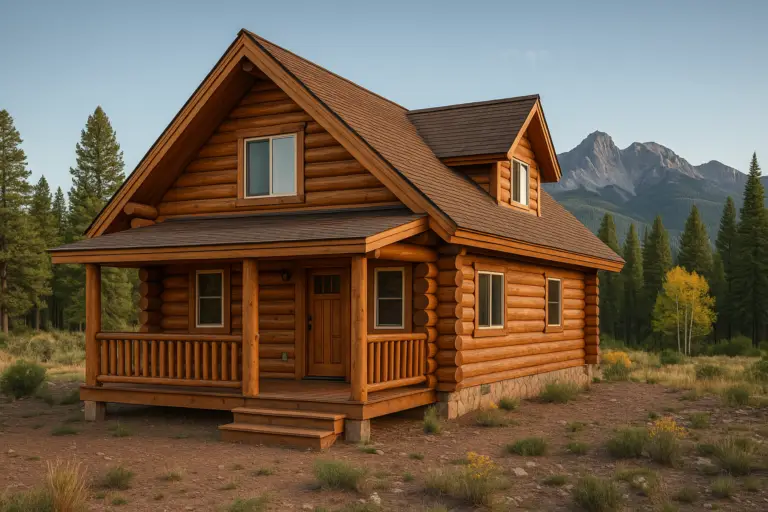








If you own a log home in Pagosa Springs, you already know why people fall in love with this town. The San Juan River running through town, the famous hot springs, the San Juan Mountains as a backdrop, and quick access to Wolf Creek Pass all make this part of Southwest Colorado feel special. Many cabins are tucked into the pines, overlooking meadows, creeks, or the lakes around Pagosa Lakes.
That same high-country setting is also challenging for log homes. Pagosa Springs sees intense sun at elevation, big winter snow, spring runoff, and summer monsoon storms, all of which can beat up exterior wood. South-facing walls get baked, stain breaks down faster than expected, and moisture can find its way into cracks and joints if the home is not properly sealed and maintained.
Pencil Log Pros focuses on helping Pagosa Springs owners keep their log homes looking good and performing well year after year. From full restorations of weathered cabins to routine maintenance, chinking, and minor repairs, the goal is simple: protect your investment and make it easier to enjoy your place in the mountains instead of worrying about it.
Below is a straightforward look at what makes Pagosa Springs log homes unique, the kinds of issues you’re likely to see over time, and how professional restoration and maintenance can help you stay ahead of problems.
Why Pagosa Springs Log Homes Need Specialized Care
Sun, Snow, and High-Country Moisture in Pagosa Springs
Pagosa Springs sits at a high elevation in the San Juan Mountains, which affects how logs weather compared to lower-elevation homes. The air is thinner, so ultraviolet light from the sun is more intense. Even on cool days, that UV exposure can be harsh on stain and clear coats. The south and west walls, in particular, can dull out, turn chalky, or start to show bare wood much sooner than owners expect.
Winter brings substantial snowfall and drifting around foundations, decks, and railings. Snow can pile up against lower log courses, holding moisture in place for long stretches. When the snow finally melts, the water often runs down walls and around trim, soaking checks and exposed end grain.
Freeze–thaw cycles are another challenge. Water gets into checks and small gaps when temperatures are above freezing, then expands as it freezes at night. Over time, that movement can widen checks, open up joints, and create pathways for water to travel deeper into the logs.
Summer is not gentle either. Afternoon thunderstorms and monsoon patterns can bring driving rain that blows sideways into corners, chinking, and sill areas. Shaded zones near the river or in dense timber may stay damp longer, which encourages mold, mildew, or decay if the finish is failing.
On real Pagosa Springs homes, all of this often shows up as graying or yellowed logs on the sunny sides, peeling or curling stain on railings and trim, dark staining below window sills, and discolored areas at the bottom few log courses near decks, patios, and grade. Those are early warning signs that the wood needs attention.
Common Pagosa Springs Log Home Construction Styles
Pagosa Springs has a mix of log home styles, each with its own maintenance personality. In the trees heading toward Wolf Creek or out along Piedra Road, it is common to see full-round pine and spruce log construction. These homes often feature visible log ends, large roof overhangs, and rustic character that needs a well-chosen stain and careful sealing at corners and log-to-log joints.
Around Lake Pagosa and the Pagosa Lakes neighborhoods, you will find more milled and D-log systems. These tend to have more uniform log sizes and tighter lines. They may rely heavily on caulking in the joints rather than a full-width chinking line. They can weather very well, but if the sealant fails, wind and water can move more freely between courses.
On larger acreage, especially heading toward Chromo or farther out in the county, older hand-peeled and hand-crafted cabins are relatively common. These structures can be beautiful but may have more pronounced checking, more variation from log to log, and some settling history. That means careful attention to movement, door and window alignment, and older chinking or caulking systems is especially important.
Every style responds differently to Pagosa’s weather. Full-round logs with heavy checking may need frequent inspection and targeted sealing. D-log homes with minimal roof overhangs may require more frequent maintenance of upper walls and gables. Older, hand-peeled homes in dense trees may require finishes that perform well in shade and do not trap moisture.
Signs Your Pagosa Springs Log Home Needs Attention
Many Pagosa Springs owners are not at their cabin year-round, which makes it easy to miss the early signs of finish failure. A simple walk-around once or twice a year can tell you a lot about the health of your log exterior.
Some things to watch for include a south-facing wall that looks dull or chalky compared to the protected sides of the home. If you can rub your hand on the wall and get a dusty, faded residue, that is a clue that the finish is breaking down under UV exposure.
Dark streaks beneath checks, knots, or trim after rainstorms or snowmelt can indicate that water is getting behind the finish and running through the wood rather than off the surface. Soft spots at log ends, posts, or where deck framing meets the house suggest that moisture has been present for a while, and decay may be starting.
Inside the home, drafts around windows, baseboards, or loft railings during winter storms can be a sign that joints and corners need better sealing. Cracks that look purely cosmetic on the outside can still let in cold air if they run deeply into the logs.
Homeowners can handle basic observation and small tasks, such as monitoring checks or lightly cleaning surfaces. When you see bigger changes in color, peeling, or softness, that is the time to have a professional evaluation and plan the next round of care before issues become much more expensive structural repairs.
Our Log Home Restoration and Maintenance Services in Pagosa Springs
Log Home Inspection and Maintenance Planning
Every good restoration or maintenance job in Pagosa Springs starts with a thorough inspection. That means walking the entire exterior, paying close attention to sun-exposed sides, roof intersections, deck connections, and lower courses where snow tends to pile up.
During this kind of evaluation, it is important to look for where the stain is fading, peeling, or failing, not just where it still looks good. Mapping exposure by orientation helps decide how aggressively to treat the south and west walls compared to the more protected sides. Checking for rot around beams, posts, railings, and sill logs helps catch soft or compromised areas before they spread.
For part-time residences or rental cabins, a maintenance plan should also consider how often the owner can be on-site and whether the cabin is in use year-round or only during certain seasons. A multi-year plan can break the work into logical phases, keeping the most vulnerable areas protected first while still respecting travel schedules and budgets.
Media Blasting, Stripping, and Surface Preparation
Many older cabins around Pagosa Springs have been coated with different products over the years. Heavy, dark coatings meant to “last forever” can trap moisture in the wood, making it hard for newer finishes to adhere correctly. In those cases, surface prep is more than just power washing.
Media blasting is often used to remove old finishes and expose fresh, sound wood. Carefully selected blasting media can strip coatings without chewing up the underlying logs when used correctly. In other situations, hand or mechanical sanding, along with targeted chemical stripping, may be more appropriate for detailed areas or delicate trim.
No matter which method is used, the goal is the same: clean, dry, and properly profiled wood that will take stain evenly and allow modern systems to do their job. In mountain neighborhoods where homes are relatively close together, it is also important to manage dust, protect nearby vehicles and landscaping, and respect neighbors’ space while blasting or sanding is underway.
Log Cabin Staining and Finishing for High-UV Mountain Sun
Choosing the right stain and finish system for a Pagosa Springs log home starts with understanding the exposure. A high, open hillside lot with wide-open views will see very different UV and wind than a cabin tucked deep into tall pines.
In general, high-elevation homes benefit from finishes with strong UV protection and enough flexibility to move with the wood as temperatures swing. Transparent and semi-transparent systems allow the character of the logs to be visible while still providing protection. More pigmented finishes can be a wise choice on heavily exposed walls that need extra help resisting the sun.
Application technique matters as much as the product. Working stain well into checks, corners, and end grain, and then back-brushing to even out coverage, helps prevent thin spots that fail early. The south and west walls may require additional attention or an extra coat to hold up between scheduled maintenance cycles.
Owners in Pagosa Springs should expect some level of maintenance every few years, depending on exposure and the system used. Light maintenance coats, applied before a finish fully fails, are much less expensive and disruptive than waiting until bare, gray wood is widespread and a complete strip and refinish is required.
Chinking, Caulking, and Air Sealing
Even a well-stained log home can feel drafty if the joints are not correctly sealed. High winds across Wolf Creek Pass and through the San Juan valley tend to find every small gap. In winter, those leaks become very noticeable, especially in lofts, near stairwells, or around older windows and doors.
Traditional chinking systems use a visible band between logs that stretches and moves as the home moves. Modern flexible materials can be installed to match or update older styles while providing better adhesion and elasticity. For milled or D-log homes that were initially built without a wide chink line, a combination of carefully installed caulking and hidden sealants may be the right approach.
Sealing work generally focuses on log-to-log joints, corners, window and door perimeters, and penetrations such as vents, hose bibs, and electrical conduits. Proper chinking and caulking not only reduce drafts but also help prevent wind-driven rain and snow from entering the wall system.
Improved air sealing can make a noticeable difference in comfort during the ski season and help control energy costs for homes heated throughout the winter.
Log Repair, Rot Removal, and Structural Corrections
When moisture is allowed to sit on or in log walls for long periods, decay can eventually set in. In Pagosa Springs, this most often shows up where snow accumulates along lower walls, where decks tie into the house, and where rooflines drop large amounts of runoff onto one section of wall.
Once rot has started, simply applying more stain will not solve the problem. The underlying wood needs to be evaluated, and the source of moisture must be addressed. That may mean adding or adjusting gutters, improving grading, or modifying trim details to manage water better.
For the logs themselves, standard solutions include removing deteriorated sections and splicing in sound, properly treated replacement material. Care is taken to match profiles and appearance so repairs blend with existing logs as much as possible. In more severe cases, temporary shoring or structural corrections may be necessary to ensure the home remains safe and stable while repairs are made.
These projects are often completed in phases, particularly for larger homes or situations with multiple areas of concern. That allows owners to address the highest-risk issues first and spread the work over a realistic timeline.
Decks, Railings, and Exterior Details
Decks and railings on Pagosa Springs homes often see even more direct exposure than the walls themselves. Elevated decks facing the San Juan Mountains catch intense sun, big temperature swings, and blowing snow. Boards can dry out, crack, and cup if they are not regularly protected.
Restoring decks and railings usually involves cleaning, stripping or sanding failing finishes, tightening or replacing hardware, and applying protective coatings that are appropriate for horizontal surfaces. The goal is to reduce water absorption, limit checking and splintering, and improve traction in wet or icy conditions.
At the same time, it makes sense to evaluate posts, beam ends, stair stringers, and other wood elements that are tied into the deck system. Many hidden rot problems begin at these connection points, especially where the deck meets the log wall. Coordinating deck and wall work helps ensure that the whole exterior functions as a system, not as separate pieces.
Local Example Scenarios Around Pagosa Springs
Lake Pagosa Second-Home Cabin with Faded South Wall
Imagine a two-story D-log cabin near Lake Pagosa that was stained a dozen or more years ago. The lakeside, south-facing wall gets full sun most of the day, while the back side of the home is partially shaded. The south wall has turned dull and patchy, and some areas show bare gray wood. The north wall still has color but looks darker and uneven.
In a situation like this, a realistic plan would likely involve more aggressive prep on the heavily exposed south and west sides. Media blasting or thorough sanding might be needed to remove the failing finish and open up the wood for a new system. The entire home would then need to be cleaned and brightened to even out the color and remove any remaining residues.
After that, a compatible stain system could be applied with careful attention to the sunniest walls. A clear or lightly tinted protective coat might be added where appropriate. Finally, a maintenance schedule would be set so that the exterior can be touched up before it reaches the same level of deterioration again.
Older Hand-Peeled Cabin in the Pines off Piedra Road
Consider an older hand-peeled log home tucked in tall pines off Piedra Road. The site is beautiful and shaded, but the lower logs tend to stay damp after storms. Over many seasons, moss or mildew can develop on the north side, and specific lower courses may show dark staining or softness where snow sits for long periods.
An evaluation here would focus on identifying any sections where decay is advanced and pinpointing the sources of excess moisture. That might lead to improvements in grading, adjustments to downspouts, or minor landscaping changes to allow better airflow and faster drying.
Where logs are compromised, sections could be carefully removed and replaced with sound, treated wood, matching the hand-peeled look as closely as possible. Once the structural concerns are addressed, the entire home would need gentle but thorough preparation and a finish system chosen for performance in more shaded conditions.
Snow-Loaded Mountain Home Near Wolf Creek Pass
Cabins near Wolf Creek Pass often see deep snow and strong winds throughout much of the winter. A typical scenario might involve a high-elevation home used mainly during ski season. Snow banks may build up along lower walls, and ice dams can form where roofs meet dormers or intersecting roof lines.
Service in this kind of setting would likely include detailed inspection of roof edges, valleys, and their connection to log walls. Log ends, trim, and lower courses in snow zones would be checked for signs of moisture damage or decay. Repairs and resealing could focus on windward walls and areas that experience repeated freeze–thaw cycles.
Owners would benefit from guidance on snow management strategies, including where to remove snow buildup, how to protect sensitive areas, and how to schedule maintenance so finishes have enough time to cure fully before winter returns.
Serving Pagosa Springs and the Wider Southwest Colorado Region
Nearby High-Country Communities We Also Work In
Log home owners in Pagosa Springs often also spend time in other Southwest Colorado mountain towns, or own cabins in more than one area. Weather patterns and elevation may differ, but the general challenges of sun, snow, and moisture are similar throughout the San Juans.
For example, ski cabins and mountain homes along the corridor toward Durango face comparable exposure, with intense sun on open ridgelines and heavy winter storms. Historic-style and mining-era log cabins in and around Silverton may require sensitive restoration to protect both their character and structure.
Farther north in the range, mountain cabins around Ouray and Ridgway see significant snow events and strong winds funneling through high passes. Valley homes closer to Gunnison deal with long, cold winters and intense sun on clear days. Experience in these nearby areas helps inform the design of maintenance plans that are realistic for Pagosa Springs as well.
Coordinating Projects for Out-of-Town Owners
Many Pagosa Springs log homes are second homes or short-term rentals. Owners may live several hours away or out of state, which can make it challenging to keep up with exterior maintenance without good communication from their contractor.
For this reason, log home projects are often built around clear scopes of work, progress photos, and agreed-upon timelines. Work can be scheduled between owner visits, between rental bookings, or in shoulder seasons when access is easier and the weather is more cooperative for stain and finish work.
Multi-year plans are beneficial for out-of-town owners. The most vulnerable areas, such as south-facing walls or known problem spots, can be addressed first. Other tasks, like full-house restaining or larger deck projects, can be scheduled a year or two later. This approach spreads out both cost and disruption while still protecting the home.
How to Time Maintenance Around Pagosa Springs Seasons
Best Seasons for Exterior Log Work
In Pagosa Springs, the main season for exterior log work typically runs from late spring through early fall. During this window, temperatures are more consistent, and humidity is usually favorable for cleaning, prep, and application of stains and sealers.
Spring is often a good time for inspections, cleaning, and early prep, especially after the snow has melted away from the base of the home. Summer can be ideal for complete restoration projects, though afternoon thunderstorms need to be factored into scheduling and daily work planning. Early fall often provides excellent conditions for final coats and touch-ups before colder nights arrive.
Monsoon season and periods of frequent rain can affect scheduling. It is crucial to allow sufficient drying time between washing, prep work, and coating application. Rushing the process during wet stretches can shorten the finish’s lifespan.
Creating a Preventive Maintenance Schedule
A consistent maintenance schedule is one of the best investments a Pagosa Springs log home owner can make. Rather than waiting until the home looks obviously worn or damaged, it is much more cost-effective to plan ahead.
For many homes, a light maintenance coat on the most exposed walls every two to four years is a good starting point. The exact timing depends on factors like orientation, tree cover, elevation, and how aggressively the home is exposed to wind and sun. Less exposed sides may be able to go longer between coats, especially if they were carefully prepped and finished to begin with.
Homeowners can handle some periodic tasks themselves, such as gentle washing to remove dust and pollen, checking for new checks or gaps, and clearing debris away from the base of walls. More involved tasks, like media blasting, full-house staining, or structural repairs, are usually best handled by specialists with the right equipment and experience.
FAQs About Log Home Care in Pagosa Springs, CO
How often should I restain my Pagosa Springs log home?
There is no single schedule that fits every home, but in Pagosa Springs’ high-UV environment, many log cabins benefit from attention every few years. South and west walls typically need more frequent maintenance, while shaded sides may go longer between coats. A full strip and refinish is usually only required when finishes are allowed to fail or when incompatible coatings have built up over time.
What if my cabin only gets used a few weeks a year?
Cabins that sit empty for long stretches still experience sun, snow, and temperature swings. In some ways, they can be at greater risk because minor problems may go unnoticed longer. Establishing a regular inspection routine, either personally or with trusted help, is essential. It is wise to schedule pre-winter checks and post-winter evaluations to detect damage from snow, ice, or wind.
Can I just touch up the south wall and ignore the rest?
In some cases, targeted work on the most exposed walls can be a reasonable approach, especially between larger projects. However, partial work should be planned carefully to avoid creating stark color differences or leaving vulnerable areas unprotected. Over time, a full-house maintenance coat will still be needed to keep the home looking consistent and protected on all sides.
How do I know if discoloration is just cosmetic or actual rot?
Color changes alone do not always mean rot, but they are a clue that moisture or UV exposure has been affecting the wood. Softness is the key indicator. Gently probing suspect areas with a tool can help determine whether the wood is still sound or has begun to break down. Hollow-sounding areas, crumbling fibers, or deep softness are all reasons to have a professional take a closer look.
Do you work in remote locations and on unpaved roads?
Many Pagosa Springs cabins are located on gravel roads or back in the woods. Access, driveways, and seasonal conditions all factor into project planning. It is essential to coordinate timing so that roads are passable, mud seasons are avoided as much as possible, and equipment can reach the site safely. With some planning, remote locations can typically be accommodated.
Why Work With a Log Home Specialist in Pagosa Springs?
Experience With High-Country Log Construction
Log homes behave differently from conventional siding and framing. They move more, they check, and they respond to moisture and temperature in their own way. In a mountain environment like Pagosa Springs, those differences are amplified. Working with a crew that understands log construction, settling, and high-country weather patterns helps avoid shortcuts that may look fine at first but fail early.
Attention to Detail From Prep to Final Coat
Successful log home work is all about preparation and detail. Thorough surface prep, proper drying times, careful masking, and the correct application techniques all contribute to a finish that holds up to Pagosa Springs’ sun and snow. Protecting landscaping, hot tubs, outdoor furniture, and neighboring properties during blasting or staining should be part of the process, not an afterthought.
Transparent Communication and Clear Scopes
Most owners want to know precisely what is being done to their home and why, especially if they are not present during the work. Clear scopes of work, realistic timelines, and straightforward communication make planning easier. Photos and progress updates help owners feel confident that the project is moving in the right direction and that the finished result will meet their expectations.
Ready to Protect Your Pagosa Springs Log Home?
Owning a log cabin in Pagosa Springs is a privilege, but it comes with responsibilities. High-altitude sun, heavy snow, and mountain weather will always put your exterior to the test. The sooner you catch and address minor issues, the longer your logs, stain, and structural components will last, and the more you will enjoy your home rather than worry about it.
Take a few minutes this week to walk around your Pagosa Springs log home. Look closely at the sunny walls, lower log courses, deck connections, and around windows and doors. If you see fading, peeling, dark streaks, or soft spots, it is a sign your home is in need of attention.
When you are ready to talk through options for inspection, maintenance, or complete restoration, scroll to the bottom of this page and connect with Pencil Log Pros. A thoughtful plan and well-timed work can keep your Pagosa Springs log home looking great and performing well for many seasons to come.