
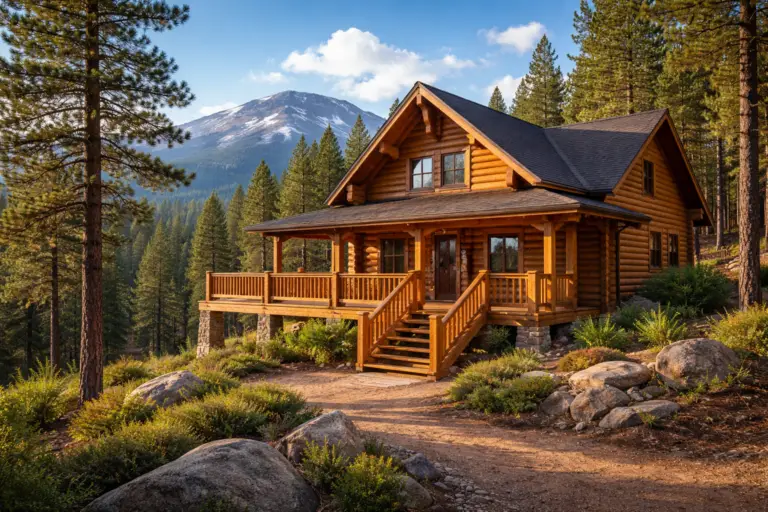












Owning a log home in Woodland Park, Colorado, feels a little bit like living in a postcard. You’ve got big Pikes Peak views, tall pines all around, and that “City Above the Clouds” feel that makes the rest of the world seem far away. But as beautiful as the setting is, the combination of altitude, snow, and strong sun is tough on log homes and mountain cabins.
At just over 8,000 feet, Woodland Park sits high enough that your logs are dealing with stronger UV rays, more intense storms, and long stretches of snow on decks and lower walls. Finishes fail faster, checks open wider, and any small maintenance issue can get worse more quickly than it would on the Front Range or in lower valleys.
This page is meant to help Woodland Park and Teller County log home owners understand how local conditions affect their cabins, what a restoration or maintenance project typically involves, and how to plan long-term care so your home stays solid and beautiful in the high-country climate.
Whether your place is a full-time residence tucked into the trees or a weekend cabin you escape to off Highway 24, a good restoration plan will protect your logs from sun, snow, and moisture for years to come.
How Woodland Park’s High-Country Weather Impacts Log Homes
Sun, UV, and High-Elevation Exposure
Up here above 8,000 feet, the sun hits harder. UV exposure is one of the biggest enemies of log home finishes in the Woodland Park area. South- and west-facing walls tend to fade, dry out, and sometimes peel long before the rest of the house shows any obvious issues.
If your home has big windows facing Pikes Peak or a deck that seems to roast on summer afternoons, those log surfaces are taking a beating. Common signs of UV damage around Woodland Park include:
- Color fading or turning dull and chalky on the sunny sides
- Hairline cracks in the stain or clear coat
- Gray, dry-looking wood where the coating has worn away
- Stain absorbs unevenly when you try to “touch up” a small spot
Because UV is so intense at this elevation, many log homes that look “fine from a distance” are actually overdue for a topcoat or full restain. Staying ahead of UV damage is one of the most cost-effective steps a Woodland Park owner can take.
Snow Loads, Ice, and Freeze–Thaw Cycles
Woodland Park sees a long snow season, and it’s common for storms to drop wet, heavy snow well into spring. That snow doesn’t just sit on your roof; it piles up on decks, railings, stair treads, and lower logs, especially on shaded north and east sides.
As the snow melts during the day and refreezes at night, water can seep into cracks, around fasteners, and into horizontal surfaces. Over time, freeze–thaw cycles can turn small cracks and soft spots into larger areas of decay. You might notice:
- Dark staining or “coffee-colored” streaking on lower logs
- Soft or spongy areas near deck connections
- Flaking or peeling finish where snow piles every winter
- Ice dams or icicles forming at rooflines, feeding meltwater down the walls
Lower courses of logs, stair stringers, rail posts, and log ends sticking out past the roofline are all prime candidates for moisture damage in the Woodland Park climate.
Dry Air, Wind, and Movement in the Logs
The air in Woodland Park is often quite dry, especially in winter and during windy periods. That dry air draws moisture out of the logs, and as the wood shrinks and swells through the seasons, gaps can open up at corners, around windows and doors, and along long checks in the logs.
Mountain winds rushing over ridges, through saddles, and up drainages can make these gaps more noticeable. Many homeowners start to notice:
- Drafts near outlets or baseboards along exterior log walls
- Light visible through gaps in older chinking or caulking
- Cracked or separated chink lines at corners
- Rattling trim or whistling sounds during storms
Proper chinking, caulking, and check sealing are critical in this environment. Keeping the building envelope tight not only protects against moisture but also improves comfort and energy use during cold snaps.
Forested Lots, Wildlife, and Wildfire Concerns
Most Woodland Park and Teller County cabins are tucked into Ponderosa pine, spruce, and mixed conifer forests. It’s a beautiful setting, but shade and vegetation introduce their own challenges.
Shaded north walls often stay damp longer after storms. That can contribute to mildew, algae, and slow-drying finishes. Lower logs near plantings, flower beds, or stacked firewood may absorb excess moisture, which, over time, can lead to rot or pest activity.
In a forested area, wildlife also comes into play. Woodpeckers may go after softened or insect-infested wood. Carpenter ants and beetles are more likely to attack if there’s decayed or consistently damp material. On the wildfire side, a well-maintained log exterior with clean, sealed checks and a sound stain is part of a broader defensible-space plan around the home.
Log Home Restoration & Maintenance Services in Woodland Park, CO
Log Home Inspections & Maintenance Planning
Every log home in the Woodland Park area is a little bit different. Some are milled D-log homes from the 1990s; others are hand-peeled, round-log cabins that have seen decades of mountain weather. A thorough inspection is the first step in any smart restoration or maintenance plan.
A typical inspection might include walking the exterior, looking closely at:
- Finish condition on all sides, especially south and west exposures
- Log ends, checks, and horizontal surfaces that collect water
- Lower logs near decks, patios, or grade-level moisture
- Chinking and caulking around windows, doors, and corners
- Decks, railings, stairs, and entryways
From there, a long-term maintenance plan can be built around Woodland Park’s short warm-weather season, prioritizing what needs attention now versus what can be scheduled in future years.
Media Blasting & Old Finish Removal
Many older cabins around Woodland Park have multiple layers of stain or clear coat that are no longer performing. When finishes are heavily built up, patchy, or peeling, media blasting is often the best way to restore sound wood.
Media blasting uses materials like crushed glass or corncob to strip away failing finishes and UV-damaged wood fibers. On steep or rocky mountain lots, it’s especially important to plan containment and cleanup, protect landscaping, and work carefully around neighboring properties. Once blasting is complete, the surface is ready for sanding, repairs, and a fresh, modern finish system.
Log Home Sanding, Staining & Clear Coats
After blasting or washing, sanding evens out the surface, opens the grain, and prepares the logs to accept new stain. In Woodland Park’s high-UV environment, choosing the right stain system matters as much as the prep itself.
Many homeowners prefer semi-transparent stains that highlight the grain of pine or spruce while offering solid protection. Others lean toward slightly darker tones that can offer more UV resistance on heavily exposed walls. A typical staining process might include:
- Spot or full sanding after blasting or stripping
- Application of a penetrating stain, with careful back-brushing
- One or more clear topcoats, depending on the system used
- Extra attention to end-grain, log ends, and checks
Clear coats and topcoats are particularly helpful in the Woodland Park area, where you want every bit of extra protection you can get against strong sun and long winters.
Chinking, Caulking & Air Sealing at Altitude
In a climate where nights can feel chilly even in July, air sealing is a big quality-of-life improvement. Re-chinking and re-caulking log joints, checks, and transitions can greatly reduce drafts and help stabilize interior temperatures.
On many older cabins, the original chinking may have pulled away from the logs, cracked, or dried out. Modern materials are more flexible and designed to move with the logs. Key areas to address include:
- Vertical and horizontal joints between logs
- Checks large enough to collect water or leak air
- Corners, notches, and saddle joints
- Transitions to windows, doors, and other materials
This type of work is especially helpful for homes that experience significant wind exposure on ridgelines or on open lots west of town toward Divide.
Log Repair, Rot Replacement & Structural Touch-Ups
In Woodland Park’s mix of snow, shade, and moisture, even well-built log homes can develop pockets of rot over time. Common trouble spots include:
- Lower logs near decks, steps, or planters
- Log ends that stick out past the roofline and soak up water
- Shady north corners where snow lingers
- Areas where downspouts or drainage have been an issue
When rot is present, the decayed material can be carefully removed and replaced with sound wood or log sections. Surrounding logs can be treated with preservatives, and the area can be visually reintegrated so it blends with the rest of the home. The goal is always to stabilize the structure and restore the logs’ strength and appearance.
Deck, Railing & Exterior Wood Refinishing
Decks and railings on Woodland Park cabins live a hard life. They may sit under snowdrifts for months, then bake in high-altitude sun all summer. It’s no surprise that finishes on horizontal surfaces usually fail first.
A good deck and railing refinishing plan often includes:
- Stripping or sanding off failing coatings
- Addressing any soft or rotten areas in treads, posts, or top rails
- Applying a product designed for high-traffic, exterior use
- Improving traction on stairs and landings where snow and ice accumulate
When decks and railings are brought back to good condition, they support the life of the whole home by improving drainage, safety, and overall curb appeal.
Preventative Treatments & Annual Touch-Ups
The most successful log home owners in Woodland Park treat maintenance as an ongoing habit, not a one-time project. Yearly or every few years touch-ups are cheaper and easier than major restorations.
Preventative care might include:
- Gentle washing to remove dust, pollen, and soot
- Touch-up staining on walls that get the harshest sun
- Sealing new checks before they become pathways for water
- Small chinking and caulking repairs as gaps appear
This approach helps keep the finish looking fresh and lets you catch small problems early.
What a Log Home Restoration Project in Woodland Park Typically Involves
On-Site Consultation & Scope
A restoration project near Woodland Park often starts with a visit to the property to understand the site and how the weather affects the home. Cabins close to town may have easier access and neighbors nearby; homes farther out toward Florissant or tucked along the Rampart Range area might involve rough driveways and more complex staging.
During a consultation, the discussion usually covers:
- Current condition of stain and chinking
- Any known leaks, drafts, or soft spots
- Access for equipment and materials
- Best timing for work given local weather and your schedule
Surface Prep for High-Country Cabins
Good prep is what separates a quick cosmetic fix from a long-lasting restoration. Depending on the home, surface prep might include washing, media blasting, chemical stripping, or some combination of those processes.
Masks, tarps, and careful setup help protect windows, stonework, roofing, and plants. In the Woodland Park area, where many properties have boulders, retaining walls, and native landscaping, prep work is planned around the terrain as much as the home itself.
Repairs, Sealing & Detail Work
Once the old finish is removed, any underlying issues become easier to see. Soft logs can be probed and marked, damaged sections can be cut out and replaced, and checks can be sealed. Chinking and caulking work normally follows, closing up gaps before the new stain goes on.
This is also the stage where trim, fascia, and soffit details can be tuned up, nail heads set, and smaller cosmetic issues addressed so the final finish looks clean and intentional.
Staining, Topcoats & Curing at Elevation
Staining in Woodland Park means working around mountain weather, including afternoon thunderstorms and temperature swings. The application is planned carefully to fit the product’s temperature and moisture requirements.
After stain and any clear coats are applied, a proper cure time is important. Even though the air is dry, cool nights and sudden changes in humidity can affect cure rates. Once everything is dry, a walk-through with the homeowner helps explain the new system, specific maintenance recommendations, and what to watch for over the next few seasons.
Where Log Homes Are Common Around Woodland Park & Pikes Peak
In and Around the City of Woodland Park
Right in town, you’ll see log homes mixed into established neighborhoods, often with smaller lots and big Pikes Peak views. These homes may have more road dust, closer neighbors, and a bit less exposure to extreme wind, but they still face the same UV, snow, and freeze–thaw issues as more remote cabins.
Here, careful prep and tidy job sites are especially important to minimize impact on nearby properties and keep the project running smoothly.
Acreage Properties Toward Divide & Florissant
West along Highway 24 toward Divide and Florissant, it’s common to find log homes on larger parcels with more open views. These properties often see stronger winds, bigger temperature swings, and deeper snowdrifts across driveways and open meadows.
On these sites, sun exposure on one side of the home and heavy snow loading on another can create very different maintenance needs from wall to wall. A good plan treats each side of the house based on how it actually weathers over the course of a year.
Mountain Homes Near Rampart Range & Backroad Areas
Some Woodland Park cabins sit on steeper slopes or tucked up along the Rampart Range and nearby backroads. These homes may have challenging access, narrow or steep driveways, and limited staging space for equipment.
Project planning in these locations must account for where vehicles and compressors can park, how materials are moved up and down the property, and how to manage blasting media or wash water on uneven ground.
Seasonal Log Home Maintenance Checklist for Woodland Park Owners
Spring – After the Snow Season
As the snow finally melts, spring is the time to see what winter left behind. A simple checklist for Woodland Park owners might include:
- Inspect lower logs, decks, railings, and stair treads for soft spots
- Look for peeling stain or gray patches on sun-exposed walls
- Check around downspouts and splash zones for moisture damage
- Clean gutters and ensure water is draining away from the foundation and logs
Summer – Best Window for Big Exterior Projects
Summer is usually the best window for major restoration work in Woodland Park. Days are longer, temperatures are more consistent, and curing conditions are easier to manage, even with afternoon storms in the forecast.
Summer is the right time to schedule:
- Full restain projects
- Media blasting and complete finish removal
- Extensive chinking and caulking work
- Large deck and railing refinishing jobs
Fall – Buttoning Up for Another Winter
In the fall, focus shifts to tightening things up before snow returns. A fall checklist might include:
- Touching up the stain on the most sun-beaten walls
- Sealing new checks, especially on exposed log ends
- Checking chinking and caulking for any new gaps
- Clearing vegetation, pine needles, and debris away from the home
Winter – Interior Monitoring & Snow Management
Winter is when you live with the results of your maintenance decisions. It’s a good time to pay attention to how the house feels and behaves:
- Notice any new drafts or cold spots along exterior walls
- Watch for condensation or frost buildup in problem areas
- Manage snow around decks, steps, and entries to avoid long-term moisture
- Start planning next season’s work so you can secure a good spot on the schedule
Woodland Park vs Other Colorado Log Home Areas
Woodland Park vs Evergreen & Nederland (Front Range Foothills)
Woodland Park shares many traits with foothill communities like Evergreen and Nederland. All three have high-country weather, evergreen forests, and homes at elevations of roughly 7,000 to 9,000 feet.
Techniques that work well for Evergreen log homes and Nederland log cabins often translate nicely to Woodland Park: strong prep work, high-quality stain systems, and thoughtful chinking and caulking. The main differences usually come down to specific storm patterns and the amount of direct exposure a particular home gets in its valley or on its hillside.
Woodland Park vs Breckenridge & Fairplay (Higher High Country)
Compared to resort and high-park towns such as Breckenridge and Fairplay, Woodland Park’s climate can feel a touch more moderate, but it still lives very firmly in the high-country category.
Snow and UV are still heavy hitters here, much like they are for cabins over the pass in Breckenridge and park county log homes near Fairplay. The same problem zones keep showing up: lower logs, sun-blasted walls, and log ends that catch water. The main lesson across all these areas is that regular maintenance beats waiting for big, expensive repairs every time.
Woodland Park vs Salida & Buena Vista (Arkansas Valley Towns)
Down in the Arkansas Valley, towns like Salida and Buena Vista are known for sunnier, slightly drier conditions. There, many log homes sit on more open terrain, with big-sky views and less-dense forest right up against the walls.
In Woodland Park’s more forested setting, snow often lingers longer in the trees and around shaded north sides. Finishes that work well for cabins in Salida can still perform nicely here, but may require closer attention to moisture in shaded areas and at the forest edge.
FAQs from Woodland Park Log Home & Cabin Owners
How often should I restain my Woodland Park log home?
In this climate, many homes benefit from a full restain every 3–7 years, depending on exposure, the products used, and how consistently you’ve handled touch-ups. South- and west-facing walls may need attention sooner than the rest of the house.
Can restoration work be done during shoulder seasons at this elevation?
Some work can be done in spring and fall, but temperature and moisture windows are tighter. Products usually have minimum temperature requirements, and surprise storms are more likely. Big, whole-house projects are often best scheduled for the heart of summer.
What if my cabin’s stain is only failing on one side?
It’s common for one or two walls to look much worse than the others. In some cases, selective prep and staining can buy you time. In other cases, the coating system is failing overall, and a full restain is more cost-effective in the long run. An inspection can help clarify which situation you’re in.
Is media blasting safe for my logs and landscaping?
When properly planned and executed, media blasting can be both effective and gentle on the logs. The choice of media, blast pressure, and technique all matter. Tarps, containment, and cleanup plans are important on the wooded, sloped lots common around Woodland Park.
How do I know if a soft spot in a log is serious rot?
Any area that easily dents under thumb pressure, crumbles, or feels significantly softer than the surrounding wood is worth a closer look. Probing with hand tools and assessing the extent of the damage helps determine whether you’re dealing with surface-level decay or a deeper structural issue.
Will better sealing help with drafts and heating bills in winter?
Improved chinking, caulking, and check sealing can make a noticeable difference in comfort by reducing drafts. While every home is different, many owners report smoother temperature control and less “cold corner” feeling after sealing work.
Can I set up a long-term maintenance plan for my Woodland Park cabin?
Yes. Establishing a regular inspection and maintenance cycle is one of the best ways to protect your investment. Planning ahead around Woodland Park’s weather windows lets you tackle the most important work at the right time, rather than scrambling after issues have already caused damage.
Get Help with Your Woodland Park, CO Log Home
Log homes and mountain cabins in Woodland Park are built to handle real high-country weather, but they need the right care to keep doing it year after year. With strong UV, deep snow, dry air, and forested surroundings, this area rewards owners who stay proactive about inspections, finish maintenance, and small repairs.
If your “City Above the Clouds” cabin is starting to show its age, or if you’ve just purchased a log home and want to understand its condition, now is a great time to get a professional set of eyes on it and map out a sensible plan.
When you’re ready to talk about log home restoration, staining, chinking, or long-term maintenance for your Woodland Park property, scroll to the bottom of this page to connect with Pencil Log Pros. We’re here to help you protect your home so you can enjoy the Pikes Peak views and mountain air for many years to come.